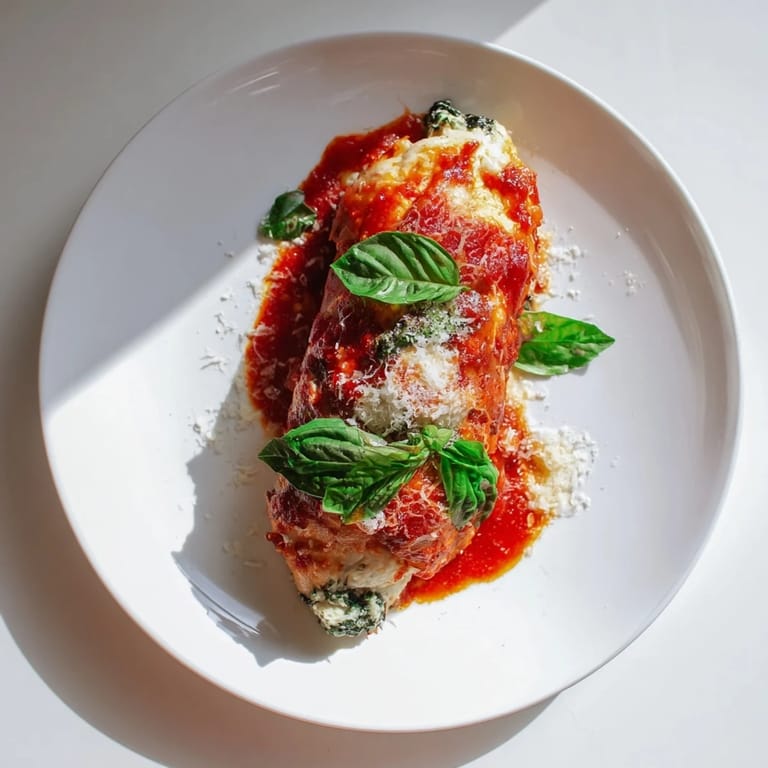
 Pin This
 My neighbor knocked on the door one Thursday evening holding a baking dish and asking if I had toothpicks. She was mid-recipe, chicken breasts splayed open on her counter, and had just realized she had nothing to hold them closed. I handed her the box and watched her dash back, and twenty minutes later the smell of tomatoes and garlic drifted through the hallway. That was my introduction to stuffed chicken, not through a cookbook, but through the scent of someone else's dinner and the curiosity it sparked.
I made this for my sister's birthday dinner the first time, convinced I'd mess up the pocket-cutting part. I did slice one breast almost in half, but it didn't matter once everything was stuffed and seared. She took one bite and said it tasted like something from a bistro, which made me feel like I'd pulled off a small miracle. We finished the whole pan that night and sopped up the sauce with bread until there was nothing left.
Ingredients
- Boneless, skinless chicken breasts: Choose breasts that are similar in size so they cook evenly, and if they're very thick, gently pound them to an even thickness before cutting the pocket.
- Ricotta cheese: The base of the filling, creamy and mild enough to let the spinach and Parmesan shine without overpowering the chicken.
- Fresh baby spinach: Chop it finely so it blends smoothly into the ricotta and doesn't create big clumps that make stuffing tricky.
- Parmesan cheese: Adds a salty, nutty depth that balances the richness of the ricotta.
- Garlic cloves: One for the filling, two for the sauce, because garlic belongs everywhere in this dish.
- Lemon zest: Just half a lemon's worth brightens the filling and cuts through the creaminess in a way that feels fresh and unexpected.
- Canned crushed tomatoes: The backbone of the sauce, thick and rich, with no chopping required.
- Dried Italian herbs and oregano: These bring warmth and familiarity, the kind of flavor that makes your kitchen smell like an Italian grandmother lives there.
- Olive oil: For searing and sautéing, it adds a fruity richness that butter can't quite replicate.
- Sugar: A small pinch balances the acidity of the tomatoes and rounds out the sauce.
Tired of Takeout? 🥡
Get 10 meals you can make faster than delivery arrives. Seriously.
One email. No spam. Unsubscribe anytime.
Instructions
- Preheat and Prep:
- Set your oven to 375°F and gather your ingredients so everything is within reach. This is the kind of dish that moves quickly once you start.
- Make the Filling:
- In a bowl, combine ricotta, chopped spinach, Parmesan, minced garlic, Italian herbs, lemon zest, salt, and pepper, stirring until it looks like a thick, speckled dip. Taste it and adjust the seasoning, this is your chance to make it yours.
- Cut the Pockets:
- Lay each chicken breast flat and use a sharp knife to carefully slice horizontally into the thickest part, creating a pocket without cutting through the other side. Season both sides with salt and pepper.
- Stuff the Chicken:
- Spoon the ricotta mixture into each pocket, pressing gently to fill it without overstuffing, and secure with toothpicks if the opening is wide. Don't worry if a little filling peeks out, it will taste just as good.
- Sear the Chicken:
- Heat olive oil in an oven-safe skillet over medium-high heat and sear each stuffed breast for 2 to 3 minutes per side until golden brown. Remove them from the skillet and set aside while you make the sauce.
- Build the Sauce:
- In the same skillet, add a bit more olive oil and sauté the chopped onion until soft and translucent, about 3 minutes, then add garlic and cook for another minute. Stir in crushed tomatoes, oregano, sugar, salt, and pepper, letting it simmer for 5 minutes until it thickens slightly and smells irresistible.
- Nestle and Bake:
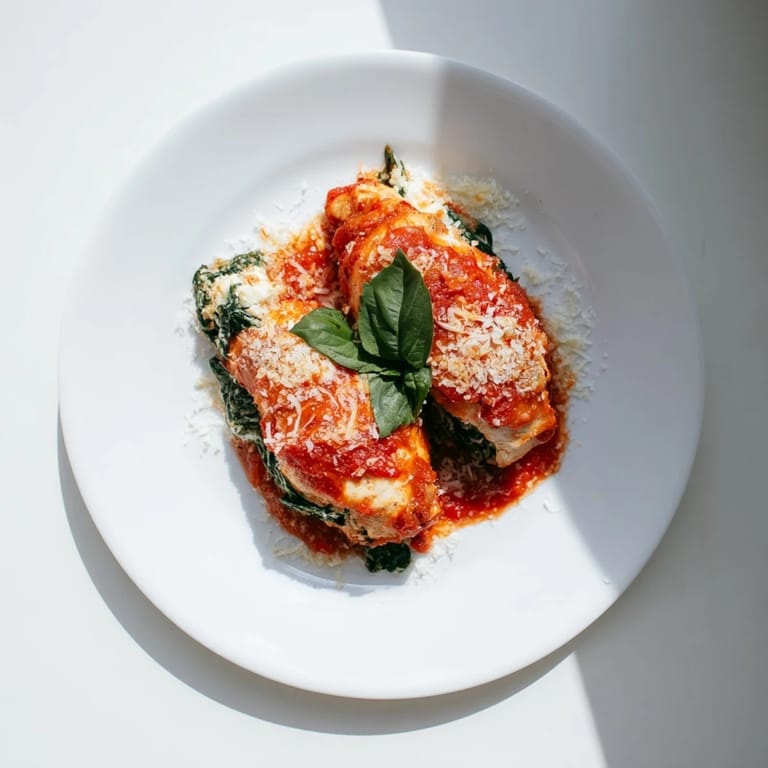
- Place the seared chicken breasts into the sauce, spooning some over the tops so they're partially covered. Transfer the skillet to the oven and bake uncovered for 20 to 25 minutes, until the chicken reaches an internal temperature of 165°F.
- Finish and Serve:
- Remove the toothpicks carefully, sprinkle with extra Parmesan or torn fresh basil if you have it, and serve hot with the sauce spooned generously over each piece. Crusty bread or pasta on the side is never a bad idea.
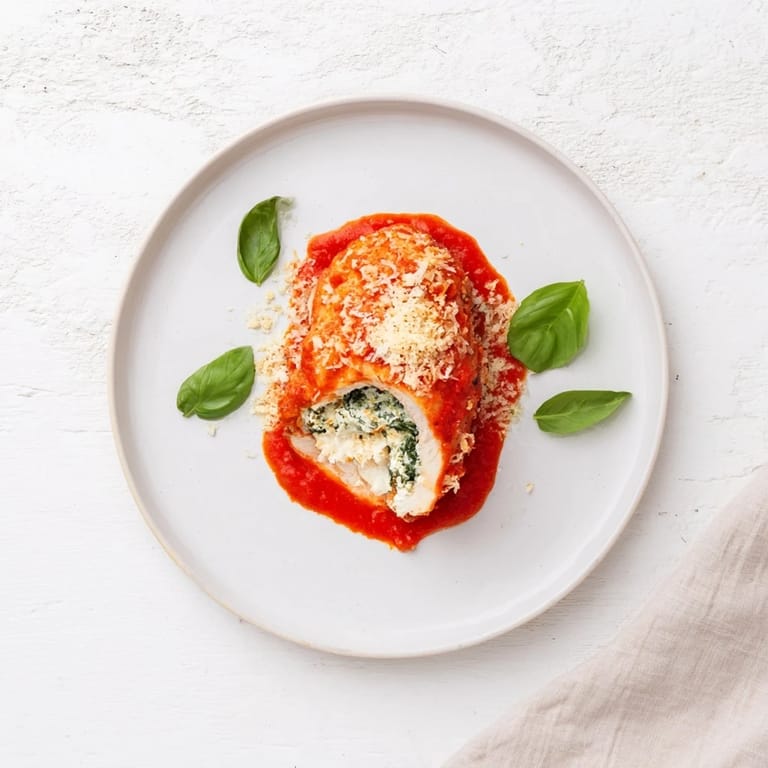 Pin This
 The first time I served this to friends, one of them asked for the recipe before she even finished her plate. She wrote it down on a napkin because she didn't want to forget it, and a week later she texted me a photo of her own version with kale instead of spinach. That's when I realized this recipe had a life beyond my kitchen, and it made me smile every time someone told me they'd made it their own way.
Choosing Your Chicken
Look for breasts that aren't too thick or thin, somewhere around 6 to 8 ounces each works best. If they're much larger, you'll need more filling and longer baking time, and if they're too small, the pockets can be tricky to cut without tearing through. I've learned to buy them from the butcher counter when I can, because they tend to be more uniform and easier to work with than the pre-packaged ones.
Making It Ahead
You can stuff the chicken breasts in the morning, cover them tightly, and refrigerate until you're ready to cook. The filling holds up well and actually benefits from a little resting time as the flavors meld together. I've even prepped the sauce separately and stored it in a jar, then combined everything in the skillet right before baking, which makes weeknight dinners feel a lot less chaotic.
Serving Suggestions
This dish pairs beautifully with something simple that can soak up the sauce. I usually make a big batch of pasta, toss it with a little olive oil, and pile the chicken on top, or I'll serve it alongside roasted vegetables and a hunk of crusty bread. A crisp green salad with lemon vinaigrette cuts through the richness and makes the meal feel complete without much effort.
- Try it over creamy polenta for a heartier, comforting plate.
- Serve with garlic bread to mop up every last bit of tomato sauce.
- Pair with roasted zucchini or green beans for a lighter, veggie-forward side.
 Pin This
 This is the kind of recipe that makes you feel capable in the kitchen, even on nights when you're not sure what you're doing. It's forgiving, flexible, and always turns out looking like you tried much harder than you did.
Recipe FAQs
- → How do I prevent the chicken from drying out?
Pound the chicken breasts to even thickness before stuffing to ensure uniform cooking. Sear them properly before baking to lock in moisture, and avoid overbaking. The internal temperature should reach 165°F (74°C) to ensure safety without overcooking.
- → Can I prepare this dish ahead of time?
Yes, you can stuff the chicken breasts up to 4 hours in advance and refrigerate them. When ready to cook, allow an extra 5-10 minutes of baking time if cooking from cold. The tomato sauce can also be prepared separately and reheated.
- → What cheese can I substitute for ricotta?
Mascarpone, goat cheese, or cream cheese work well as alternatives. Cottage cheese is lighter option. You can also use part-skim ricotta for a lower-fat version while maintaining creaminess and flavor.
- → How do I make a vegetarian version?
Replace chicken with thick portobello mushroom caps, eggplant slices, or tofu cutlets. Prepare the same spinach and ricotta filling and follow identical cooking instructions. Adjust baking time based on your chosen protein.
- → What wines pair well with this dish?
A crisp Pinot Grigio, Vermentino, or light Chianti complements the creamy filling and tomato sauce beautifully. For red wine preferences, choose lighter, unoaked options rather than heavy or overly tannic wines.
- → Can I freeze the leftover portions?
Yes, store cooled portions in airtight containers for up to 3 months. Thaw in the refrigerator overnight before reheating gently in a 350°F oven covered with foil until heated through, approximately 20-25 minutes.