 Pin This
 My grandmother kept a ritual every December that felt like opening a time capsule—pulling out that old ceramic soaking container and beginning the patient five-day wait for dried cod to transform into something tender and worth the anticipation. The first time I watched her prepare lutefisk, I was skeptical about the whole process, but the moment that creamy mustard sauce hit the plate beside the delicate flakes of fish, I understood why this humble dish had survived centuries in Norwegian kitchens. There's something almost meditative about a recipe that refuses to be rushed, that demands you check in daily and stay present. She'd hum while whisking the sauce, and somehow that became as much a part of the tradition as the fish itself.
I made this for my partner on a snowy evening after finding a package of lutefisk at a Nordic market, and the skepticism on their face slowly melted as they took that first bite with potatoes and sauce. They asked for seconds, which felt like a small victory—like I'd just passed some kind of culinary test I didn't know I was taking. Watching someone discover why your family's food matters has a way of making you see it through fresh eyes.
Ingredients
- Dried cod (lutefisk): Start with quality dried fish from a Nordic or specialty market; the better the starting ingredient, the more tender your final dish will be.
- Cold water for soaking: Change it daily without fail—this is how the fish slowly rehydrates into something delicate rather than rubbery.
- Coarse salt: The final salt treatment draws out any remaining harshness and awakens the clean fish flavor.
- Unsalted butter: Use real butter here; it's the foundation of a sauce that should taste homemade and honest.
- All-purpose flour: Keep gluten-free on hand if needed, and whisk it in gently to avoid lumps that'll ruin the silky texture.
- Whole milk: Full-fat milk makes the sauce naturally rich without needing cream, which would overpower the delicate fish.
- Dijon and whole-grain mustard: The combination gives you sharp tang from one and texture from the other; don't skip the whole-grain.
- Sugar: Just a teaspoon, but it balances the mustard's bite and feels almost invisible in the final taste.
- Boiled potatoes: Waxy potatoes hold their shape better than starchy ones and won't fall apart on the plate.
- Crispbread or flatbread: Serve alongside for texture contrast and to soak up every bit of that sauce.
Tired of Takeout? 🥡
Get 10 meals you can make faster than delivery arrives. Seriously.
One email. No spam. Unsubscribe anytime.
Instructions
- Begin the patient soaking process:
- Rinse the dried cod under cold water first to remove any surface dust or salt residue. Submerge it completely in a large container filled with cold water, then set a phone reminder to change the water every single day for five to six days—this is non-negotiable work that transforms the fish from brittle to tender. Keep it in the refrigerator so nothing spoils while you wait.
- Finish the pre-cook salt treatment:
- After those days of soaking, drain the fish and sprinkle coarse salt all over it, then let it sit for exactly thirty minutes. This draws out any remaining off-flavors and firms up the texture just slightly before cooking.
- Preheat and prepare for baking:
- Heat your oven to 200°C and pat the fish pieces dry with paper towels so they'll cook evenly. Arrange them in a baking dish, cover tightly with foil to trap gentle steam, and bake for twenty-five to thirty minutes until the flesh turns opaque and flakes easily when you test it with a fork.
- Build the mustard sauce base:
- While the fish cooks, melt butter in a saucepan over medium heat, then whisk in flour quickly to combine, cooking for just one minute—you want a pale roux, not a brown one. The pale color keeps the sauce elegant and lets the mustard flavor shine.
- Coax the milk into silky cream:
- Pour the milk in slowly while whisking constantly, which prevents lumps from forming and creates a smooth foundation. Simmer gently for three to four minutes, stirring often, until the sauce coats the back of a spoon with a slight sheen.
- Season with mustard and finesse:
- Stir in both the Dijon and whole-grain mustard, then add the sugar, salt, and white pepper. Taste as you go and adjust—this is your moment to make it perfectly yours, whether you like it slightly spicier or more mellow.
- Plate like you mean it:
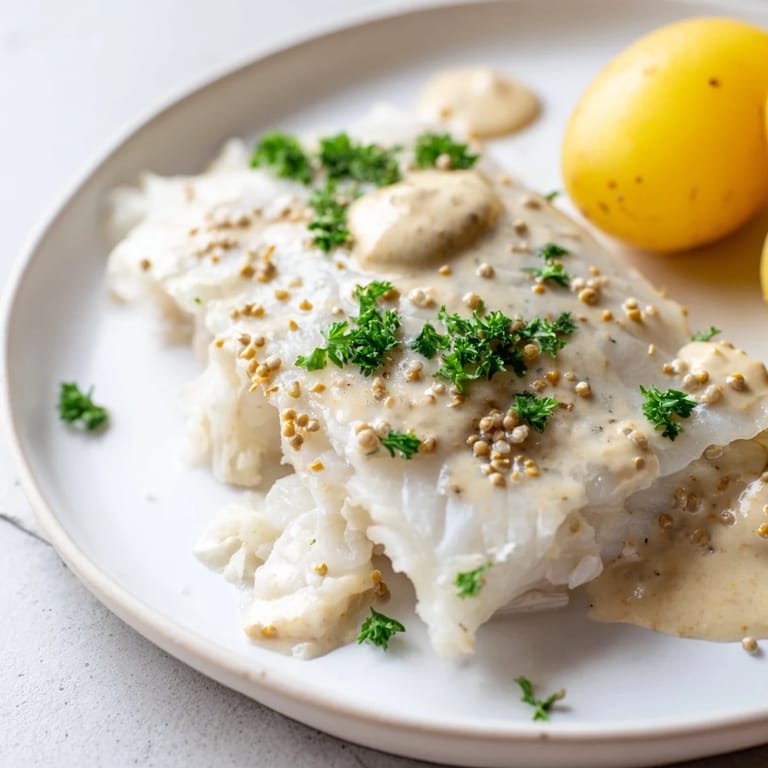
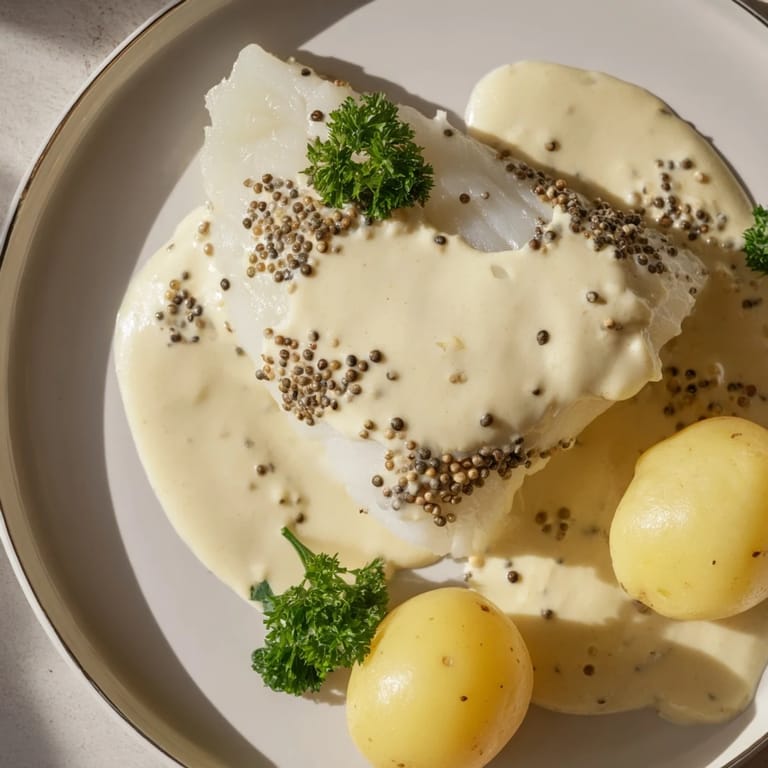
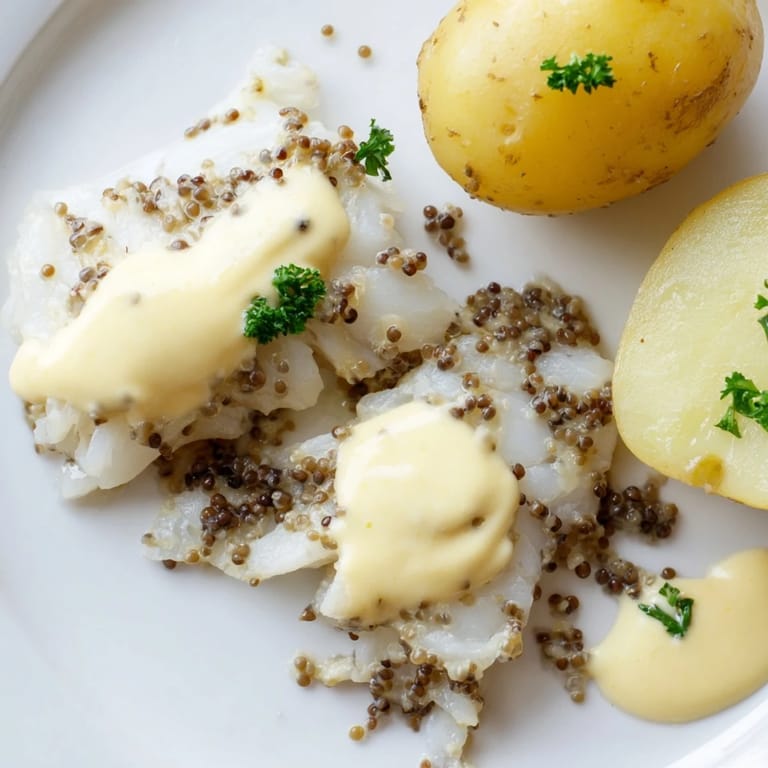
- Arrange hot lutefisk on warm plates with boiled potatoes and bread, then spoon that mustard sauce generously over everything. Finish with fresh parsley if you have it, which adds a brightness that feels intentional rather than an afterthought.
 Pin This
 I realized this dish had become special to me not because it's fancy or trendy, but because it carries the weight of continuity—a Norwegian tradition that arrived at my table through my grandmother, and somehow tastes like both respect and rebellion against ever simplifying it.
Why This Dish Still Matters
Lutefisk sits at the intersection of pragmatism and ritual in Scandinavian food culture—a way that people centuries ago preserved fish through long winters, but that transformed into something families gather around and argue about at holiday tables. There's no pretense to it, just patience and the understanding that certain foods deserve the time they ask for. Making this dish yourself, rather than ordering it or skipping it, is a quiet way of saying you believe in traditions that are worth the work.
Building Flavor Through the Sauce
The mustard sauce is where the magic happens, where this dish stops tasting strictly traditional and becomes something uniquely yours—the whole-grain mustard gives texture and visual interest, while the Dijon brings clean, sharp flavor that cuts through the richness of butter and milk. That pinch of sugar might seem strange, but it's the secret that makes people stop mid-bite and ask what they're tasting. The sauce should taste bold enough to be interesting but not so strong that it overshadows the delicate fish, which is why tasting and adjusting as you cook matters more than following the measurements exactly.
Serving and Pairing This Like a Meal
Temperature matters more than you'd think—serve everything hot, from the fish to the potatoes to the plates themselves, because lutefisk loses its appeal if it cools down and the texture becomes dense. The crispbread or flatbread isn't decoration; it's functional and delicious, there to catch every drop of sauce and provide contrast to the soft fish. A chilled glass of aquavit or a crisp lager makes sense not because it's traditional but because the acidity and cold cut right through the richness of the sauce and clean your palate between bites.
- Serve everything on prewarmed plates so the fish stays hot from plate to mouth.
- Set out extra napkins because the sauce is generous and completely worth getting a little messy.
- Don't be shy about spooning extra sauce on individual plates—this is not a dish where restraint is rewarded.
 Pin This
 This is the kind of meal that teaches you something about patience and tradition if you let it, and tastes even better when you share it with someone who's never had it before and gets to discover why it's mattered for so long.
Recipe FAQs
- → How long should lutefisk be soaked before cooking?
Lutefisk needs to be soaked in cold water for 5 to 6 days, with daily water changes, to rehydrate and remove excess lye.
- → What type of mustard is used in the sauce?
The sauce combines Dijon mustard and whole-grain mustard for a balanced tang and texture.
- → Can gluten-free flour be used for the mustard sauce?
Yes, substituting all-purpose flour with gluten-free flour works well without compromising the sauce’s consistency.
- → What side dishes traditionally accompany this dish?
Boiled potatoes, crispbread or flatbread, and sometimes green peas or bacon bits are classic accompaniments.
- → How should lutefisk be baked for best results?
Bake the fish covered in foil at 200°C (390°F) for 25–30 minutes until opaque and flaky.