 Pin This
 I stumbled upon the idea for this terrine while standing at the South Rim at sunset, watching the canyon walls shift through impossible shades of rust and shadow. The layers of rock seemed to tell a story in cross-section, and I thought: why not translate that into something you could actually eat? The blue cheese felt like the obvious river—bold, unmissable, flowing through the landscape like the Colorado itself.
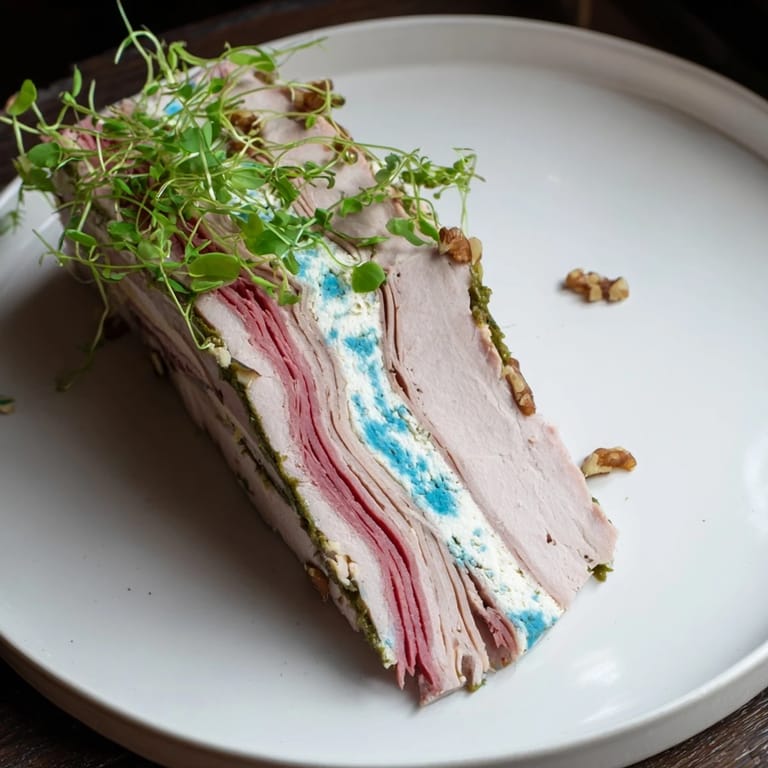
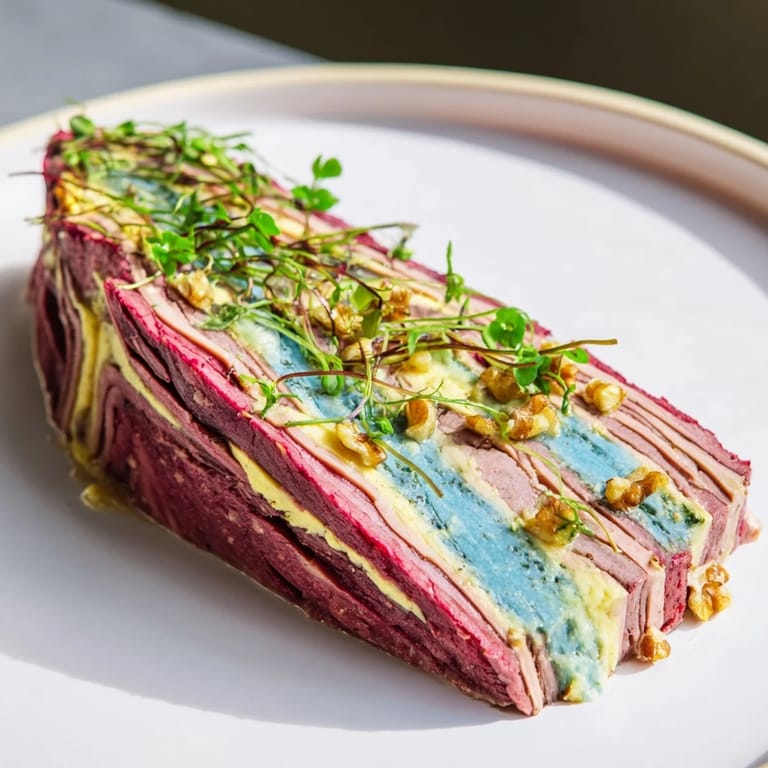
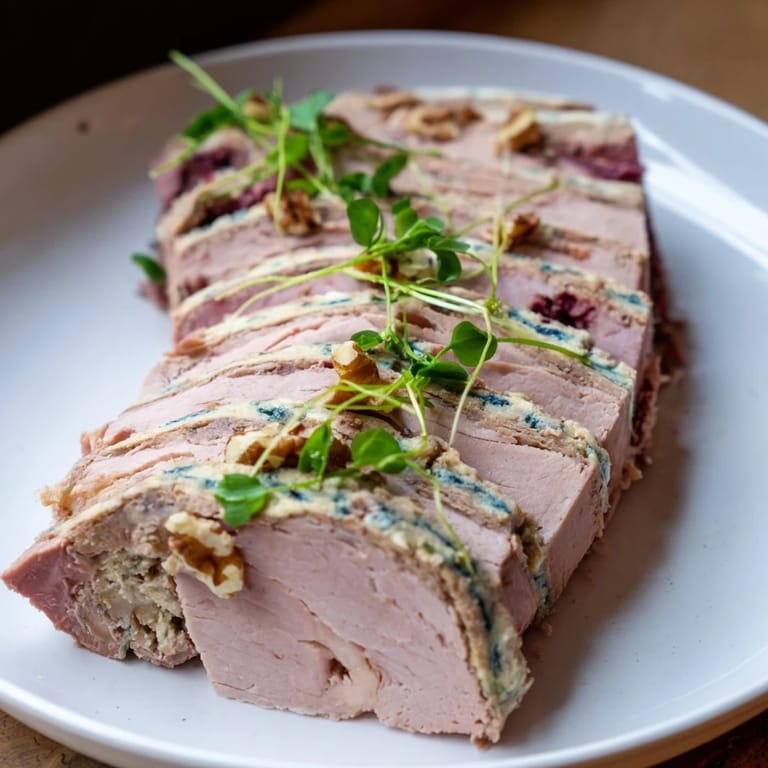
The first time I actually made this, it was for a dinner party that felt slightly ambitious—maybe too ambitious. I remember my hands shaking a little as I carefully arranged those meat layers, worried the whole thing would collapse or look like a mistake instead of intentional art. But when I unmolded it and saw those striated meats with that vivid blue vein running through the center, the room went quiet for just a moment. That silence was worth every minute of fussing.
Ingredients
- Beef sirloin, thinly sliced (300g): Choose a cut with good marbling; it adds depth and prevents the terrine from tasting too lean or bland.
- Turkey breast, thinly sliced (250g): Turkey keeps things from feeling too heavy and adds a subtle delicate note between the richer meats.
- Smoked ham, thinly sliced (200g): The smokiness is essential—it echoes that weathered canyon rock feeling and anchors the whole composition.
- Pork loin, thinly sliced (200g): Pork bridges the gap between the beef and turkey textures, adding body without overwhelming.
- Blue cheese, crumbled (150g): Don't hold back on the blue cheese; it's the star, the river everyone came to see. Quality matters here.
- Cream cheese, softened (100g): This smooths out the blue cheese without diluting its personality, making it spreadable through the layers.
- Heavy cream (30ml for river, 60ml for binding): Heavy cream is what transforms the cheese mixture from crumbly to luxurious and bindable.
- Fresh chives and parsley, finely chopped (1 tbsp each): These herbs brighten the cheese river and prevent it from tasting one-dimensional.
- Eggs (4 large): Beaten eggs act as your invisible glue, setting everything once the terrine bakes.
- Whole milk (120ml): Milk dilutes the egg mixture to the right consistency so it binds without turning rubbery.
- Salt and black pepper: Season both your binding layer and blue cheese mousse; seasoning is what separates forgettable from memorable.
Tired of Takeout? 🥡
Get 10 meals you can make faster than delivery arrives. Seriously.
One email. No spam. Unsubscribe anytime.
Instructions
- Set your stage:
- Preheat your oven to 160°C and line a loaf pan with plastic wrap, leaving generous overhang on all sides. This plastic wrap is your safety net—it makes unmolding infinitely easier and less likely to break.
- Make the binding mixture:
- Whisk together eggs, milk, heavy cream, salt, and pepper until completely smooth. This mixture should feel silky and pour easily; if it seems too thick, add a splash more milk.
- Create the blue cheese river:
- Blend blue cheese, cream cheese, heavy cream, chives, parsley, and pepper until you get a spreadable mousse. Taste it—it should be peppery and bold, almost intimidating on its own.
- Build your canyon layers:
- Start laying meat slices overlapping along one side, then add turkey, ham, and pork in alternating layers, letting them slope downward like canyon walls. This is where patience and a steady hand matter; take your time, don't rush.
- Brush and bind:
- After every 2–3 meat layers, brush lightly with your egg mixture. You're not trying to soak anything; just a light whisper of binding liquid to hold the next layers in place.
- River placement:
- About halfway up the pan, spoon that blue cheese mousse down the center in a thick line, then continue layering meats around and over it. Watch how it sits there, bold and unapologetic, exactly like a river carving through stone.
- Seal and bake:
- Fold the plastic wrap overhang over the top and cover everything tightly with foil. Place your loaf pan in a larger roasting dish and fill the dish with hot water halfway up the sides, creating a water bath that will cook this gently and evenly for 1 hour 15 minutes.
- Cool and chill:
- Let it cool to room temperature—don't skip this step, it helps everything set properly—then refrigerate for at least 4 hours, preferably overnight. This waiting is crucial; the terrine needs time to firm up so you can slice it cleanly.
- Unmold and unveil:
- Run a thin knife around the edges, then unfold the plastic wrap and flip everything onto your serving platter. The moment of truth—and it's always worth the suspense.
 Pin This
 I served this at a dinner where my usually skeptical father brought his new girlfriend, and she actually gasped when I sliced it. Not a small reaction, but a genuine gasp. That was the moment I realized this dish wasn't just food—it was something that could change how people thought about what a home-cooked meal could be.
Why Layering Matters
The entire purpose of this terrine is visual and textural storytelling. Each meat layer has a slightly different flavor and texture, and when you bite into a slice, you're tasting all four meats in one bite, plus that shock of blue cheese. It's the opposite of a single-protein dish—it's about complexity and surprise.
Variations on the Theme
Once you understand the structure, you can play with it. Smoked duck replaces turkey beautifully if you want something richer. Herbed goat cheese swaps in for blue cheese if you're cooking for someone who finds blue cheese too assertive. The underlying principle stays the same: alternating proteins with a showstopping center element.
Serving and Pairing
Slice thick enough that the layers don't collapse—about half an inch or so. The richness of the terrine wants something acidic to balance it; a light red wine cuts through beautifully, as does a crisp white. Toasted brioche is almost mandatory, and a simple green salad with a sharp vinaigrette keeps everything from feeling too heavy.
- Microgreens and edible flowers aren't just pretty; they add a pop of freshness and a subtle bitterness that makes the savory-salty layers even more pronounced.
- This dish gets better with time, so if you make it the day before your dinner party, you've just solved most of your timing stress.
- Leftovers are excellent sliced thin and served cold on bread the next day, almost like a composed charcuterie in slice form.
 Pin This
 Every time I make this, I think about that sunset at the canyon and how the best dishes are the ones that try to capture a moment or a feeling. This one succeeds.
Recipe FAQs
- → How do I achieve the layered cliff effect?
Arrange thin slices of beef, turkey, smoked ham, and pork alternating at a slight angle in the loaf pan, brushing with egg mixture between layers to bind and create the downward slope resembling canyon walls.
- → What is the role of the blue cheese mousse?
The mousse adds a creamy, tangy river through the centre of the terrine, enhancing flavor complexity and visual contrast that mimics a flowing river within the layers.
- → How should the terrine be cooked?
Bake it slowly in a bain-marie (water bath) at 160°C (320°F) to ensure gentle, even cooking and maintain moisture.
- → Can I substitute the meats used?
Yes, you can replace some meats with smoked duck or prosciutto for a smoky nuance, adjusting layers as desired.
- → What garnishes complement this dish?
Microgreens, edible flowers, and toasted walnuts add freshness, texture, and visual appeal to serve alongside the terrine.