 Pin This
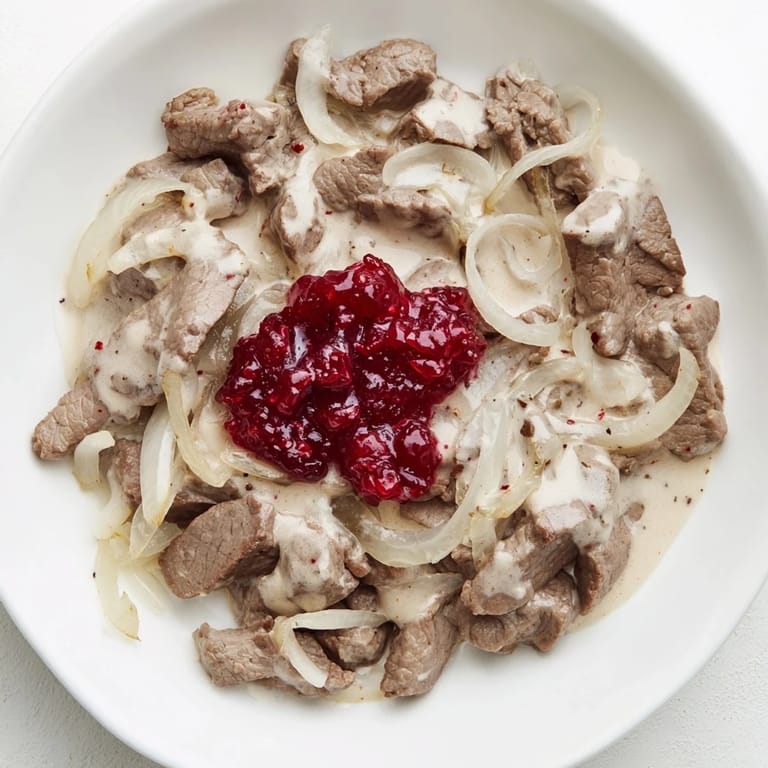
 There's something about the first spoonful of reindeer stew that transports you straight to a Finnish kitchen on a cold evening—rich, earthy, and wrapped in cream that shouldn't work but somehow does. I discovered this dish during a cooking class where the instructor casually mentioned that reindeer had been feeding Nordic tables for centuries, and when braised low and slow, it becomes impossibly tender. The aroma alone—juniper berries releasing their pine-like warmth, onions turning golden and sweet—made me understand why this simple stew has survived generations. What drew me in wasn't just the novelty of the meat, but how the tart lingonberries cut through the richness like a bell being rung at just the right moment. Once I made it at home, I kept coming back to it.
I made this for a small dinner party where one guest mentioned offhandedly that she'd never had reindeer, and watching her face light up when she tasted how silky and tender it was—paired with those bright berries—reminded me that some of the best meals are the ones that feel a little adventurous. By the end of the evening, someone asked for seconds, and that's when I knew this recipe had staying power.
Ingredients
- Reindeer meat (800 g, thinly sliced): If you can't find reindeer, venison carries a similar intensity and tenderness, though beef works when you're starting out.
- Butter and vegetable oil (2 tbsp and 1 tbsp): The combination gives you a higher smoke point and richer browning than either alone.
- Onions (2 medium, finely sliced): Don't rush them—they're the backbone of this stew's sweetness and body.
- Garlic (2 cloves, minced): A moment in the pan is all it needs; any longer and it turns bitter.
- Beef or game stock (300 ml): Use stock that tastes like something, not just saltwater—it carries the whole stew.
- Water (100 ml): This keeps the braise gentle and prevents the stew from becoming too concentrated too quickly.
- Sour cream (150 ml): Add it at the end, off heat or barely simmering, so it stays silky instead of breaking.
- Salt and black pepper: Taste before finishing; the stock may have brought salt already.
- Bay leaves and juniper berries (2 and 5, crushed): The juniper is optional but transforms this from good to authentic—those berries are where the Nordic flavor lives.
- Lingonberry preserves or fresh lingonberries (100 g): Cranberry jam works if you can't find the real thing, though lingonberries have a brighter, almost floral tartness.
Tired of Takeout? 🥡
Get 10 meals you can make faster than delivery arrives. Seriously.
One email. No spam. Unsubscribe anytime.
Instructions
- Sear the meat until golden:
- Heat the butter and oil in a large heavy-bottomed pot until the fat shimmers and smells nutty. Work in batches so the meat browns instead of steaming—this takes patience but builds flavor you can't skip.
- Coax sweetness from the onions:
- After removing the meat, add your sliced onions to the same pot with its browned bits clinging to the bottom. Let them soften and turn translucent, around 5 minutes, then add the garlic for just 1 minute until fragrant.
- Return and layer the braise:
- Nestle the browned meat back into the pot with the onions, then add salt, pepper, bay leaves, and crushed juniper berries. Pour in the stock and water, enough to almost cover the meat.
- Simmer gently for 1½ hours:
- Bring it to a gentle simmer, cover the pot, and let time do the work. Stir occasionally and listen for a quiet, steady bubble—you want a whisper, not a rolling boil, or the meat toughens.
- Reduce briefly, then cream:
- After the meat is fall-apart tender, uncover and simmer for 10 more minutes to concentrate the braising liquid slightly. Remove from heat, let it cool just a minute, then stir in the sour cream gently until the stew is silky and pale.
- Taste, adjust, and serve:
- A pinch more salt, a crack of pepper—taste and trust your instincts. Serve over mashed potatoes with a generous spoonful of lingonberries alongside.
 Pin This
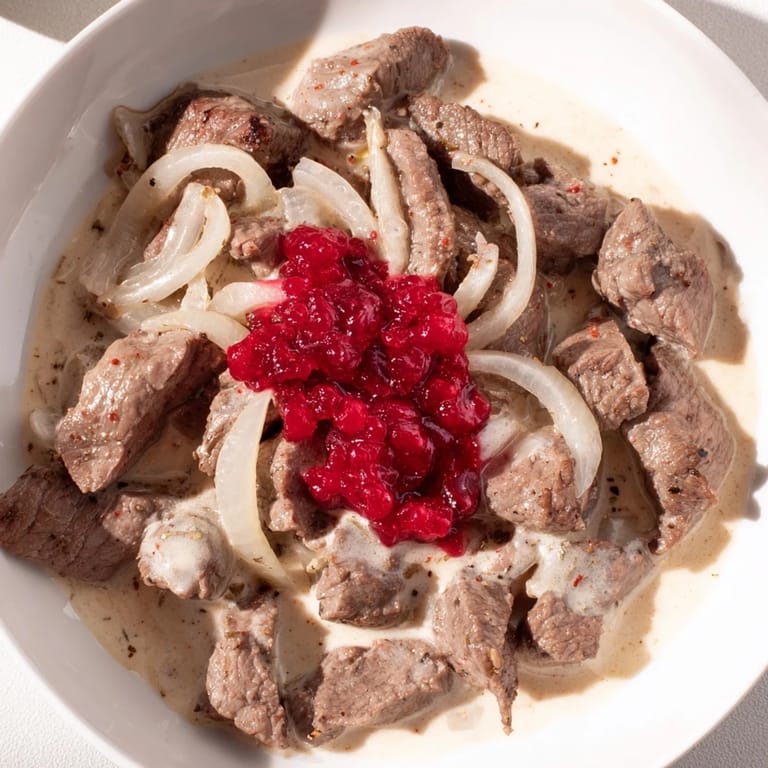
 The moment I served this at a winter dinner and watched someone take their first spoonful, lean back, and close their eyes—that's when I realized this stew does something beyond nourishment. It tells a story about cold forests, long nights, and the generosity of slow cooking.
The Nordic Magic of Juniper
Juniper berries aren't just a garnish here; they're the thread connecting this stew to generations of Nordic cooks who foraged for them in autumn forests. When you crush them lightly before adding to the pot, they release oils that smell like pine needles and gin, and they cut through the richness of the meat and cream in a way nothing else quite does. If you can't find them, the stew is still good—but it loses that whisper of wilderness that makes it feel authentic.
Lingonberries: The Tart Counterpoint
The tart brightness of lingonberries isn't an accident or an afterthought; it's essential balance. Without them, the stew can feel heavy after a few spoonfuls. With them, each bite feels complete—the creaminess, the tender meat, and that unexpected tartness that wakes up your palate and makes you reach for another spoonful. Fresh lingonberries are rare outside Scandinavia, so preserves are traditional and honestly better—they've been cooked down to concentrate their brightness.
Building Depth in Your Braise
This stew teaches you something fundamental about low-and-slow cooking: time transforms tough cuts into silk, and aromatics build layers if you let them. The onions become sweet, the meat surrenders, and the braise liquid turns silky. One small adjustment I've learned to make: if you have dark beer or red wine in the kitchen, a splash mixed with the stock deepens everything without overwhelming it.
- Taste the stew twice—once before the sour cream, once after—so you understand how cream changes what you're tasting.
- Mashed potatoes aren't just a side; they're your vessel for soaking up every bit of that creamy, rich sauce.
- Leftover stew tastes even better the next day, which is the highest compliment a braise can receive.
 Pin This
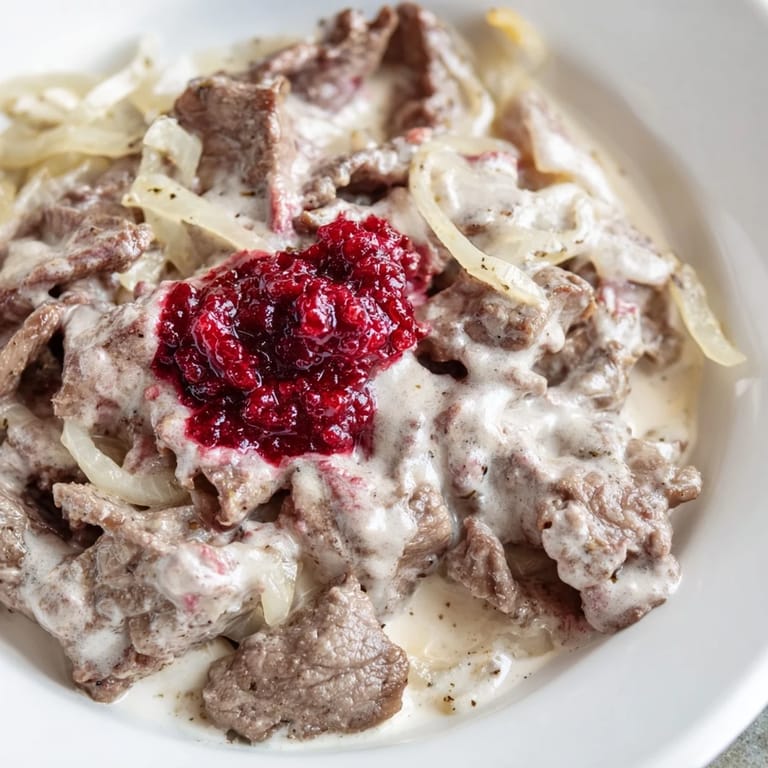
 This is the kind of stew that reminds you why people gather around tables when it's cold outside. It's worth the effort, worth seeking out the ingredients, and worth keeping in your rotation.
Recipe FAQs
- → Can I substitute reindeer meat?
Yes, venison or beef are great alternatives that maintain a similar rich flavor and texture.
- → What sides pair well with this dish?
Mashed potatoes are traditional, but root vegetables or pickled cucumbers also complement the flavors nicely.
- → Are juniper berries essential?
Juniper berries add distinct earthy notes but can be omitted if unavailable without losing the dish's essence.
- → How long should the meat be cooked?
Simmer the meat on low heat for about 1½ hours until it becomes very tender and flavorful.
- → Can I add wine or beer to the broth?
Adding a splash of dark beer or red wine enhances the depth of flavor in the slow-cooked broth.