 Pin This
 My grandmother kept a small jar of dried cod on a high shelf in her Oslo kitchen, wrapped in brown paper like it held ancient secrets. Every December, without fail, she'd pull it down and begin the ritual of soaking—five days of patience that transformed brittle, yellowed fish into something tender and almost luxurious. The first time I watched her do this as a teenager, I thought she was mad, but when that creamy mustard sauce hit the pale, flaky fish, I understood. Lutefisk isn't just food in Norway; it's a conversation with tradition, a way of saying we remember who we are.
I made this for my Swedish boyfriend the first winter we lived together, nervous he'd judge my family's most prized dish. He was skeptical until he tasted it, then he went quiet—the kind of quiet that means something just clicked. Now he jokes that he married me for the mustard sauce, but I know he means it a little bit.
Ingredients
- Dried cod (lutefisk): Look for proper lutefisk, not rehydrated or pre-soaked versions; the whole point is transforming something ancient and hard into something sublime through time and care.
- Cold water for soaking: Use filtered or very clean water and change it daily—this step matters more than any recipe step, honestly.
- Coarse salt: The salt draws out excess moisture after soaking; don't skip this small step.
- Unsalted butter and flour: A classic roux base for the sauce; the butter should be real and the flour fresh.
- Whole milk: Whole milk makes the sauce luxurious, but you can use cream if you're feeling rich.
- Dijon and whole-grain mustard: Use good-quality mustard; this sauce rises or falls on the mustard you choose.
- Sugar: Just a teaspoon balances the mustard's sharpness, rounding everything out.
- Boiled potatoes and crispbread: Serve alongside to catch the sauce and add texture—crispy bread against soft fish is the contrast that makes it work.
Tired of Takeout? 🥡
Get 10 meals you can make faster than delivery arrives. Seriously.
One email. No spam. Unsubscribe anytime.
Instructions
- Start the transformation:
- Rinse your dried cod under cold water until the water runs clear, breaking it gently into manageable pieces. Submerge everything in a large container filled with cold water, making sure the fish is completely covered, then settle in for five to six days of daily water changes—this is where the magic truly begins, each fresh water drawing out the salt and strangeness until what remains is tender and ready.
- Salt and rest:
- After your final water change, drain everything well, sprinkle the fish generously with coarse salt, and let it sit for exactly thirty minutes. This salt pulls out final moisture; rinse it away gently and pat the fish dry with paper towels until it's no longer slick.
- Bake gently:
- Heat your oven to 200°C, arrange the dried fish in a baking dish, cover it loosely with foil, and slide it into the oven for twenty-five to thirty minutes. You're looking for the moment when it turns opaque and flakes easily with just a fork—don't rush this, and don't let it brown.
- Build the sauce:
- In a medium saucepan over medium heat, melt butter until it's foaming slightly, then whisk in flour and cook for just one minute, stirring constantly so it stays pale and doesn't brown. Slowly pour in your milk while whisking continuously, moving steadily to avoid lumps, then let it simmer for three to four minutes until it thickens into something glossy and smooth.
- Add the mustard magic:
- Stir in both mustards, the sugar, a pinch of salt, and a few grinds of white pepper, tasting as you go. The sauce should taste boldly mustardy but balanced by the cream and sugar—adjust until it feels right to you, then keep it warm while you plate.
- Come together:
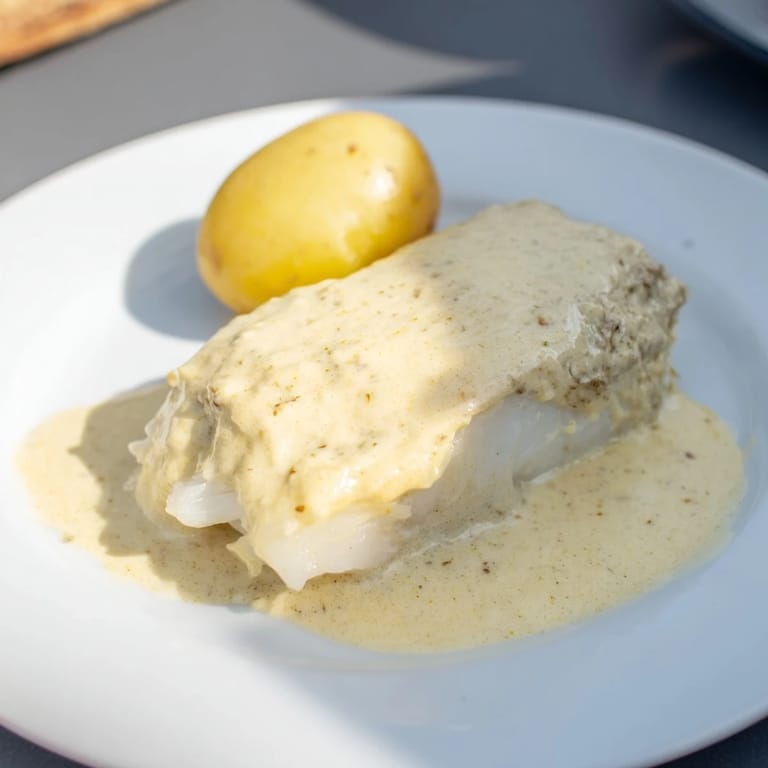
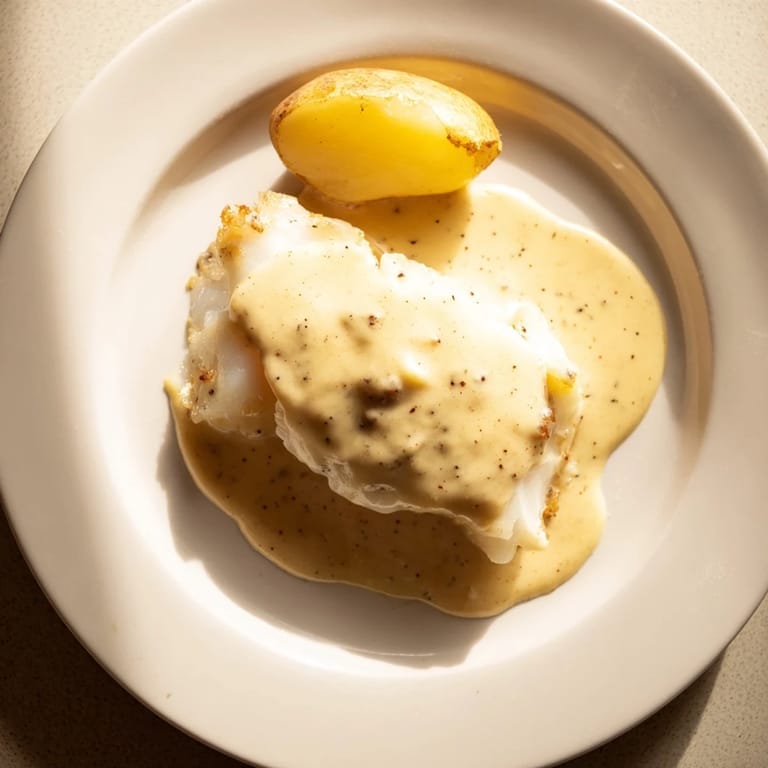
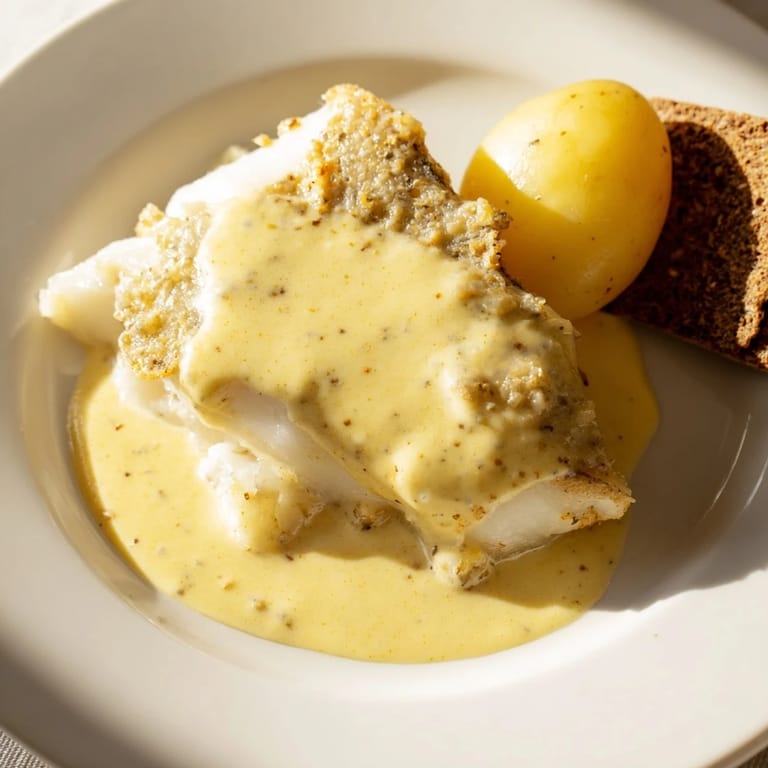
- Arrange your hot lutefisk on a plate alongside boiled potatoes and a slice of crispbread, then spoon that creamy mustard sauce generously over everything. A scatter of fresh parsley adds color, but it's optional—the dish is already beautiful.
 Pin This
 There's a moment every December when my kitchen fills with that particular smell—milky, mustardy, with a faint undertone of the sea—and suddenly it doesn't feel like just cooking anymore. It feels like continuity, like my grandmother's hands and mine are doing the same thing, separated by decades but connected by this one dish. That's when I know I've gotten it right.
Why This Dish Matters Beyond the Kitchen
Lutefisk exists in a strange space between survival and celebration. In earlier centuries, it was a way to preserve fish through long Nordic winters; today, it's a declaration of identity. Making it is slower than necessary, harder than modern cooking demands, and that's precisely the point. You're not optimizing for speed or efficiency; you're honoring a way of doing things that said your time and patience matter.
The Sauce as Redemption
Here's something I didn't understand until I'd made this dish a dozen times: the mustard sauce isn't optional flavoring—it's the translator between old Norway and your kitchen today. The fish is subtle and almost neutral; the sauce is where personality lives. A good mustard sauce turns lutefisk from something historical into something you actually want to eat, and that's not a compromise, it's kindness.
How to Make It Your Own
Tradition is a starting place, not a prison. I've made this sauce with smoked mustard instead of Dijon, added a touch of horseradish for heat, even stirred in fresh dill when I had it on hand. The base stays the same—butter, flour, milk, mustard, a whisper of sugar—but what you build from there is your story. Some people serve it with bacon bits fried until crispy, others with soft peas stirred in warm, still others with nothing but bread to soak up every drop.
- If you want to add green peas, warm them gently in the finished sauce rather than cooking them separately.
- Crispy bacon scattered over the fish at the last moment adds a textural contrast that feels festive and fun.
- A small dollop of sour cream stirred into the sauce at the very end makes it even richer, if your kitchen is ready for that kind of decadence.
 Pin This
 Make this dish when you want to sit down with people and take your time. It's not fast food; it's the opposite. It's an invitation to slow down, to taste carefully, to remember that some foods carry stories bigger than any single meal.
Recipe FAQs
- → How long should the dried cod soak before cooking?
The dried cod requires 5 to 6 days of soaking in cold water, with daily water changes, to rehydrate properly and reduce saltiness.
- → What is the best way to bake the fish for optimal texture?
Place the soaked cod in a baking dish, cover with foil, and bake at 200°C (390°F) for 25-30 minutes until the fish is opaque and flakes easily.
- → How is the mustard sauce prepared without lumps?
Whisk butter and flour over medium heat for 1 minute, then slowly add milk while whisking constantly. Simmer until thickened before adding mustards and seasoning.
- → Can the flour in the mustard sauce be substituted for gluten-free options?
Yes, all-purpose flour can be replaced with gluten-free flour to accommodate gluten-free diets without compromising the sauce's texture.
- → What traditional sides accompany the dish?
Boiled potatoes and crispbread or flatbread commonly accompany the fish, enhancing the meal with complementary textures and flavors.
- → Are there common allergens to be aware of in this dish?
The dish contains fish, milk, mustard, and possibly gluten if regular flour is used, so check ingredient labels carefully to manage allergens.