 Pin This
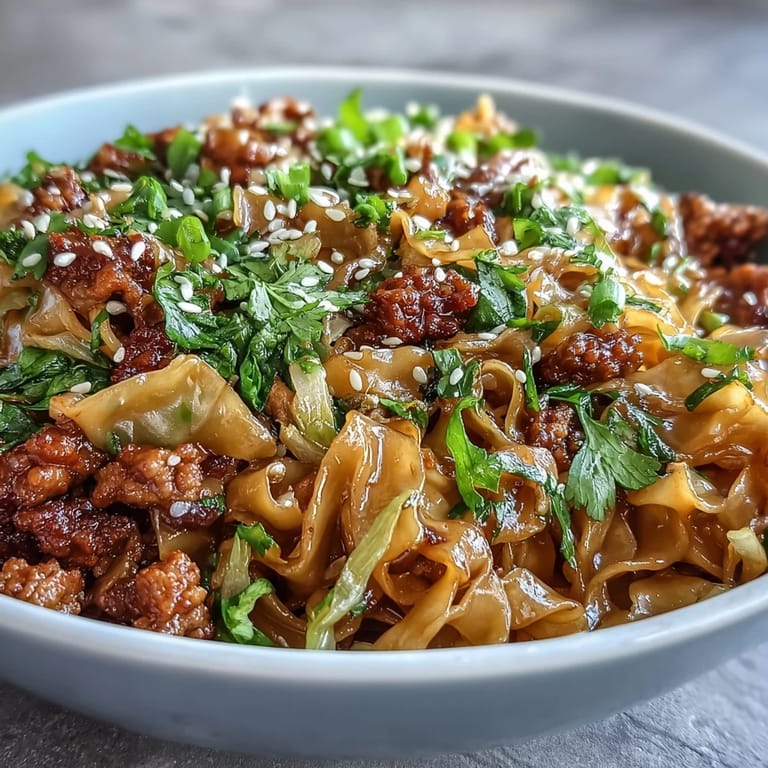
 The smell of sesame oil hitting a hot pan always brings me straight back to that tiny kitchen where counter space was a luxury and inspiration came from leftovers. I had a pack of rice noodles, some ground pork thawing on the counter, and a serious craving for dumplings I didn't have the patience to fold. What started as a shortcut dinner turned into something I now crave more than the real thing: all those savory, gingery, slightly sweet dumpling flavors tossed with tender noodles and piled high with crisp vegetables. It's messy, satisfying, and completely unfussy.
I made this for a friend who swore she didn't like ground pork, and I watched her go back for seconds without a word. The trick was browning it hard enough to get those crispy, caramelized edges that taste more like a pan-fried dumpling than anything out of a pot. She asked for the recipe before she even finished her bowl. Now every time I make it, I think of her sitting at my kitchen counter, speechless and chewing, which is the highest compliment I know.
Ingredients
- Rice noodles: They turn silky and slick when tossed with the sauce, and they don't fight for attention like heavier wheat noodles sometimes do.
- Ground pork: The seasoning mix turns it into something that tastes exactly like dumpling filling, especially when you let it sit and get a little sticky before cooking.
- Soy sauce, rice vinegar, and sesame oil: This trio is the backbone of the sauce, bringing salty, tangy, and nutty all at once.
- Chili-garlic sauce: It adds just enough heat and funk to wake everything up without overwhelming the other flavors.
- Fresh ginger and garlic: The aromatics that make your kitchen smell like a dumpling house; don't skimp or use the jarred stuff.
- Cabbage and carrots: They give crunch and freshness, plus they soak up the sauce in all the right ways.
- Green onions and cilantro: Bright, grassy, and essential for that final pop of flavor right before you dig in.
Tired of Takeout? 🥡
Get 10 meals you can make faster than delivery arrives. Seriously.
One email. No spam. Unsubscribe anytime.
Instructions
- Prepare the noodles:
- Boil them until they're just tender, then drain and toss with a few drops of oil so they don't turn into a gummy clump while you cook everything else. Keep them nearby.
- Season the meat:
- Mix the soy sauce, sesame oil, cornstarch, pepper, sugar, and salt right into the raw pork, working it gently until it feels tacky and cohesive, like dumpling filling should. Let it sit while you prep the vegetables.
- Make the sauce:
- Whisk everything together in a bowl until the sugar dissolves and the sauce tastes balanced: salty, sweet, tangy, and a little spicy. Adjust now, because it's much easier than trying to fix it in the pan later.
- Prepare the vegetables:
- Slice everything thin and uniform so it cooks evenly and quickly. Keep the green onion whites separate from the greens; the whites go in early for flavor, the greens go on top for freshness.
- Brown the meat:
- Heat the oil until it shimmers, then add the pork in an even layer and resist the urge to stir it for a full two minutes. Those crispy, golden edges are where all the flavor lives.
- Add aromatics:
- Push the meat aside, add a little more oil, then toss in the garlic, ginger, and white parts of the green onions, stirring until they smell incredible. Mix everything together so the aromatics coat the meat.
- Cook vegetables:
- Start with the mushrooms, let them soften and brown a bit, then add the cabbage and carrots, stirring frequently until the cabbage wilts but still has some bite. If the pan looks dry, add a splash of water to keep things moving.
- Combine with sauce:
- Pour the sauce over everything and toss well, letting it bubble and thicken for a minute or two. The sauce should cling to the meat and vegetables, not pool at the bottom of the pan.
- Add noodles:
- Toss the noodles into the skillet and use tongs to lift and turn everything together until every strand is coated. Add a little water if it looks dry, and toss in the bean sprouts at the very end if you're using them.
- Finish and serve:
- Taste and adjust with more soy sauce, chili paste, or a squeeze of lime, then stir in half the green onion tops. Divide into bowls and pile on the rest of the green onions, cilantro, and sesame seeds before serving.
 Pin This
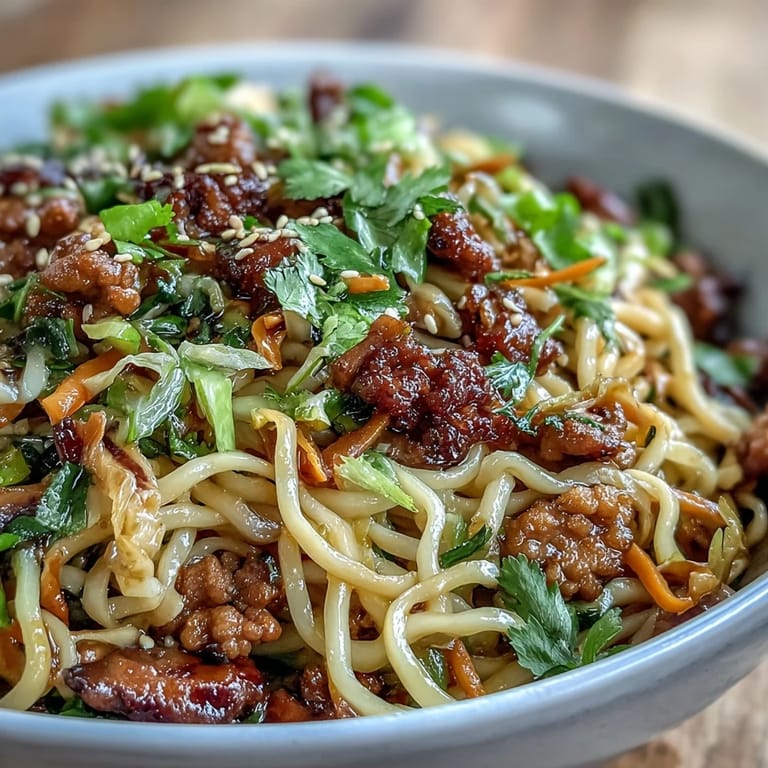
 There was a night when I made this for myself after a long day, and I ate it straight out of the skillet standing at the stove, too hungry to bother with a bowl. The noodles were glossy, the pork was crispy, and the sauce had that perfect balance of salty and sweet that made me keep going back for one more bite. It wasn't fancy, but it felt like exactly what I needed, and that's when I realized this recipe had earned a permanent spot in my rotation.
How to Get the Best Texture
The secret to noodles that don't clump or turn mushy is all in the timing and the toss. Cook them just until tender, drain them fast, and give them a quick rinse with cold water to stop the cooking. Toss them with a tiny bit of oil, then let them sit while you cook everything else. When you add them to the skillet at the end, use tongs or chopsticks to lift and turn them gently, not mash them around with a spoon. If they look dry, add water a tablespoon at a time, not more sauce, or everything will get too salty.
Making It Your Own
This recipe is incredibly forgiving when it comes to swaps and additions. Ground chicken or turkey work just as well as pork, and I've even used crumbled tofu when I wanted to keep it plant-based. You can toss in snap peas, baby bok choy, or thinly sliced bell peppers depending on what's in your fridge. If you like it spicier, double the chili-garlic sauce or drizzle on some chili oil at the end. A soft-boiled egg on top turns it into something almost luxurious, and a handful of chopped peanuts adds crunch and richness that feels restaurant-worthy.
Storage and Reheating
Leftovers keep well in the fridge for up to three days, though the noodles will soak up more sauce as they sit, which honestly isn't a bad thing. When you reheat, add a splash of water or broth to the pan or microwave-safe bowl to loosen everything back up, and stir gently so the noodles don't break apart. The vegetables will soften a bit more, but the flavors deepen overnight, and I've been known to eat cold noodles straight from the container for breakfast more than once.
- Store in an airtight container and keep the garnishes separate so the cilantro and green onions stay fresh.
- Reheat gently on the stovetop with a few tablespoons of water, stirring often, or microwave in 30-second intervals.
- If the noodles seem dry after storing, don't add more soy sauce: just add water or broth to bring back the silky texture.
 Pin This
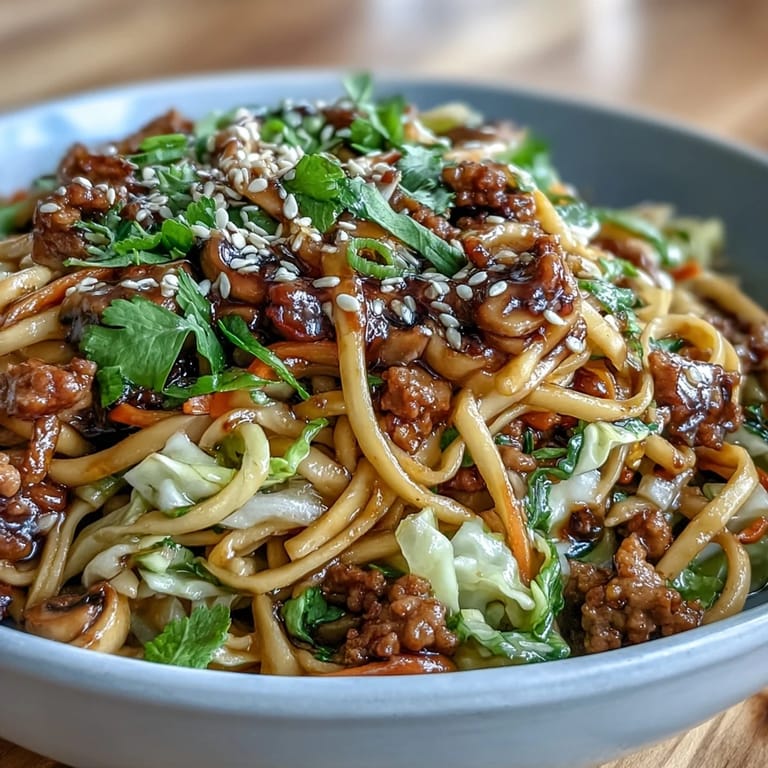
 This bowl has become my go-to when I want something that feels like a treat but doesn't require much thought or skill. It's warm, savory, and just a little bit indulgent, and it never fails to hit the spot.
Recipe FAQs
- → Can I use different types of noodles?
Rice noodles, lo mein, udon, or even spaghetti work well. Rice noodles keep this gluten-free when using tamari. Wheat noodles absorb the sauce beautifully and add a chewy texture that complements the crisp vegetables.
- → What's the best way to achieve crispy meat edges?
Let the seasoned ground meat cook undisturbed for 2–3 minutes in a hot skillet before breaking it up. This allows the meat to caramelize and develop those crispy, browned edges that add texture and depth of flavor.
- → Can I make this vegetarian?
Use crumbled firm tofu, plant-based ground meat, or shiitake mushrooms in place of the pork. Season the same way with soy sauce, sesame oil, and aromatics. The sauce provides plenty of umami richness.
- → How spicy is this dish?
The chili-garlic sauce adds moderate heat. Start with 1 teaspoon and adjust to your preference. You can also serve extra chili-garlic sauce at the table so everyone can customize their spice level.
- → Can I prepare components ahead?
The sauce can be mixed 2–3 days ahead and stored refrigerated. Vegetables can be shredded a day in advance. For best results, cook the meat and noodles fresh, though leftovers reheat beautifully with a splash of water or broth.
- → What vegetables work best?
Shredded green cabbage, carrots, and shiitake mushrooms are ideal for their crunch and quick cooking time. You can also add baby bok choy, snap peas, bell peppers, or napa cabbage depending on what's available.