 Pin This
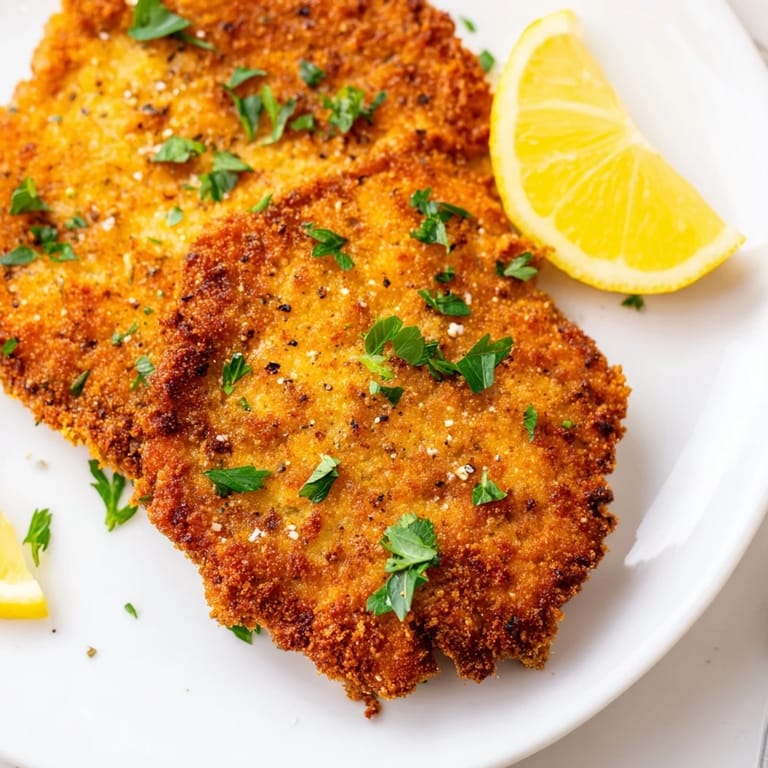
 I learned to make schnitzel by accident, really. My grandmother's kitchen in Hamburg smelled like hot butter and lemon, and I was supposed to be just watching, but she handed me the meat mallet with this knowing look. The pork was so thin it was almost translucent when I finished, and she nodded once—that was approval. By the time those golden cutlets came out of the pan, I understood why this simple dish had survived generations.
There was a night when I made this for friends who'd just moved in next door, and the smell traveled through their open windows before they even arrived. One of them said it smelled like home, though she'd never had schnitzel before. That's when I realized this dish has a kind of permission built into it—it makes people feel welcomed without trying too hard.
Ingredients
- Boneless pork chops or chicken breasts (4 pieces, about 150 g each): The quality here truly matters; ask your butcher for pieces of even thickness, or you'll spend frustrating minutes pounding thick spots thin.
- All-purpose flour (100 g): This first layer seals in moisture and helps the egg mixture grip the meat properly.
- Large eggs (2) and milk (2 tbsp): The milk thins the egg just enough so it clings without pooling; some cooks swear by water instead, but milk gives you a slightly richer coating.
- Fine dry breadcrumbs (150 g): Fresh breadcrumbs will steam and soften; you need the dried kind for that authentic golden crunch.
- Vegetable oil or clarified butter (120 ml): Butterschmalz is traditional and gives a deeper flavor, but neutral oil works beautifully too—the key is maintaining heat without smoking.
- Salt and freshly ground black pepper: Season generously; thin meat forgives nothing, so don't hold back here.
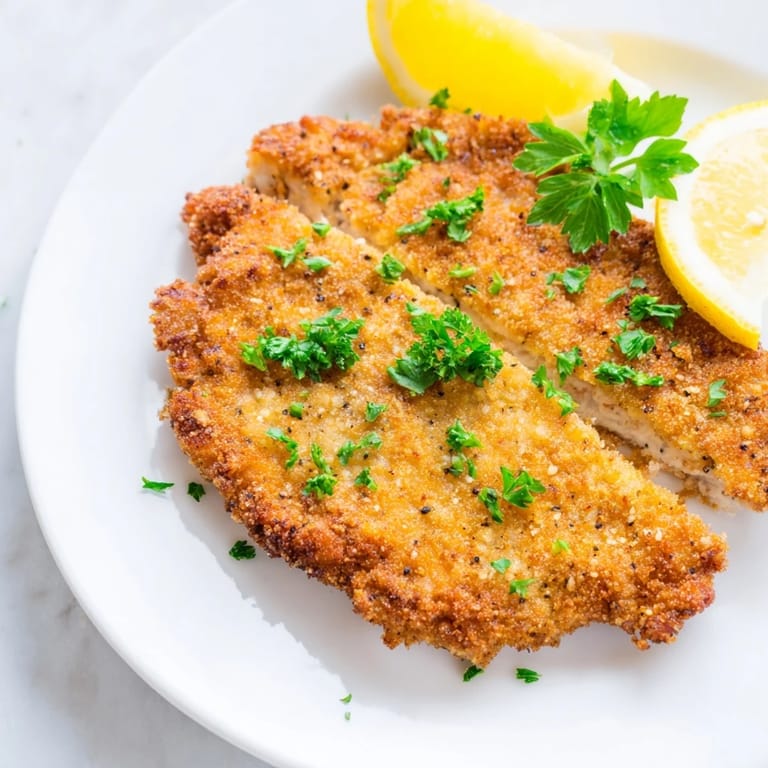
- Lemon wedges and fresh parsley (optional): These aren't decoration—they brighten everything and make the dish feel intentional.
Tired of Takeout? 🥡
Get 10 meals you can make faster than delivery arrives. Seriously.
One email. No spam. Unsubscribe anytime.
Instructions
- Pound the meat to paper thinness:
- Place each piece between plastic wrap and use firm, even strokes with your mallet. You want the meat uniform so it cooks at the same speed; thicker spots will either dry out or stay underdone while you wait for the thin parts.
- Season both sides:
- Don't skip this step—salt now means it penetrates the meat, not just sitting on top of the breading.
- Set up your breading station:
- Three plates in a row: flour, beaten egg with milk, breadcrumbs. Working left to right saves time and keeps your hands cleaner.
- Coat each cutlet with care:
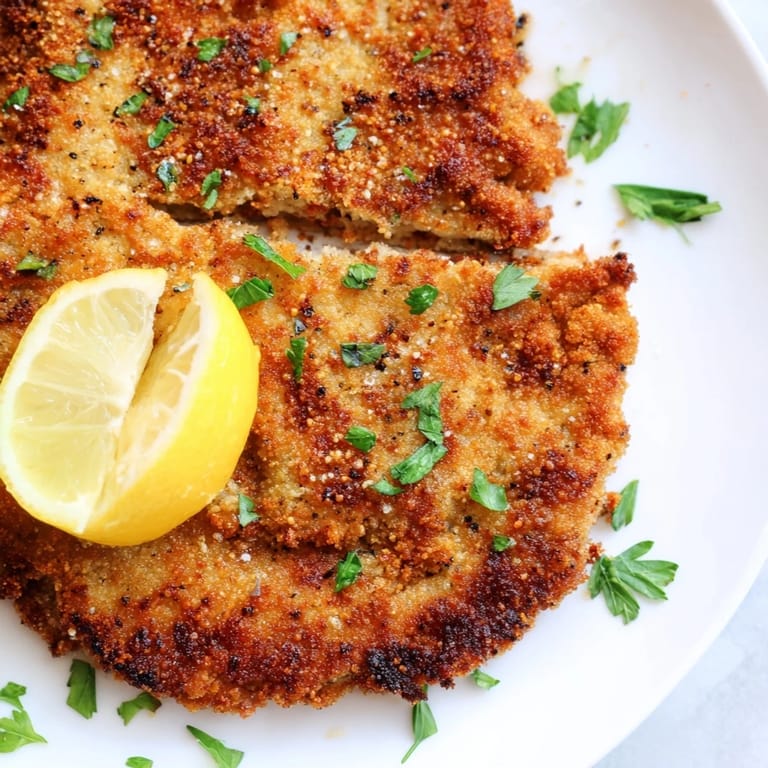
- Flour first, shake off excess, then egg, then breadcrumbs—press gently so they stick but don't compress into a thick shell that won't crisp properly. The breadcrumbs should feel like they're just barely holding on.
- Heat your fat to the right temperature:
- When a single breadcrumb dropped in sizzles immediately, you're ready. This takes about 2–3 minutes on medium-high heat.
- Fry until both sides are deep gold:
- About 2–3 minutes per side depending on thickness and heat. You want that beautiful color before the inside has a chance to dry out.
- Rest on paper towels:
- This drains excess oil and lets the outside stay crispy instead of getting soggy against a warm plate.
 Pin This
 I made this for someone who said they didn't like breaded food, and they finished two cutlets without thinking about it. Afterward, they asked what was different, and I realized it wasn't about the breading—it was about the meat still being tender inside, about respecting the ingredient enough to not turn it into a shell. That's when I understood this dish isn't fancy, but it's careful.
The Pounding Matters More Than You'd Think
The meat mallet teaches you something if you let it: that uniform thickness is everything. I used to rush this part, and the result was always uneven—some parts golden and crispy while others seemed pale and timid. Once I slowed down and really attended to making each piece the same thickness, the whole dish transformed. It's a small patience that changes everything.
Why Lemon Is Not Optional
A schnitzel without lemon is like a sentence without punctuation—technically fine, but missing its voice. The acid cuts through the richness of the frying and wakes up your palate between bites. I've had people squeeze lemon over theirs and suddenly start asking for the recipe, as if the lemon was magic. It isn't magic, but it is clarity.
Building a Meal Around This
The beauty of schnitzel is that it doesn't demand much from its companions. It pairs with potato salad, cucumber salad, simple greens, or even just rice—whatever you have time for. The cutlet itself is already complete; everything else is just conversation at the table.
- Serve with cool cucumber salad on the side for contrast, or warm potato salad if you want comfort.
- A squeeze of lemon at the table beats any sauce; let people dress their own plate.
- If you're feeding a crowd, you can bread the cutlets hours ahead and fry them just before serving.
 Pin This
 This is a dish that never pretends to be something it isn't, and that's exactly why it works. Make it, serve it, watch people relax into the simple pleasure of it.
Recipe FAQs
- → What cut of meat works best?
Boneless pork chops or chicken breasts pounded to about 1/4 inch thickness ensure quick, even cooking and tender results.
- → How do I achieve a crispy crust?
Using fine dry breadcrumbs and frying in hot vegetable oil or clarified butter creates a golden, crunchy coating without sogginess.
- → Can I substitute veal for this dish?
Yes, veal can be used for a traditional Wiener Schnitzel style, offering a delicate flavor and texture.
- → Should I press breadcrumbs firmly onto the meat?
Press breadcrumbs lightly to adhere without compacting, which helps maintain a crisp and airy crust after frying.
- → What sides complement this dish well?
Classic sides include potato salad, cucumber salad, or fries, and pairing with a dry German Riesling or pilsner enhances the flavor.