 Pin This
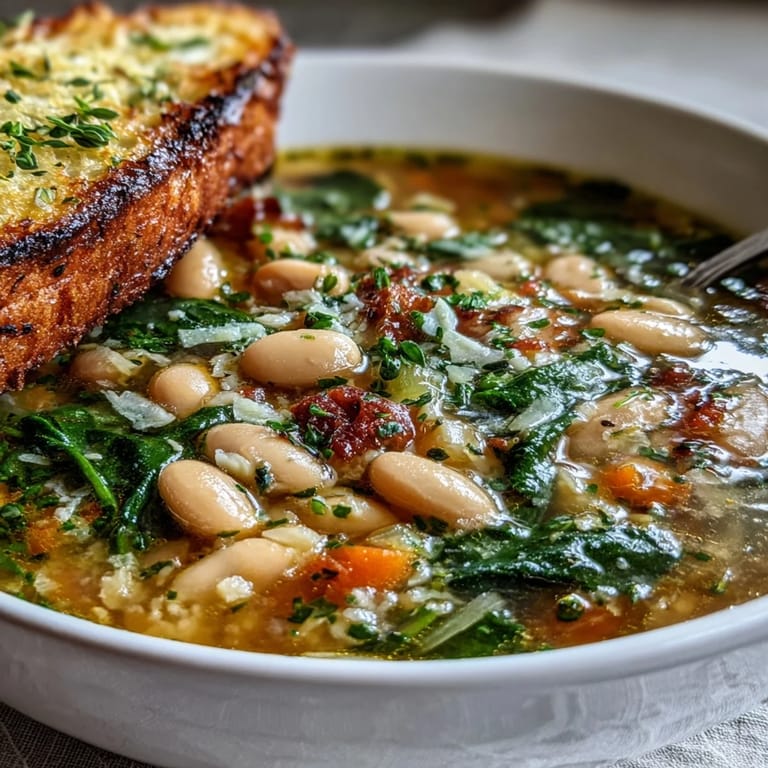
 There's something about a bowlful of Tuscan white bean soup that stops a rushed afternoon cold. My neighbor Maria handed me a thermos of hers one October when I'd been staring at my kitchen wondering what to cook, and after one spoonful I understood why she made it every week. The beans were impossibly creamy, the broth tasted like it had been simmering for hours even though it hadn't, and that crispy garlic bread turned it from a simple soup into something you'd remember. I've been making it ever since, tweaking it slightly each time, but always coming back to that same uncomplicated magic.
I made this for my book club last winter when it was my turn to bring dinner, and people actually got quiet while eating, which never happens at our table. Someone asked for the recipe before dessert even arrived, and now three of them text me pictures of their versions. That's when I realized this soup isn't fancy or complicated, but it has a way of making people slow down and actually taste what's in front of them.
Ingredients
- Extra virgin olive oil: Use the good stuff here since it's a main player, not a background ingredient; drizzle it in generously without guilt.
- Yellow onion, carrots, and celery: This trio is the foundation of almost everything, so dice them evenly so they cook at the same pace.
- Garlic cloves: Mince them fine and don't skip this step; garlic that's chopped unevenly will either burn or not cook through.
- Dried thyme and rosemary: These herbs are the quiet backbone that makes people ask what's in here, so don't be shy with them.
- Dried chili flakes: Optional, but they add a whisper of heat that surprises you in the best way.
- Cannellini beans: Drain and rinse them thoroughly or your soup will be murky and starchy instead of clear and clean.
- Diced tomatoes: A can of good quality matters more than you'd think; they add acidity and brightness.
- Vegetable broth: Taste it before you buy it if you can; some brands taste tinny and will throw off the whole balance.
- Fresh spinach or kale: Spinach wilts faster and is more delicate, while kale holds its shape and has a heartier bite.
- Fresh parsley: Save this for the end as a garnish so it stays bright and fresh tasting.
- Lemon juice: Just a squeeze at the very end can transform the whole bowl if it tastes flat.
- Butter, garlic, and parsley for bread: Softened butter spreads easier than cold, and fresh parsley in the spread makes the bread taste herbaceous and alive.
Tired of Takeout? 🥡
Get 10 meals you can make faster than delivery arrives. Seriously.
One email. No spam. Unsubscribe anytime.
Instructions
- Build your flavor base:
- Heat the olive oil until it shimmers just slightly, then add your diced onion, carrots, and celery. Let them soften for 6 to 7 minutes, stirring occasionally, until they start to turn tender and the kitchen smells sweet and vegetable-forward.
- Wake up the herbs:
- Add the minced garlic, thyme, rosemary, and chili flakes, then cook for just one minute until the smell hits you all at once. You'll know it's right when you can't resist leaning over the pot.
- Build the body:
- Stir in the drained cannellini beans and canned tomatoes, then pour in the vegetable broth. Bring everything to a boil, then lower the heat and let it simmer gently for 20 minutes so the flavors have time to meld and deepen.
- Finish with greens:
- Add your fresh spinach or kale and give it a few minutes to wilt completely. Taste as you go, then season with salt, pepper, and a squeeze of lemon juice if the soup tastes like it needs brightness.
- Meanwhile, prep the bread:
- While the soup simmers, turn on your oven broiler. In a small bowl, mash together the softened butter, finely minced garlic, fresh parsley, and a pinch of salt until it looks like a paste.
- Make the garlic bread:
- Slice your baguette on a slight diagonal so each piece is large enough to hold, then spread the garlic butter mixture over each slice. Lay them on a baking sheet and slide under the broiler for 2 to 3 minutes, watching closely until they're golden and the edges are just starting to char.
- Come together:
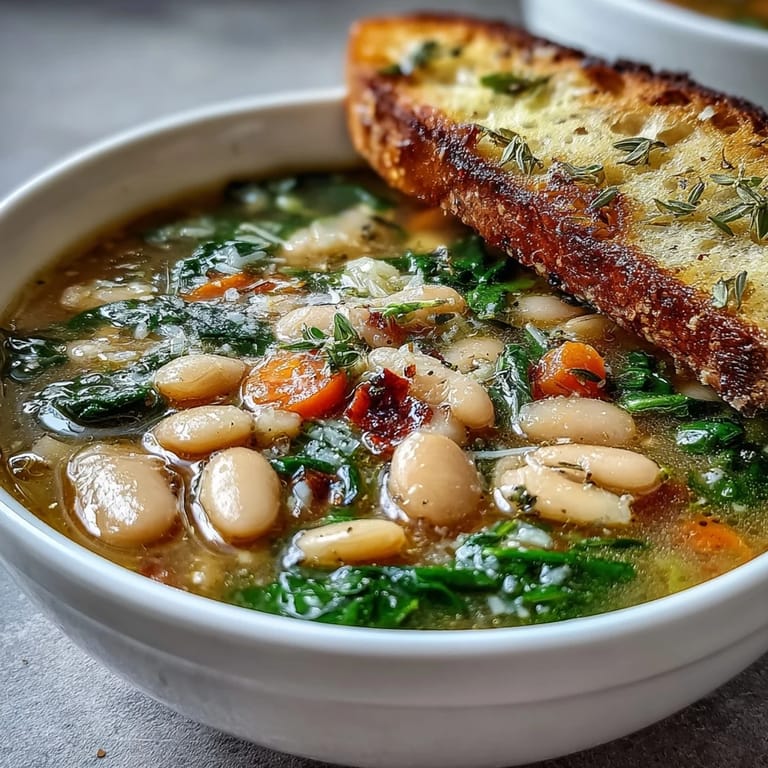
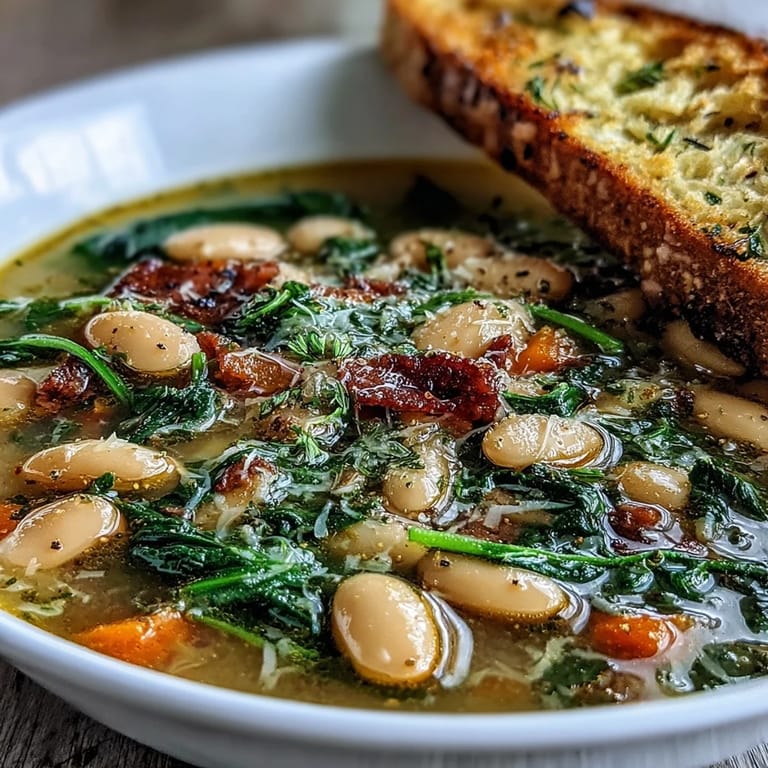
- Ladle the soup into warm bowls, scatter fresh parsley over the top, and serve immediately with the still-warm garlic bread alongside for dipping and soaking.
 Pin This
 I learned something watching my father eat this soup slowly one Sunday: he was savoring it, actually present in a way that doesn't happen much anymore. There's comfort in that kind of eating, the kind where soup stops being sustenance and becomes an excuse to slow down. After that, I understood why Maria made it so often.
How to Make It Creamier
Some versions call for blending the whole thing smooth, but I'm partial to a halfway approach where the soup stays mostly chunky but creamy underneath. Grab a wooden spoon about halfway through simmering and crush some of the beans against the side of the pot, or use an immersion blender to pulse it a few times until you see some of the broth turn cloudy and thick. If you want it even richer, add a Parmesan rind while it simmers and fish it out before serving; the umami it leaves behind is subtle but noticeable.
What Pairs Well With This
This soup feels complete on its own, but it also plays well with others. A crisp white wine like Pinot Grigio cuts through the richness perfectly, or if you're not drinking, sparkling water with a wedge of lemon works just as well. I've served it alongside a simple green salad with a sharp vinaigrette when I wanted something a little lighter, and I've also done it with nothing but bread and called it a meal.
Storage and Reheating Notes
This soup keeps beautifully in the refrigerator for up to four days, and it actually tastes better the next day once the flavors have had time to get to know each other. Reheat it gently over medium-low heat, stirring occasionally, and add a splash of broth or water if it's thickened too much. The garlic bread is best eaten fresh, but leftovers can be wrapped and stored for a day, then warmed in a low oven before serving.
- Make the soup on Sunday and you'll have comforting lunch for half the week with barely any effort on the actual eating days.
- If you're freezing it, leave out the fresh spinach and add it when you reheat, so it doesn't turn to mush.
- A quick rule of thumb: soup always tastes better when you give it time to rest after cooking.
 Pin This
 This is the kind of recipe you make once and then keep making, not because it's impressive but because it works. It asks very little of you and gives back comfort in every spoonful.
Recipe FAQs
- → What ingredients enhance the soup's flavor?
Aromatic herbs like thyme and rosemary, together with garlic and fresh parsley garnish, elevate the rich taste of the white bean base.
- → Can I use a different green than spinach?
Yes, kale is a great alternative that adds texture and nutrition while wilting nicely in the simmering broth.
- → What is the best way to prepare the garlic bread?
Spread softened butter mixed with minced garlic, parsley, and salt on sliced bread, then broil until golden and fragrant.
- → How can I make the soup creamier?
Mashing some beans before adding or partially pureeing the soup with an immersion blender will create a creamier texture.
- → Are there options for vegan or gluten-free variations?
Use plant-based butter alternatives for vegan garlic bread and substitute with gluten-free bread to accommodate dietary needs.
- → What pairs well with this dish to enhance the meal?
A crisp white wine such as Pinot Grigio complements the hearty flavors of the soup and garlic bread nicely.