 Pin This
 The first time I made teriyaki meatballs, it was a Tuesday night when I had exactly four people coming over and no plan. I'd just bought ground beef and a bottle of mirin, and something about the way they smelled together—sweet and salty at once—made me think of this bowl. Two hours later, my kitchen smelled like caramelized honey and soy sauce, and everyone asked for the recipe before they'd even finished eating.
I remember watching my neighbor's daughter, who's usually picky about meat, eat three bowls of these in a row. She kept saying she liked that the meatballs weren't too heavy, and her mom looked at me like I'd performed magic with ground beef and panko. That's when I realized this dish has a way of winning people over without trying too hard.
Ingredients
- Ground beef or chicken: The base—use whichever you have, though beef gives you a richer glaze that clings better.
- Panko breadcrumbs: They keep the meatballs tender and airy; regular breadcrumbs pack too tight.
- Fresh ginger and garlic: Minced small enough that you taste them in every bite, not chunks you have to chew around.
- Soy sauce and sesame oil: These go into both the meatball mix and the sauce, layering the umami so it builds as you eat.
- Mirin and brown sugar: Mirin brings a subtle sweetness and glossy texture that regular sugar can't quite match.
- Rice vinegar: Just enough tang to cut through the richness and keep your palate interested.
- Cornstarch slurry: This thickens the sauce into something that clings to the meatballs instead of pooling at the bottom of the bowl.
- Jasmine or sushi rice: Fragrant enough to stand up to the sauce, and it actually absorbs the flavors instead of staying bland.
- Cucumber and sesame seeds: The crunch and freshness keep every bite from being too sweet or heavy.
Tired of Takeout? 🥡
Get 10 meals you can make faster than delivery arrives. Seriously.
One email. No spam. Unsubscribe anytime.
Instructions
- Start your rice:
- Get it going first so it's warm and ready when everything else comes together. Set it aside somewhere it won't get cold.
- Prep your workspace:
- Line a baking sheet with parchment paper and preheat your oven to 200°C (400°F). This small step saves you from sticking meatballs and uneven cooking.
- Mix the meatball base:
- Combine ground meat, egg, breadcrumbs, garlic, ginger, spring onions, soy sauce, sesame oil, salt, and pepper in a large bowl. Mix gently with your hands until everything is just incorporated—overworking it makes them dense and tough.
- Shape and bake:
- Roll the mixture into 20–24 meatballs about the size of walnuts and space them out on the baking sheet. Bake for 15–18 minutes until golden and cooked through; they should feel firm to a light press.
- Build the teriyaki sauce:
- While the meatballs bake, combine soy sauce, mirin, water, brown sugar, honey, and rice vinegar in a small saucepan. Bring it to a simmer over medium heat, stirring occasionally until the sugar dissolves and the sauce darkens slightly.
- Thicken and gloss:
- Stir in your cornstarch slurry and let it bubble for 1–2 minutes, watching as it goes from thin to glossy and thick enough to coat a spoon. Remove from heat immediately so it doesn't keep thickening.
- Coat the meatballs:
- Transfer the warm meatballs to the sauce and toss gently until each one is coated and glossy. You can do this right in the saucepan or in a separate bowl.
- Assemble the bowls:
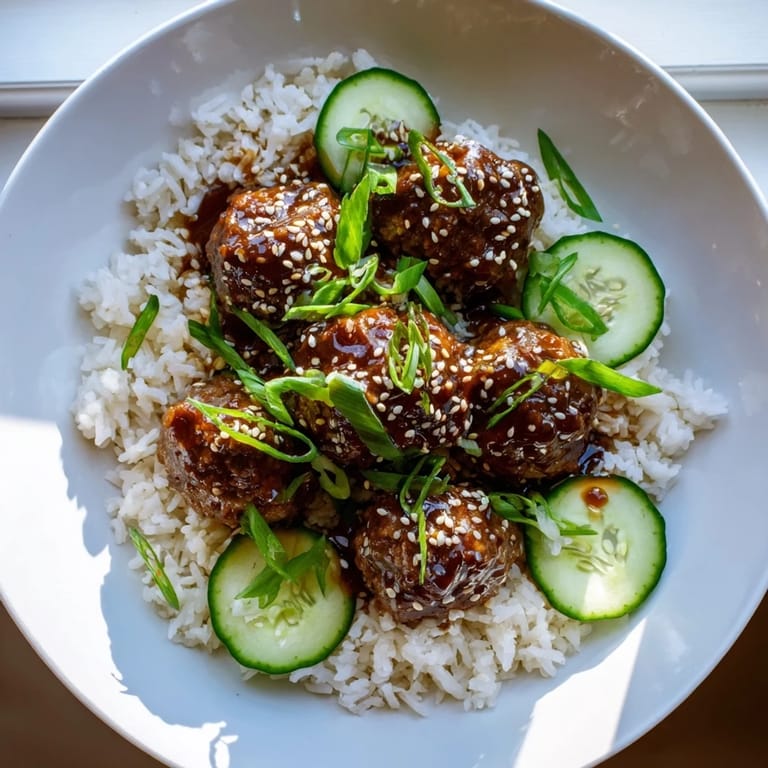
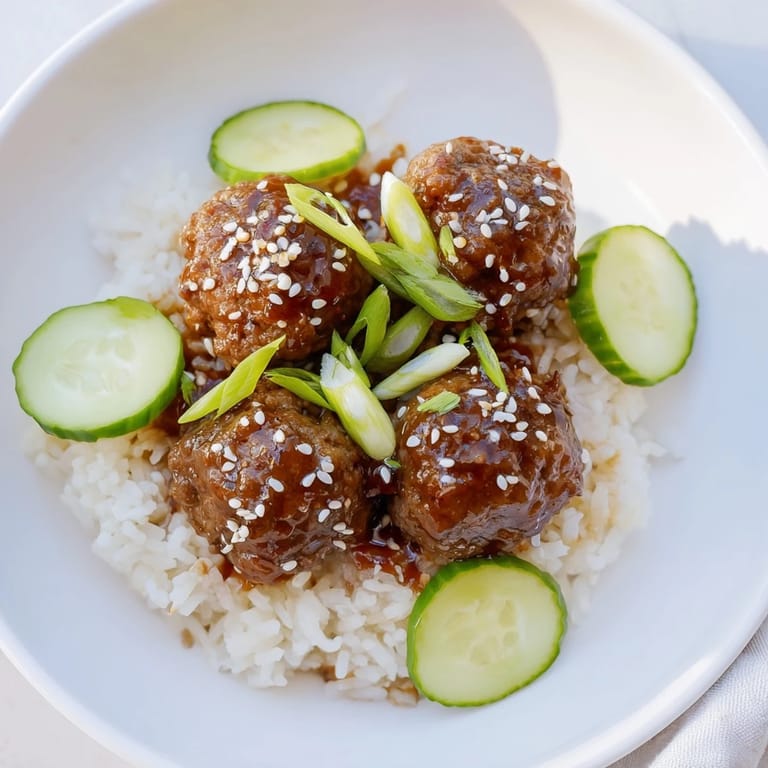
- Divide warm rice among four bowls, top with meatballs and sauce, then add a handful of sliced cucumber, a sprinkle of sesame seeds, and a few slices of fresh spring onion. Serve right away while everything is still warm.
 Pin This
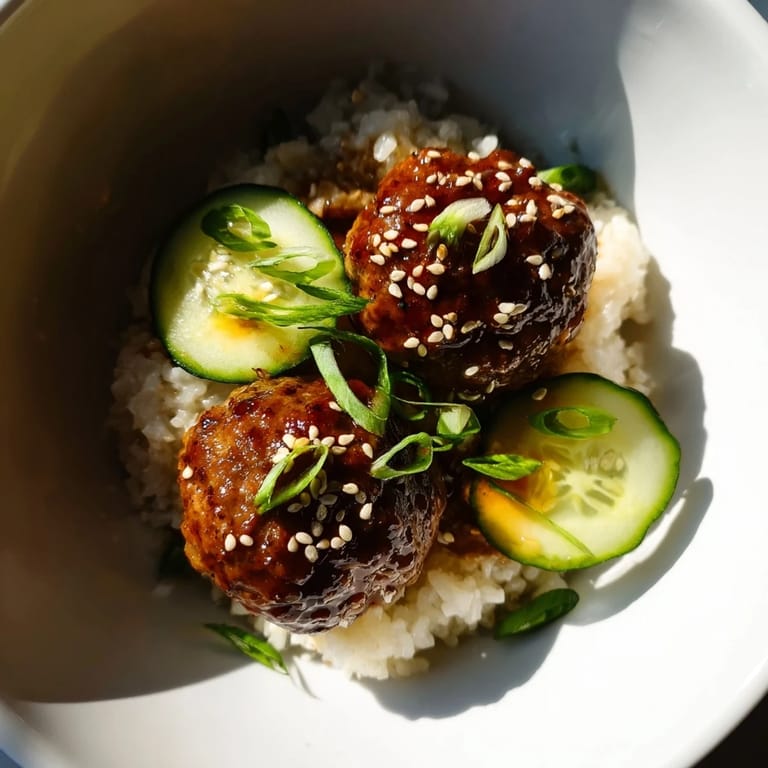
 There was one night when I served these to my partner while we were both exhausted from work, and somehow the combination of soft meatballs, crisp cucumber, and that sticky sauce felt like the first good meal we'd had in weeks. Food doesn't always need occasion; sometimes it just needs to be there at the right moment.
Why the Glaze Makes All the Difference
The teriyaki sauce is where this dish goes from good to craveable. When you combine soy sauce, mirin, and brown sugar together, something happens—the sweetness doesn't taste candy-like because the soy brings salt and depth, and the mirin adds a subtle umami that makes you want another bite. The cornstarch thickens it so it clings to the meatballs like a glaze, not a sauce that runs off onto the rice. I once forgot the mirin and used honey instead, and while it was still good, it tasted flat and one-dimensional. The mirin is what gives it complexity.
Timing and Temperature Matter More Than You'd Think
Baking the meatballs instead of pan-frying them means they cook evenly and you're not stuck hovering over the stove rolling them around. The oven does the work for you, and they come out golden and cooked through in about 16 minutes. When you toss them in the hot sauce right after they come out, the glaze sets slightly and sticks to them as they cool. If you let them sit and get cold first, the sauce just slides off. Timing is everything—have everything ready, and do this in order.
Make It Your Own
The beauty of this bowl is that it's a foundation, not a rule. I've made it with ground turkey when beef was gone, and it came out leaner but still delicious. Add steamed broccoli or edamame if you want more vegetables, or toss in some pickled ginger if you like a sharp kick. For gluten-free, swap tamari for soy sauce and use gluten-free breadcrumbs—the dish works just as well. The rice is there to soak up the sauce, but use whatever grain you have on hand.
- Ground turkey works beautifully and creates a lighter version that's still flavorful.
- Pickled ginger adds a bright, acidic contrast that cuts through the sweetness.
- Make a double batch of sauce and freeze it for quick weeknight dinners later.
 Pin This
 This bowl has become one of those dishes I make when I want to feel like I've really cooked without actually spending hours in the kitchen. It's honest food that tastes intentional.
Recipe FAQs
- → Can I make the meatballs ahead of time?
Yes, you can prepare and bake the meatballs in advance, then toss them in warm teriyaki sauce just before serving for convenience.
- → What rice works best with this dish?
Jasmine or sushi rice are ideal, as they absorb flavors well and provide a soft, fluffy base for the meatballs.
- → How can I make this dish gluten-free?
Use tamari in place of soy sauce and substitute regular breadcrumbs with gluten-free ones for a safe alternative.
- → Are there good substitutions for the meat?
Ground turkey or pork can be used instead of beef or chicken to vary the flavors while keeping the texture tender.
- → What adds extra crunch and freshness?
Thinly sliced cucumber and toasted sesame seeds give a refreshing contrast to the rich meatballs and sauce.