 Pin This
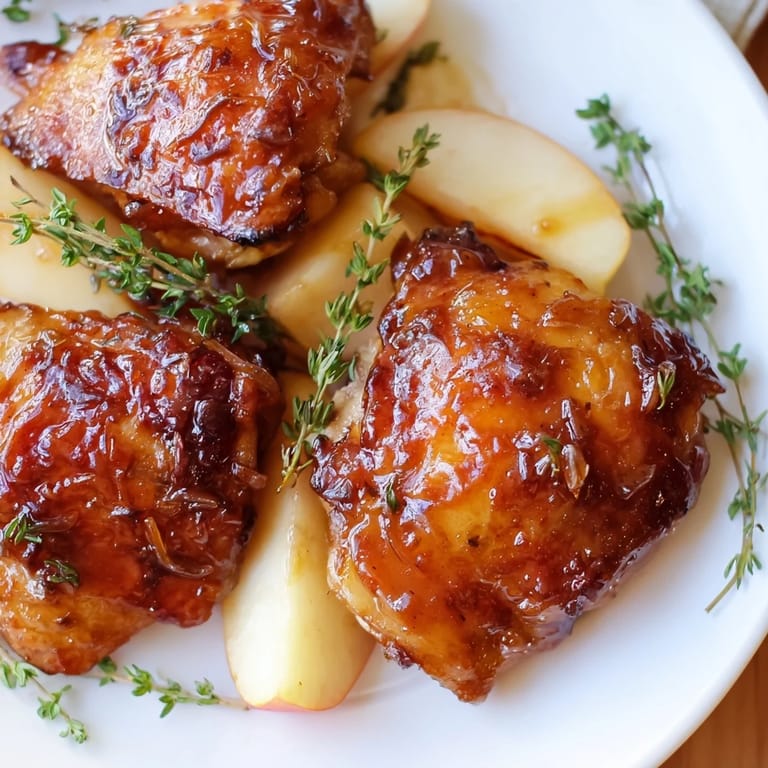
 There's something about the way maple syrup bubbles in a hot pan that made me fall for this chicken dish years ago. I wasn't trying to be fancy that afternoon—just had chicken thighs on hand and a bottle of apple cider I'd bought on a whim at the farmers market. I whisked them together with maple syrup and some mustard, threw it all in the oven, and twenty minutes later the kitchen smelled like autumn had moved in permanently. My partner wandered in mid-cook asking what was happening, and honestly, I was figuring it out as I went. By the time those thighs turned golden and the glaze got thick and sticky, I knew I'd stumbled onto something worth repeating.
I made this for a dinner party last spring, and it became the meal people still mention. One guest asked if I'd learned to cook in France—I laughed and told her the truth, that I'd discovered it by accident and refined it by repetition. What really stuck with them was how the apples softened into the glaze, how the thymes' earthiness cut through all that sweetness just enough. It felt special without feeling pretentious, which is exactly the kind of food I want to cook.
Ingredients
- Bone-in, skin-on chicken thighs: Eight pieces give you room to work with, and the bone keeps everything moist while that skin turns golden and crispy—the best part of eating it.
- Pure maple syrup: Don't reach for the cheap stuff; real maple makes an actual difference in how the glaze tastes and behaves.
- Apple cider: Fresh or unsweetened keeps the balance from tipping too sweet, which is where so many glazed chicken recipes lose me.
- Apple cider vinegar: Two tablespoons might seem small, but that tang is what makes your mouth wake up at the table.
- Dijon mustard: A secret player that adds complexity and helps the glaze stick and thicken without cream or flour.
- Olive oil: Helps everything emulsify and keeps the glaze from becoming too thick or coating-heavy.
- Garlic, thyme, smoked paprika: This trio builds depth—the paprika especially gives a whisper of something smoky that makes people ask what your secret is.
- Apples: Honeycrisp or Gala work best because they hold their shape in the heat and add subtle sweetness that echoes the maple.
Tired of Takeout? 🥡
Get 10 meals you can make faster than delivery arrives. Seriously.
One email. No spam. Unsubscribe anytime.
Instructions
- Prep and preheat:
- Get your oven to 400°F and line a baking dish with parchment—it makes cleanup almost disappear and prevents sticking. Pat those chicken thighs completely dry; this is the one step that really matters for crispy skin.
- Build your glaze:
- Whisk everything together in a bowl—the maple syrup, apple cider, vinegar, mustard, oil, and all the seasonings. Take a moment to taste it; it should hit sweet, tangy, and savory all at once.
- Arrange and nestle:
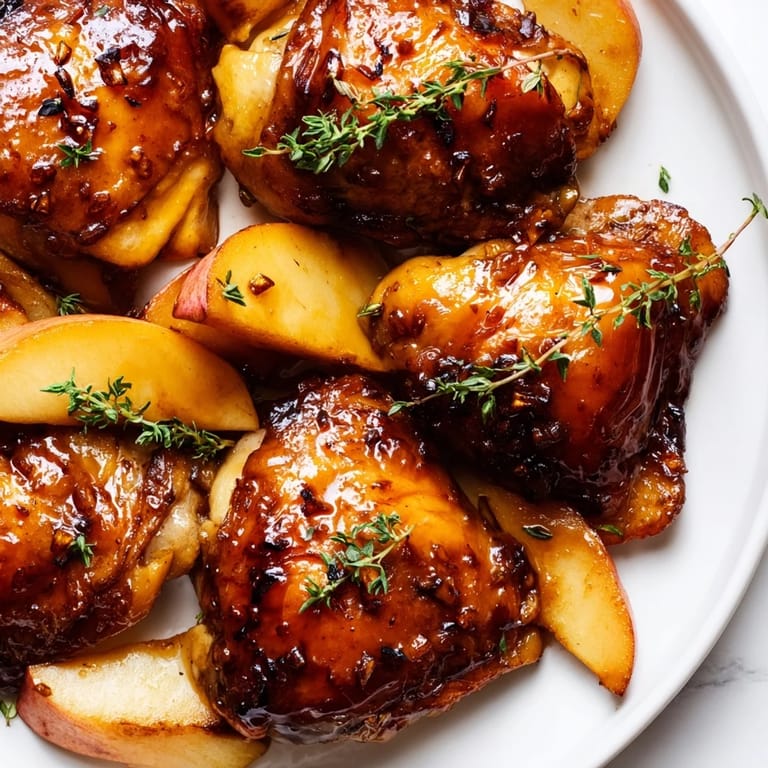
- Place chicken skin-side up in your baking dish and tuck apple wedges around them like you're creating little pockets of flavor. Pour that glaze over everything, making sure the chicken gets a good coat.
- Bake and baste:
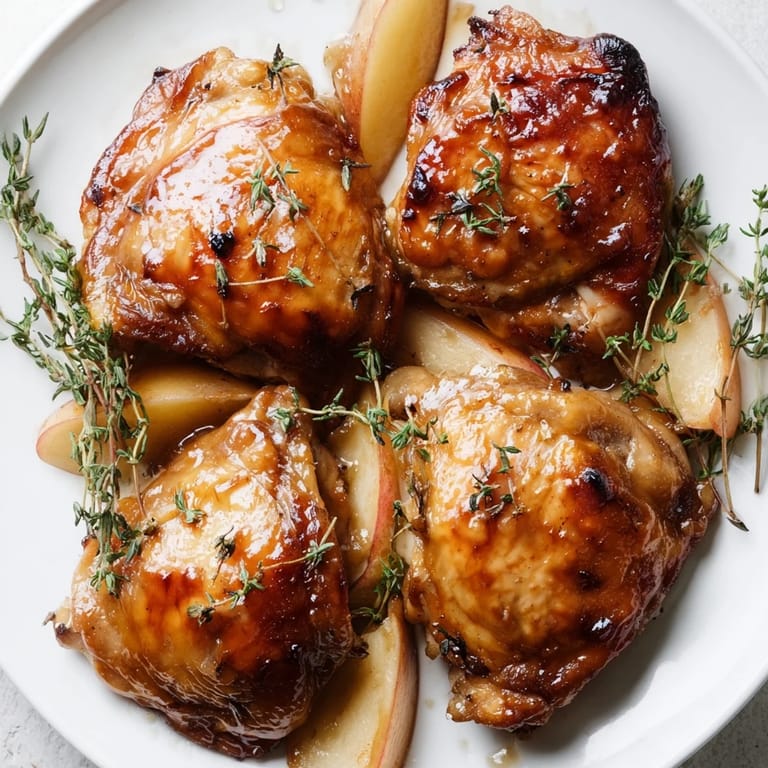
- Slide it into the oven for 30 to 35 minutes, and halfway through, use a spoon or brush to baste those thighs with the pan juices—this is when the magic happens. You'll see the glaze thicken, bubble, and turn dark gold.
- Optional caramelization boost:
- If you want extra sticky-sweet depth, turn on the broiler for the last 2 to 3 minutes, but watch it constantly—broilers move fast.
- Rest and serve:
- Let everything sit for five minutes before plating; this gives the juices a moment to settle. Spoon extra glaze from the pan over each piece, and add fresh thyme if you have it.
 Pin This
 I remember my mom tasting this the first time I made it for her, and she got quiet for a moment in that way that means something hit right. She said it reminded her of holiday dinners but felt modern somehow, like tradition had taken a cooking class. That kind of moment is what keeps me making this dish.
Why Apples Matter Here
The apples aren't just a garnish—they're part of the story. As they bake, they soften into the glaze and release their own sweetness, which mingles with the maple and vinegar into something deeper than any of those flavors alone. I've tried this without them out of curiosity, and it's fine, but it loses something essential. The apples give the dish texture contrast, a subtle tartness, and the visual reminder that this came from somewhere real, not a jar.
Timing and Temperature
At 400°F, bone-in thighs need about 30 to 35 minutes to reach a safe internal temperature of 165°F—and honestly, I usually pull them at around 33 minutes when the skin has turned a deep mahogany and the glaze looks thick and bubbly. If you use boneless thighs, shave 5 to 8 minutes off that time since they're thinner. An instant-read thermometer takes the guessing out of it, and I always use one because overcooked chicken thighs are genuinely rare, but dry ones are tragic.
Serving and Pairing Ideas
This dish plays beautifully with other foods, which makes weeknight planning easier. Roasted root vegetables soak up that glaze; creamy mashed potatoes balance the tangy-sweet; even simple rice works if you're in a low-fuss mood. I've served it with crisp apple cider in the glass and let the flavors echo each other, and I've poured a dry Riesling over ice and called it dinner with friends. Either way feels right.
- For vegetable sides, try roasted Brussels sprouts or parsnips—anything that can handle caramelization.
- If you make rice, a splash of apple cider in the cooking liquid ties everything together without extra work.
- Leftover chicken is magic shredded into salads or tucked into sandwiches the next day.
 Pin This
 This is the kind of recipe that teaches you something new every time you make it—about heat, about timing, about how simple ingredients build something that feels luxurious. I hope it brings the same comfort to your table that it's brought to mine.
Recipe FAQs
- → What type of chicken is best for this dish?
Bone-in, skin-on chicken thighs are recommended for juiciness and flavor, though boneless can be used with adjusted cooking time.
- → Can I use a different type of apple for the glaze?
Yes, varieties like Honeycrisp or Gala work well, providing a balance of sweetness and tartness.
- → How should I check if the chicken is done?
Ensure the internal temperature reaches 165°F (74°C) for safe consumption and optimal juiciness.
- → Is it necessary to broil after baking?
Broiling for 2–3 minutes enhances caramelization and adds extra stickiness but can be skipped if preferred.
- → What sides pair well with this chicken?
Roasted vegetables, mashed potatoes, or rice complement the sweet and savory flavors nicely.
- → Can I add spice to the glaze?
Yes, adding a pinch of chipotle powder gives a smoky heat that complements the maple-apple sweetness.