 Pin This
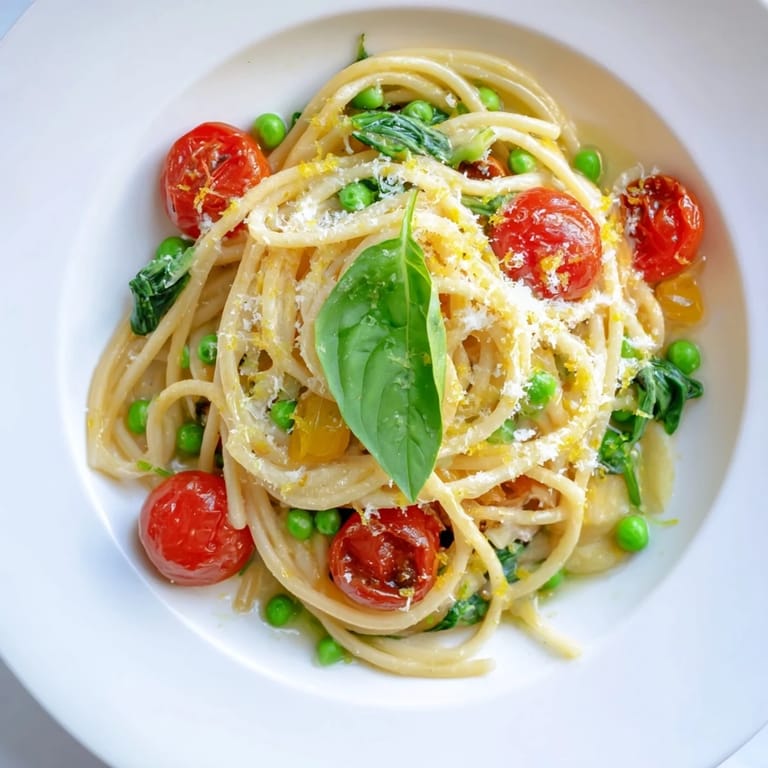
 My tiny apartment kitchen smelled like garlic and hope the first time I attempted this one-pot method. I was skeptical about cooking pasta directly in broth but something magical happened as the liquid reduced and transformed into a silky sauce that coated every strand.
Last April my sister came over exhausted from a new job and I threw this together in twenty minutes while she told stories about her coworkers. We sat on the floor with our bowls and she admitted it was better than any restaurant meal she had that week.
Ingredients
- Spaghetti: The starch released into the broth creates a naturally creamy sauce so traditional pasta works beautifully here
- Vegetable broth: Use a good quality brand as it becomes the base of your sauce and infuses every ingredient
- Cherry tomatoes: They burst during cooking releasing their juices into the broth for extra sweetness and depth
- Peas and spinach: Add these toward the end so they keep their bright color and fresh taste
- Garlic and red onion: Thinly sliced they melt into the sauce providing aromatic backbone without chunks
- Lemon zest: This bright addition cuts through the richness and makes spring flavors sing
Tired of Takeout? 🥡
Get 10 meals you can make faster than delivery arrives. Seriously.
One email. No spam. Unsubscribe anytime.
Instructions
- Sauté the aromatics:
- Heat olive oil in a large pot over medium heat and cook the sliced garlic and red onion until fragrant and softened about 2-3 minutes
- Build the base:
- Add the spaghetti peas spinach and cherry tomatoes then pour in the vegetable broth and bring everything to a gentle boil
- Season and simmer:
- Add salt black pepper and red pepper flakes then cook uncovered for 10-12 minutes stirring occasionally until pasta is al dente and most liquid is absorbed
- Finish with brightness:
- Stir in the lemon zest remove from heat and let it rest for 2 minutes before serving
- Serve it up:
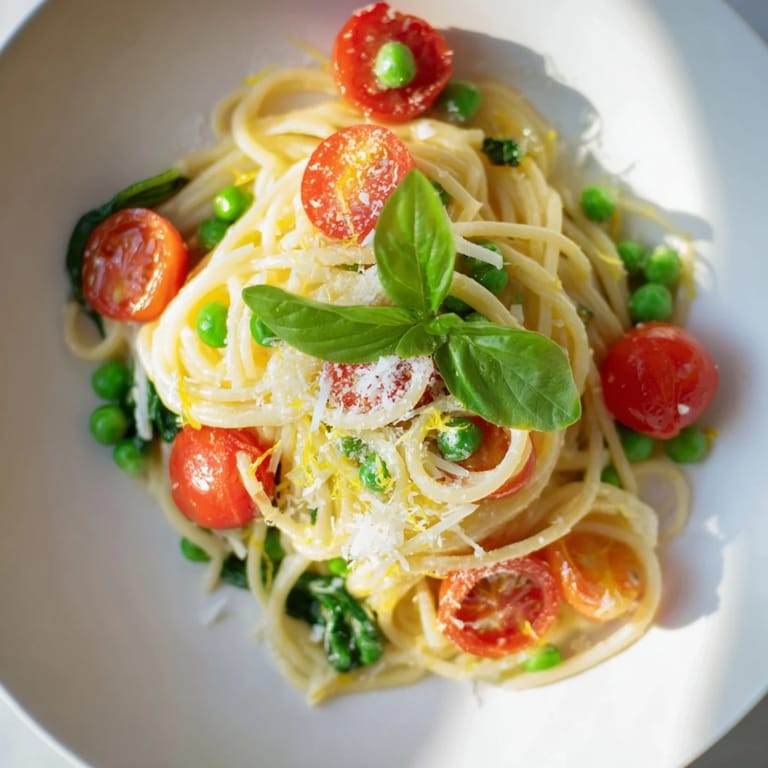
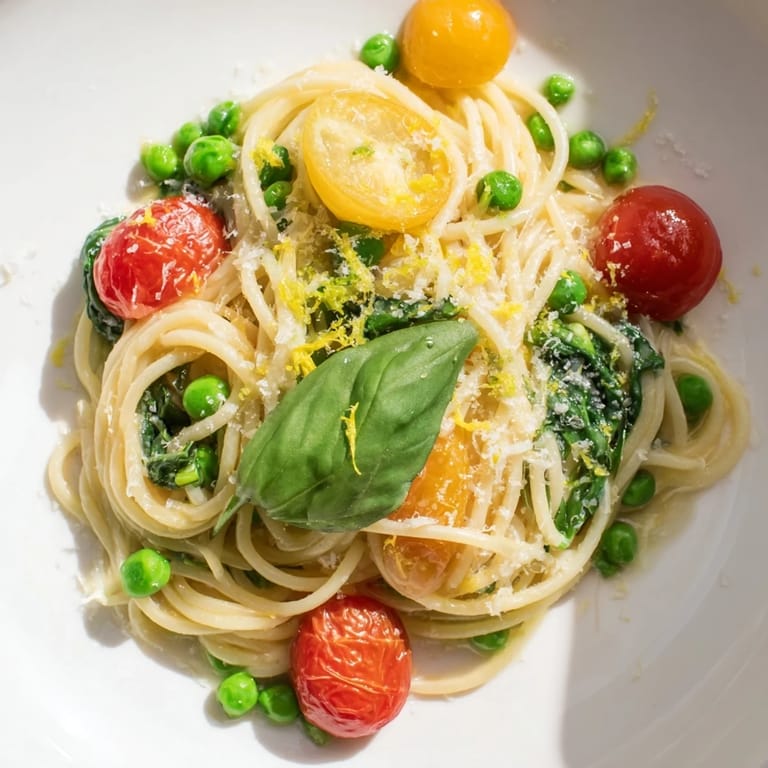
- Divide among plates and top generously with grated Parmesan and fresh basil leaves
 Pin This
 This recipe saved me during a week when my dishwasher broke and I had zero energy for multi step meals. Now it has become my go to for busy weeknights when I want something comforting but not heavy.
Make It Your Own
I have added white beans for protein and swapped in asparagus when peas were out of season. The method is forgiving and works with whatever vegetables look fresh at the market.
Timing Is Everything
Have all your ingredients prepped before you start because once the pasta hits the pot things move quickly. I learned this the hard way when I burned the garlic while searching for my vegetable broth.
Leftover Magic
This pasta actually tastes better the next day as the flavors continue to meld together in the refrigerator. Store it in an airtight container and reheat with a splash of water or broth to loosen the sauce.
- Add a dollop of ricotta when reheating for extra creaminess
- Fried egg on top turns leftovers into a completely different meal
- Pack cold for lunch with extra lemon juice and fresh herbs
 Pin This
 Spring arrives differently each year but this pasta always brings that bright green hopeful feeling to my table regardless of the weather outside.
Recipe FAQs
- → Can I use fresh vegetables instead of frozen peas?
Yes, fresh peas work beautifully in this dish. If using fresh peas, add them at the same time as the frozen ones. They may cook slightly faster, so check for doneness a minute or two earlier than the recipe indicates.
- → What if I don't have vegetable broth?
You can substitute with chicken broth or even water with a vegetable bouillon cube dissolved in it. Water alone will result in a less flavorful dish, so using broth really enhances the final result.
- → How do I prevent the pasta from sticking?
Stir occasionally throughout the cooking process, especially during the first few minutes. The key is not to leave it unattended. The vegetables and liquid help prevent excessive sticking, but regular stirring ensures even cooking.
- → Can I make this dish ahead of time?
This dish is best enjoyed fresh, but you can prepare all your ingredients in advance. Chop vegetables and measure broth the night before, then assemble and cook when ready to serve.
- → What pasta alternatives work best for this one-pot method?
Whole-wheat spaghetti, gluten-free pasta, or even penne work well. Thinner pasta varieties cook faster and absorb broth more effectively. Just ensure whatever pasta you choose can handle being cooked directly in broth without losing its texture.
- → How can I add more protein to this dish?
Chickpeas, white beans, or lentils are excellent additions. You can also stir in some crumbled feta cheese, add a poached egg on top, or toss in some grilled chicken for extra protein without disrupting the dish's simplicity.