 Pin This
 There's something about the smell of lemongrass hitting hot oil that makes a kitchen feel alive. I discovered this soup on an ordinary Tuesday when I had a bunch of coriander that needed rescuing and half a can of coconut milk lingering in the pantry. What started as an improvised lunch turned into something I now make whenever I need a bowl of pure comfort that doesn't weigh me down. The vibrant green, the aromatic steam rising from the pot, the way it tastes both bright and creamy at once—it became one of those recipes I reach for without thinking.
I made this for my sister after she mentioned craving something warm but not heavy, and watching her face light up at that first spoonful made me realize how a simple soup could feel like a small gift. She asked for the recipe immediately, and now she texts me photos of her version with variations I never would have thought of. Those moments remind me why cooking for people matters—it's not just about the food, it's about the connection.
Ingredients
- Fresh spinach, 200 g: Spinach mellows beautifully when blended and adds body to the soup without heaviness; wash it well and chop it roughly so it breaks down easily.
- Fresh coriander, 1 large bunch: Both the leaves and tender stems go into the pot—don't waste those stems, they're packed with flavor and hold up surprisingly well to blending.
- Lemongrass, 1 stalk: Remove the tough outer layers first (they're papery and bitter), then slice finely so the flavor distributes evenly throughout the soup.
- Onion, 1 medium: Chopped medium-fine so it softens quickly and creates a sweet foundation for the other flavors to build on.
- Garlic, 2 cloves: Minced small so it melts into the soup rather than leaving harsh chunks behind.
- Fresh ginger, 2 cm piece: Grated rather than minced gives you a more uniform spice and prevents stringy bits; don't peel it—the skin adds subtle complexity.
- Coconut milk, 400 ml: Full-fat coconut milk is essential here; it creates that silky texture and balances the bright herbs beautifully.
- Vegetable stock, 750 ml: Homemade stock makes a difference if you have it, but quality store-bought works just as well—avoid anything too salty since you'll season at the end.
- Soy sauce or tamari, 1 tbsp: This adds umami depth without making the soup taste overtly Asian; tamari keeps it gluten-free if that matters for your table.
- White pepper, 1/2 tsp: White pepper is milder and less visible than black, which keeps the soup's bright green color pristine.
- Salt, to taste: Always season at the end so you don't accidentally over-salt as the liquid reduces.
Tired of Takeout? 🥡
Get 10 meals you can make faster than delivery arrives. Seriously.
One email. No spam. Unsubscribe anytime.
Instructions
- Warm the base:
- Heat your saucepan over medium heat and add a splash of oil—just enough to coat the bottom. Once it shimmers, add your chopped onion and let it soften for about three minutes, stirring occasionally so it doesn't brown.
- Build the aromatics:
- Add your minced garlic, grated ginger, and sliced lemongrass to the soft onions and cook for another two minutes. The kitchen will smell incredible—that's when you know the aromatics are releasing their oils.
- Wilt the greens:
- Toss in your chopped spinach and coriander (saving a few leaves for garnish) and stir until everything turns dark and soft, about two minutes. Don't worry if it looks like too much greenery at first; it shrinks down dramatically.
- Bring liquids together:
- Pour in the coconut milk and vegetable stock, then bring the whole thing to a gentle boil. Once it bubbles, lower the heat and let it simmer quietly for ten minutes so the flavors meld.
- Make it smooth:
- Remove from heat and use an immersion blender to puree everything until the soup is creamy and uniform. If you're using a countertop blender, work in batches and be careful with the hot liquid—let it cool slightly first.
- Season and finish:
- Return the soup to the pot (if you used a blender), stir in the soy sauce, white pepper, and salt to taste, then simmer gently for two more minutes. Taste it now and adjust—this is your moment to make it exactly right.
- Serve with intention:
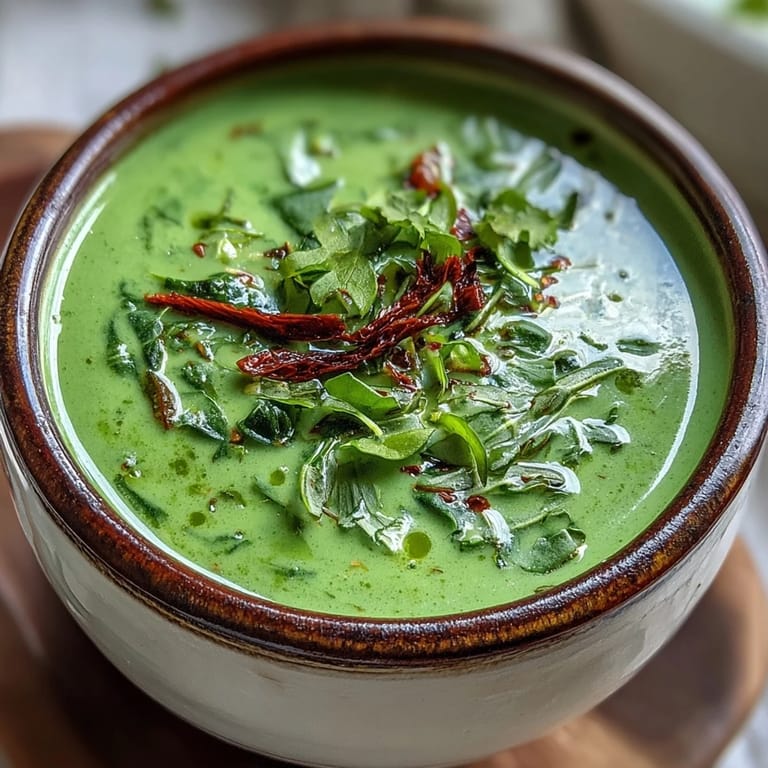
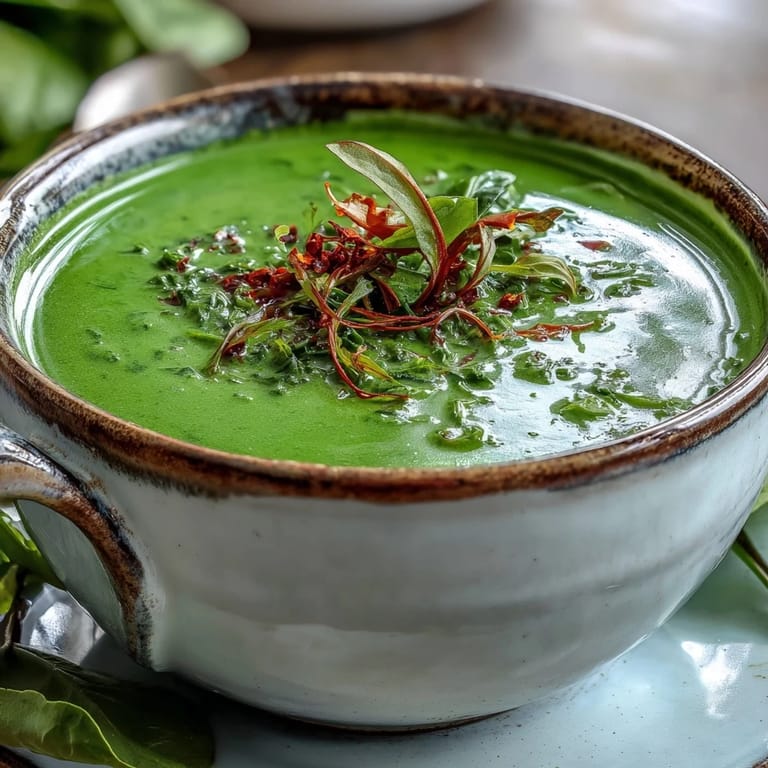
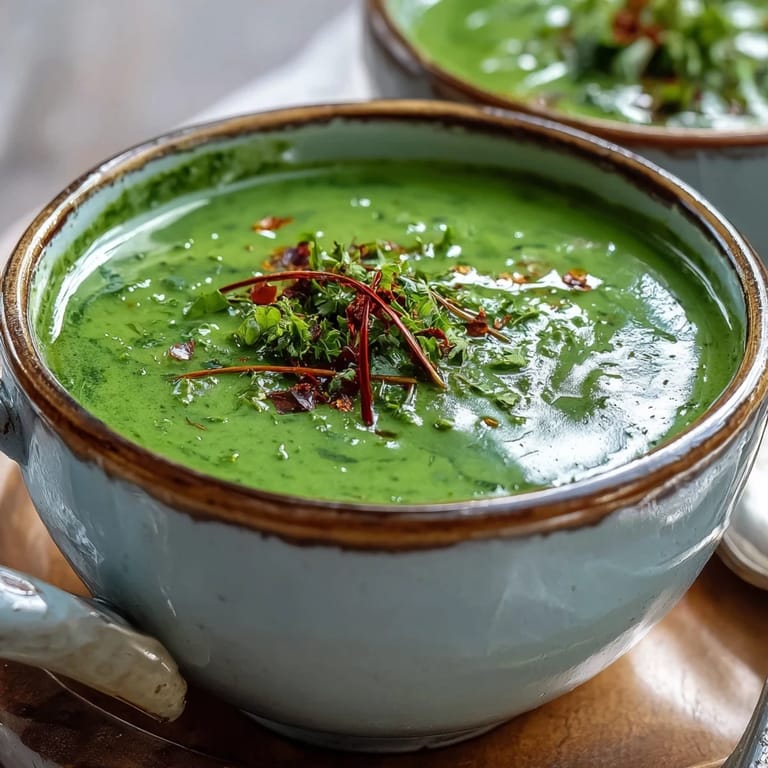
- Ladle the soup into bowls and top with a sprinkle of fresh coriander leaves and sliced red chili if you want heat. Serve it hot and watch people's faces as they take that first sip.
 Pin This
 I learned the power of this soup on a gray November afternoon when a friend dropped by unexpectedly, and I had it ready in the freezer. Reheating it gently on the stove while we caught up felt like the most natural form of hospitality—simple, warm, and present. That's when I realized this recipe was more than just easy; it was deeply kind.
Variations That Work
This soup is genuinely forgiving, and I've played with it endlessly. Sometimes I add a handful of mushrooms (sliced thin so they cook quickly), or a splash of coconut cream for extra richness. I've discovered that adding a squeeze of lime juice right before serving lifts everything—it's like turning up the volume on an already good song without changing the melody.
Serving Suggestions That Matter
Crusty bread for dipping feels essential, though I've also served this alongside steamed jasmine rice for when I want something more substantial. A small bowl of lime wedges on the side lets people adjust brightness to their preference—I've found that not everyone wants the same amount of tang. The optional red chili on top matters too; it's not just decoration, it adds a gentle heat that makes each spoonful interesting.
Making It Your Own
The beauty of this soup is that it invites customization without falling apart. I've made it with half coconut cream and half regular coconut milk when I wanted something richer, and I've added green chilies when I was cooking for people who love heat. The foundation is strong enough that your changes become enhancements rather than corrections.
- For extra spice, mince a green chili and add it with the garlic and ginger—it softens as the soup cooks and weaves throughout.
- If you want more body, try adding a cup of cooked rice or a handful of silken tofu for protein that doesn't change the soup's essential character.
- Lime juice added at the very end is non-negotiable if you want that bright, almost caffeinated feeling that makes you want another bowl.
 Pin This
 This soup has become my answer to those moments when cooking feels less like a chore and more like a conversation with ingredients. It's something I keep coming back to because it never disappoints.
Recipe FAQs
- → Can I make this soup ahead of time?
Yes, this soup keeps well for up to 3 days in the refrigerator. The flavors often develop and improve after resting. Reheat gently over low heat, stirring occasionally to prevent separation.
- → Can I freeze this soup?
Absolutely. Cool completely before transferring to airtight containers or freezer bags. Freeze for up to 3 months. Thaw overnight in the refrigerator and reheat slowly, adding a splash of water or stock if needed.
- → What can I substitute for coriander?
Fresh basil or Thai basil works beautifully as an alternative. Flat-leaf parsley provides a milder herbal note if you find coriander too overpowering. Adjust quantities to taste.
- → How do I prepare lemongrass properly?
Remove the tough outer layers to reveal the tender inner stalk. Trim the woody root end and cut the stalk into shorter lengths. Bruise with a knife or rolling pin to release oils before finely slicing. The bottom 4-5 inches are most flavorful.
- → Can I use frozen spinach instead of fresh?
Yes, thaw frozen spinach completely and squeeze out excess liquid before adding. You may need about 250 g frozen spinach to equal 200 g fresh. The soup might be slightly less vibrant in color but will still be delicious.
- → How can I make this soup protein-rich?
Stir in silken tofu after blending for creaminess and protein, or add cooked lentils, chickpeas, or shredded chicken during the last 5 minutes of simmering. Crispy tofu cubes or pan-fried tempeh also make excellent toppings.