 Pin This
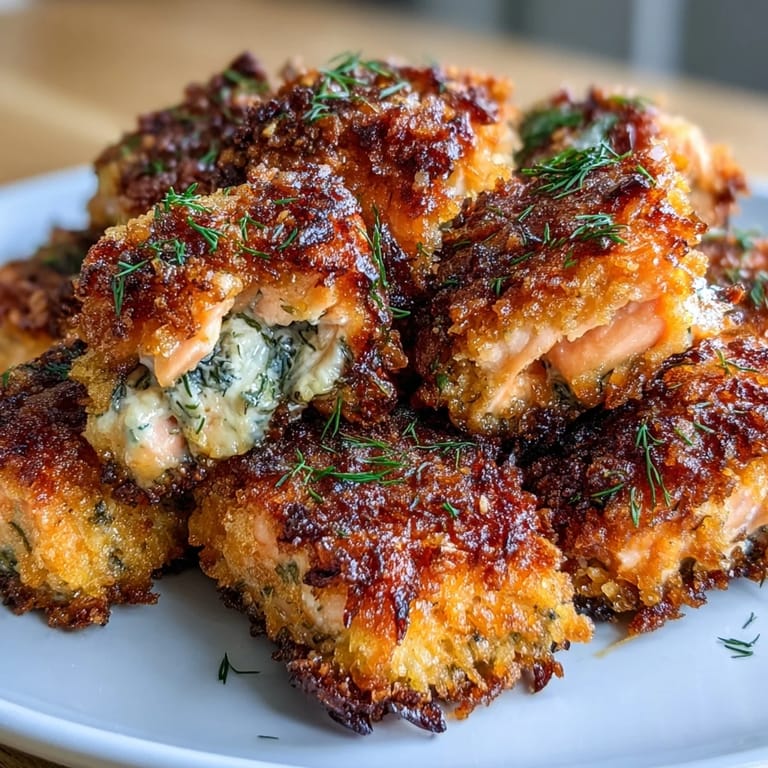
 My friend texted me at 4 PM asking if I could bring something to her dinner party, and I had exactly one hour to figure it out. I opened the fridge, saw a beautiful salmon filet, and remembered how the crispy, golden panko-crusted bites I'd made months ago disappeared from a plate in minutes. This time I'd make them smaller, crunchier, and with a bit more seasoning swagger. What started as a kitchen scramble became the one dish everyone asked about that night.
I'll never forget my neighbor leaning against the kitchen counter, watching me coat each salmon piece in that mustard-egg mixture, asking why I bothered with the extra step. Two minutes into eating one, he was already on his second bite, nodding silently in a way that said everything. That's when I realized these weren't just appetizers, they were little golden reasons to slow down and pay attention to what you're eating.
Ingredients
- Salmon filet, 1 lb, cut into 1-inch pieces: Look for wild-caught if you can, though farmed works beautifully too. Pat each piece completely dry before coating, or the flour won't stick properly and you'll end up with a sad, slippery bite.
- All-purpose flour, 1/4 cup: This is your adhesive layer, the thing that makes the panko actually cling to the salmon instead of sliding off in the oven.
- Kosher salt, 1 tsp total: Split between the flour and panko layers so you get seasoning throughout, not just on the outside.
- Egg, 1, beaten: The glue that holds everything together, so don't skip whisking it properly.
- Dijon mustard, 2 tsp: This adds a subtle tang that nobody will identify but everyone will taste, plus it helps the coating adhere like nothing else.
- Panko breadcrumbs, 1 cup: Japanese-style panko stays crunchier longer than regular breadcrumbs, and it's worth seeking out for this recipe.
- Onion powder, garlic powder, dried dill, and dried parsley, 1/2 tsp each: These dried herbs pack more flavor punch than you'd expect, creating a savory crust that complements salmon's richness.
- Olive oil or cooking spray: For the baking sheet and any extra insurance that nothing sticks.
Tired of Takeout? 🥡
Get 10 meals you can make faster than delivery arrives. Seriously.
One email. No spam. Unsubscribe anytime.
Instructions
- Heat your oven and prep your workspace:
- Set the oven to 400°F and line a baking sheet with parchment paper, then lightly coat it with oil or cooking spray so nothing surprises you later. Having everything ready before you touch the salmon makes the whole process feel less chaotic.
- Dry your salmon thoroughly:
- Pat each piece with paper towels until it looks almost matte, not wet. Moisture is the enemy of crispy coatings, so don't rush this step.
- Set up your three-bowl assembly line:
- Bowl one gets flour mixed with 1/2 tsp salt. Bowl two is beaten egg whisked together with Dijon mustard until it's pale and smooth. Bowl three combines panko, onion powder, garlic powder, dill, parsley, and the remaining 1/2 tsp salt, mixing it all evenly with your fingers so no clump of herbs dominates a single bite.
- Coat each piece with precision:
- Dredge salmon in flour, shake off excess, dip in the egg wash until fully coated, then press firmly into the panko mixture, turning it so all sides get covered. This is meditative work, honestly, and rushing it shows in the final product.
- Let the coating set:
- Place coated pieces on a clean plate and let them sit for 5 minutes. This resting period helps everything stick together instead of flaking off mid-cook.
- Arrange on your baking sheet:
- Space each bite with about half an inch between them so heat circulates evenly. Crowding the pan makes them steam instead of bake.
- Bake until almost done:
- Bake for 10 minutes at 400°F until the panko turns light gold and the salmon is cooked partway through. At this point they'll look pale, not finished, which is exactly right.
- Broil for the final crunch:
- Flip each piece with tongs, switch the oven to broil, and broil for 2 to 3 minutes until the tops turn deep golden and crispy. Watch them closely because broilers vary wildly and the difference between golden and burnt is sometimes 30 seconds.
- Serve immediately:
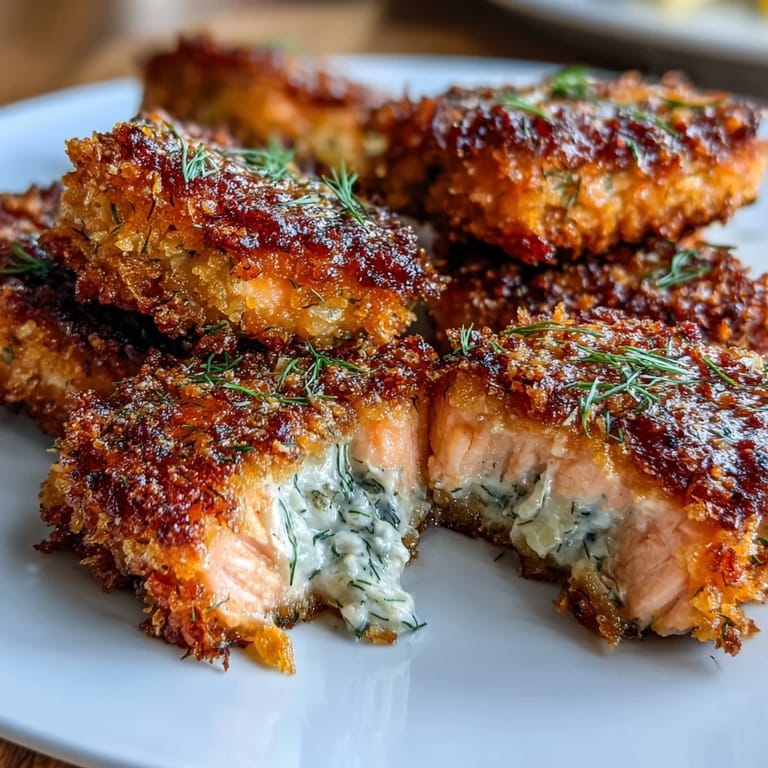
- Transfer to a plate and serve while the outside is still crackling. They stay decent for a few minutes, but they're honestly best eaten right away.
 Pin This
 There's something about watching someone bite into one of these and hear that audible crunch, that moment where their eyes widen because the outside is so crispy and the inside is so delicate and buttery. That's when food stops being sustenance and becomes a small, golden gift.
Why Panko Makes All the Difference
Regular breadcrumbs are fine for many things, but panko is specifically designed with larger, fluffier flakes that create air pockets in the coating. When those air pockets hit the heat, they crisp up differently, giving you that shattering-shell-meets-tender-interior experience that regular breadcrumbs just can't deliver. I learned this the hard way when I made these with whatever was in my pantry and wondered why they tasted like they came from a frozen box.
The Secret of Drying Your Salmon
Moisture on your salmon is a covenant with mediocrity. Every drop of water you leave on that fish is a drop that will turn to steam in the oven, creating humidity that prevents the coating from crisping properly. I now use paper towels and actually press gently on the surface, letting the towels absorb every bit of moisture possible. It takes an extra 30 seconds and changes everything.
Timing and Temperature Matters More Than You'd Think
The two-stage cooking method, baking then broiling, is deliberate and not random. The 400-degree oven gets the salmon cooked through without burning the outside, and then the broiler's intense, direct heat creates that crackling golden crust. If you tried to broil from the start, the outside would blacken before the inside was cooked. If you skipped the broil, you'd have cooked salmon with a pale, soft coating that tastes like sadness.
- An air fryer set to 400°F for 8 to 10 minutes also works brilliantly if you're trying to avoid heating up your kitchen.
- Don't skip the resting period after coating, even though it feels like wasted time.
- These freeze beautifully before cooking, so you can coat them ahead and bake straight from frozen, adding just a few minutes to the cook time.
 Pin This
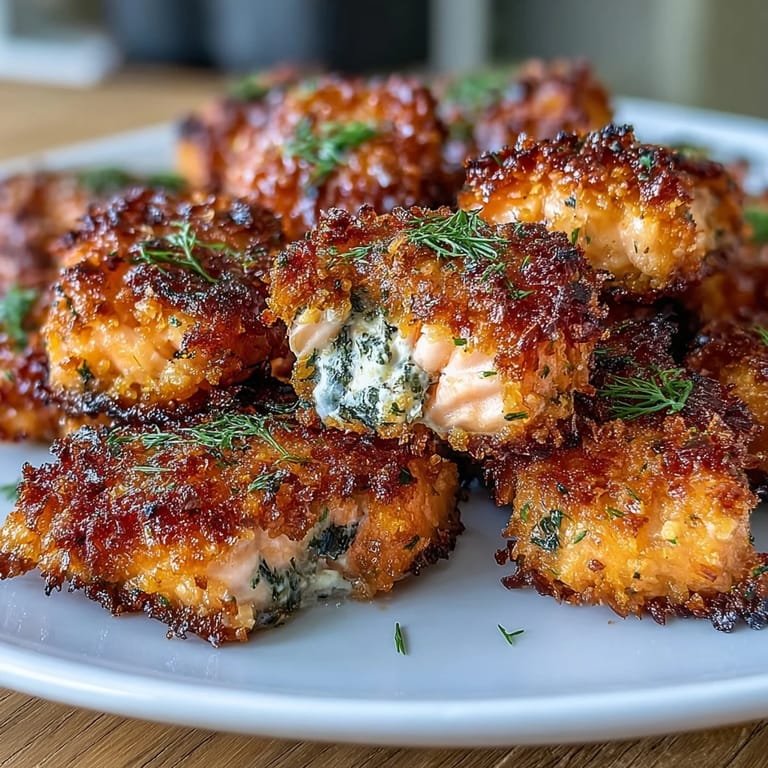
 These salmon bites prove that simple, honest cooking doesn't need a lot of fussing to taste memorable. Make a batch for yourself and understand why they keep disappearing from every plate they touch.
Recipe FAQs
- → What type of salmon works best for these bites?
Use fresh, wild-caught or farmed salmon fillets cut into bite-sized pieces for even cooking and optimal flavor.
- → Can I substitute panko breadcrumbs?
Japanese-style panko is recommended for extra crunch, but regular breadcrumbs can be used with a slightly different texture.
- → How do I achieve a crispy coating?
Coat salmon in flour, then egg-mustard wash, followed by seasoned panko, then bake and broil for a crispy, golden finish.
- → Is it possible to air fry these salmon bites?
Yes, cooking at 400°F in an air fryer for 8–10 minutes yields similarly crispy results.
- → What dipping sauces pair well with these bites?
Lemon wedges, tartar sauce, or a yogurt-dill dip complement the crispy texture and flavors beautifully.