 Pin This
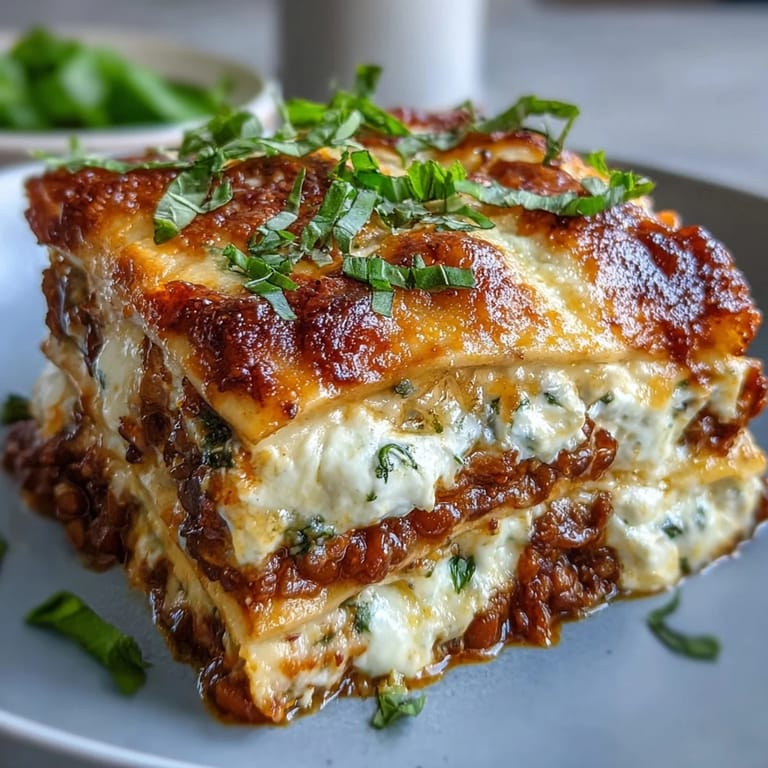
 Last Tuesday, I stood in my kitchen staring at a regular lasagne pan, wondering why I'd chosen the most complicated dish for a weeknight when I was already exhausted. Then it hit me: what if I just made the whole thing in one skillet? No juggling pots, no draining pasta, no theatrical layering on the counter. That spontaneous decision led to this smoky, lentil-packed lasagne that somehow tastes like you spent hours fussing over it, when really you just let one pan do all the heavy lifting.
I made this for my partner's parents when they visited, and I'll never forget my mother-in-law's surprised expression when I pulled it straight from the oven in a rustic skillet instead of a fancy ceramic dish. She asked for the recipe before she'd even finished her first bite, and that's when I knew the simplicity of it all—the method, the ingredient list, the whole vibe—had somehow made it feel even more special.
Ingredients
- Olive oil: Use good quality here since it's a foundational flavor; it carries the heat and helps everything develop that golden, caramelized base.
- Large onion: Finely chopped means it almost melts into the sauce, creating body and natural sweetness without anyone noticing the onion itself.
- Garlic cloves: Mince them small so they distribute evenly and cook quickly without burning on the bottom of the pan.
- Carrots and celery: Together they build the classic soffritto base; dice them roughly the same size so they cook at the same rate.
- Red bell pepper: Adds brightness and a subtle sweetness that balances the smokiness beautifully.
- Mushrooms: Finely chopped mushrooms are the secret vegetarian umami bomb that makes this feel meaty and satisfying.
- Large courgette: Diced small keeps it tender and helps thicken the sauce naturally as it releases moisture.
- Smoked paprika: This is the backbone of the flavor; don't skip it or use regular paprika—the smoke is everything.
- Dried oregano and thyme: Dried herbs are stronger here than fresh, and that intensity is exactly what this dish needs.
- Chili flakes: Optional, but they add a gentle heat that complements the smokiness rather than overwhelming it.
- Chopped tomatoes: Canned works perfectly and actually has better flavor consistency than fresh ones that vary by season.
- Tomato paste: This concentrate deepens the sauce color and richness without adding watery liquid.
- Dried red lentils: They cook in about 20 minutes and thicken the sauce naturally; rinse them first to remove excess starch.
- Vegetable stock: Warm stock helps the lentils cook evenly; cold stock slows everything down.
- Salt and black pepper: Season as you build the sauce, not just at the end, so flavors develop layer by layer.
- Balsamic vinegar: A small splash at the end brightens everything and cuts through the richness with subtle sweetness.
- No-boil lasagne sheets: They soften directly in the sauce as the lasagne bakes, saving you boiling water and a colander full of slippery pasta.
- Ricotta cheese: Dolloped in layers, it stays creamy rather than melting completely, creating pockets of richness.
- Grated mozzarella: This is your melting agent and binding glue between layers.
- Grated Parmesan: A sharper cheese that adds depth and helps the top brown beautifully.
- Fresh basil: Torn just before serving so it stays bright green and aromatic rather than wilting into the dish.
Tired of Takeout? 🥡
Get 10 meals you can make faster than delivery arrives. Seriously.
One email. No spam. Unsubscribe anytime.
Instructions
- Heat and soften the aromatics:
- Pour olive oil into your large ovenproof skillet over medium heat and let it shimmer slightly before adding the chopped onion. You'll notice the kitchen immediately smells alive and welcoming; cook for 3 to 4 minutes, stirring occasionally, until the onion turns translucent and soft.
- Build the vegetable foundation:
- Stir in the minced garlic, diced carrots, celery, and red bell pepper, cooking for about 5 minutes until the harder vegetables start to yield to your wooden spoon. The smell deepens at this point, turning from sweet onion into something more complex and developed.
- Add the fungi and green vegetables:
- Toss in the finely chopped mushrooms and diced courgette, sautéing for 5 to 6 minutes until everything softens and any moisture the vegetables release has evaporated. This is the moment you'll notice the pan becomes less crowded and more unified as a sauce base.
- Toast the spices:
- Sprinkle in the smoked paprika, oregano, thyme, and chili flakes if you're using them, stirring constantly for about 1 minute until the kitchen fills with toasted, smoky aromatics. Don't let this stage linger too long or the spices can turn bitter.
- Build the sauce body:
- Stir in the chopped tomatoes, tomato paste, rinsed red lentils, and warm vegetable stock, scraping the bottom of the pan to release any flavorful browned bits. Season with salt and pepper, tasting as you go rather than waiting until the end.
- Simmer and soften the lentils:
- Bring everything to a gentle simmer, cover the skillet partially with a lid or foil, and let it bubble quietly for 20 to 25 minutes until the lentils are completely tender and the sauce has thickened into something velvety and rich. Stir occasionally and finish with a tablespoon of balsamic vinegar for brightness.
- Prepare for layering:
- While the sauce simmers, preheat your oven to 180°C (350°F). Once the sauce is ready, carefully remove half of it from the skillet and set it aside in a bowl, leaving a foundation layer in the pan.
- First lasagne layer:
- Arrange 3 or 4 no-boil lasagne sheets directly over the remaining sauce, breaking them to fit if needed and letting them nestle into the sauce. They'll soften as everything bakes, so don't worry if they seem too firm now.
- First cheese layer:
- Dollop half the ricotta in small spoonfuls over the lasagne sheets, sprinkle with a third of the mozzarella and Parmesan, creating an uneven, generous layer. This variation in thickness creates pockets of cheesy richness throughout.
- Second sauce layer:
- Spread half of the reserved veggie bolognese over the cheese, creating an even layer and pushing it gently into the gaps. Then top with another layer of lasagne sheets, again breaking them to fit your skillet.
- Repeat the assembly:
- Dollop the remaining ricotta, sprinkle another third of the mozzarella and Parmesan, then spread the final layer of reserved veggie bolognese on top. The assembly rhythm becomes almost meditative once you understand the pattern.
- Final cheese crown:
- Finish with a final layer of lasagne sheets and sprinkle the remaining mozzarella and Parmesan over the top in an even, generous coating. This will brown and bubble beautifully as everything bakes.
- The protected bake:
- Cover the entire skillet tightly with foil and slide it into the preheated oven for 25 minutes, which allows the lasagne sheets to soften and everything to heat through without the top burning. The foil is your friend here, keeping steam trapped.
- Golden finish:
- Remove the foil and bake for another 10 to 15 minutes until the cheese on top turns golden brown and the sauce at the edges bubbles gently. You'll see the edges of the skillet darkening slightly, which is exactly the sign of deep flavor developing.
- Rest and settle:
- Remove from the oven and let the lasagne rest for 10 minutes before serving; this allows the layers to set slightly and makes serving cleaner. Tear fresh basil leaves over the top just before bringing it to the table.
 Pin This
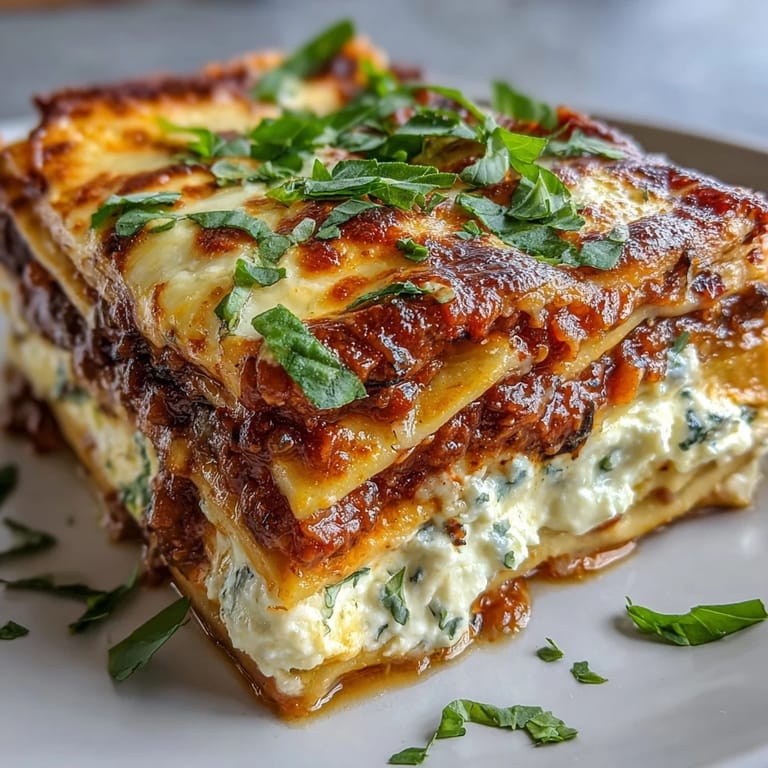
 My eight-year-old nephew watched me assemble this lasagne and asked why I was making it in a frying pan, convinced something had gone wrong. When everyone dug in at dinner, he whispered to me that this was "fancy restaurant food made in normal pans," and somehow that perfectly captured why this recipe has become my go-to for impressing people without the pretense or the cleanup aftermath.
The Magic of the Smoky Element
The smoked paprika is what transforms a straightforward vegetable lasagne into something that tastes like it's been slow-cooked all day over a wood fire. When you sprinkle it in and stir it through the aromatics, you're not just adding flavor; you're building an entire emotional landscape. People will taste this and try to figure out where the smokiness is coming from, and there's something deeply satisfying about keeping that secret.
Why Red Lentils Are Your Secret Weapon
Unlike other lentils that hold their shape stubbornly, red lentils practically dissolve into a sauce, thickening it naturally without requiring reduction time or constant stirring. They cook in just 20 minutes, which is genuinely fast, and they absorb all the smoky, herby flavors around them. This means you get a sauce that feels meaty and substantial without any actual meat, and the fiber content makes the whole dish feel nourishing rather than heavy.
One Pan, No Excuses
Starting with one skillet and finishing in the same skillet is the entire philosophy behind this dish. I used to think the ritual of transferring things between pots made me a better cook, but honestly, it just made my sink miserable.
- The ovenproof skillet must be truly oven-safe; check the handle before committing, or you'll have a melted handle situation on your hands.
- If your skillet isn't large and deep enough for the full assembly, a 9 x 13 inch baking dish works just as well for finishing the lasagne part.
- The beauty of this method is that you taste and adjust flavors in the actual dish you're eating from, which feels intimate and honest.
 Pin This
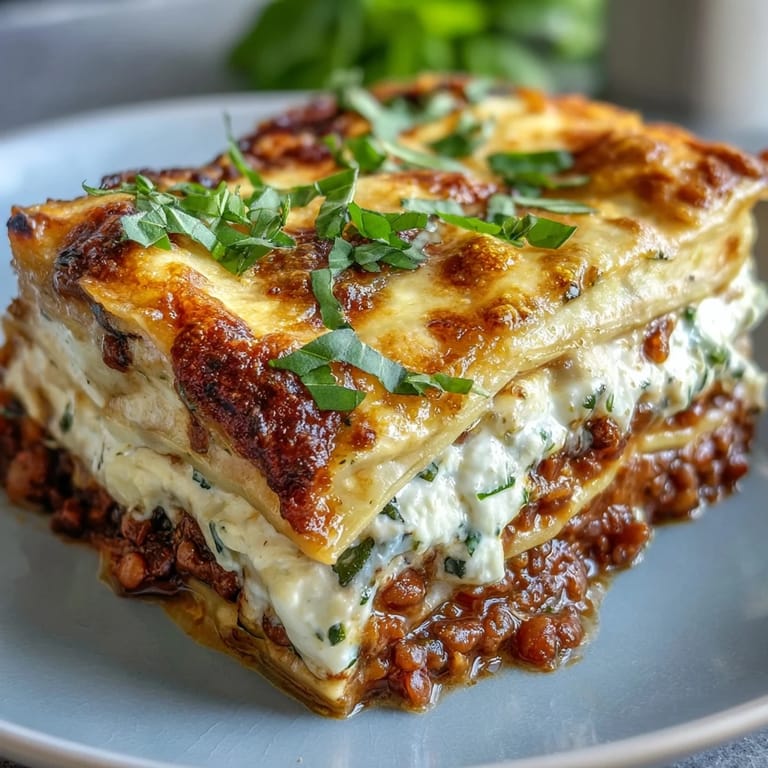
 This lasagne proves that the best recipes aren't the most complicated ones; they're the ones that understand your life and work within it. Make this when you need comfort that doesn't demand hours of your attention.
Recipe FAQs
- → Can I make this vegan?
Yes, simply substitute plant-based ricotta, mozzarella, and Parmesan alternatives. The lentils provide plenty of protein and substance.
- → Do I need to cook the lasagne sheets first?
No, use oven-ready no-boil lasagne sheets. They'll cook perfectly in the sauce and bake, absorbing moisture as they cook.
- → Can I add more vegetables?
Absolutely. Spinach, eggplant, or bell peppers work well. Just keep the total vegetable quantity similar to maintain proper consistency.
- → How long does this keep?
Leftovers store well for 3-4 days refrigerated. The flavors often improve as the ingredients continue to meld together.
- → Can I freeze this dish?
Yes, assemble before baking and freeze for up to 3 months. Thaw completely before baking, adding extra time if needed.
- → What can I serve with this?
A crisp green salad with vinaigrette balances the richness. Crusty bread works well too, along with a light Italian red wine like Chianti.