 Pin This
 There's something about the moment when miso and butter hit a hot pan that stops you in your tracks. I wasn't planning to create a fusion dish that night, but I had leftover white miso from a soup project and fresh salmon that needed cooking, and something clicked. The umami depth of the miso married with the richness of butter felt like discovering a secret sauce I'd been missing all along, and when I tossed it with pasta, every bite tasted like I'd accidentally stumbled onto something I'd been craving without knowing it.
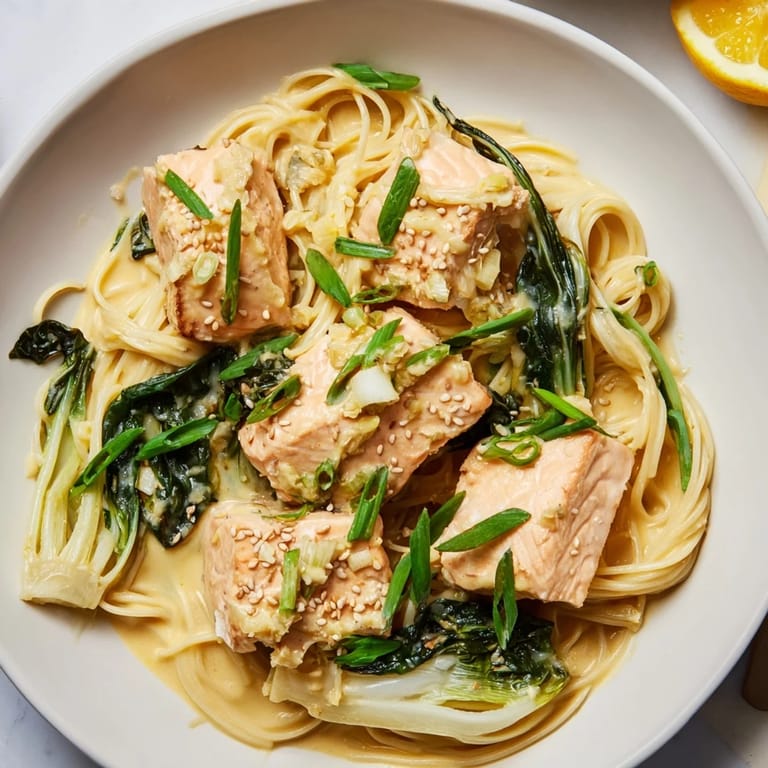
I remember my partner coming home while the bok choy was still wilting in the pan and catching the aroma of sesame oil and miso. Before I'd even plated it, they were asking what I was making, and when I served it with the sesame seeds and fresh scallions scattered across the top, the whole kitchen felt like one of those moments where cooking suddenly becomes about more than hunger. That dish became the one they'd text me to make on rough days, the one that somehow felt like both comfort and celebration at the same time.
Ingredients
- Salmon fillets (400g, cut into bite-sized pieces): The key is not to cut them too small or they'll disappear into the sauce. I've learned that pieces about the size of a grape work perfectly, cooking through gently without falling apart.
- Linguine or spaghetti (300g): The long strands capture the creamy sauce better than short pasta shapes, though honestly, use whatever you have in the cupboard.
- Baby bok choy (2 heads, chopped): The tender greens provide a crisp contrast to all that richness, and they wilt just enough to soften without turning mushy if you time it right.
- Garlic (2 cloves, minced): Fresh garlic is crucial here because it's building the foundation of flavor before everything else joins in.
- Scallions (2, sliced): Save these for the end as a garnish to keep their fresh bite intact against the creamy sauce.
- Unsalted butter (60g/4 tbsp): Use real butter, not substitutes, because it's doing the heavy lifting in creating that silky sauce texture.
- White miso paste (2 tbsp): This is your umami anchor, the ingredient that makes everything taste intentional rather than random. Don't skip it.
- Soy sauce (2 tbsp): It deepens the savory notes and ties the Japanese flavors together.
- Mirin (2 tbsp): A touch of sweetness that rounds out the bold flavors without making anything taste dessert-like.
- Heavy cream (100ml/⅓ cup): This transforms the sauce from thin and bright into something luxurious that clings to every ingredient.
- Sesame oil (1 tsp): Just a whisper because it's potent, but it adds an aromatic depth that ties the whole dish together.
- Black pepper (½ tsp): Fresh ground makes all the difference.
- Toasted sesame seeds and lemon wedges (optional): The sesame seeds add crunch and nutty flavor, while lemon brightens everything at the end.
Tired of Takeout? 🥡
Get 10 meals you can make faster than delivery arrives. Seriously.
One email. No spam. Unsubscribe anytime.
Instructions
- Get Your Pasta Water Ready:
- Fill a large pot with salted water and bring it to a rolling boil, then add your pasta and cook it until it's just shy of fully tender. Reserve about half a cup of that starchy water before draining, because it's going to be your secret weapon for creating a silky sauce later.
- Start the Aromatics:
- In a large skillet, warm the butter with a teaspoon of sesame oil over medium heat. Once it's foaming gently, add your minced garlic and let it toast for just about a minute until the kitchen smells incredible.
- Cook the Salmon Gently:
- Add your salmon pieces to the warm pan and let them sit undisturbed for about two minutes on the first side, then flip carefully and cook for another minute or two until they're just barely opaque through the center. Remove them to a plate before they overcook.
- Build Your Sauce:
- Add the remaining butter to the same pan and let it melt, then whisk in your white miso paste until it's completely smooth and creamy. This takes a bit of whisking but it's worth it for a silky finish.
- Layer in Flavor:
- Pour in the soy sauce and mirin, stirring everything together, then add the heavy cream and black pepper. The sauce will look rich and glossy, and that's exactly what you want.
- Add the Greens:
- Scatter the chopped bok choy into the pan and let it soften for a couple of minutes until it's tender but still has a bit of snap to it. You're not trying to cook it into submission, just enough to warm it through.
- Bring It All Together:
- Return the salmon to the pan and gently fold in the drained pasta, using some of that reserved pasta water to loosen the sauce if it feels too thick. The goal is a creamy coating, not a pool of sauce.
- Plate and Celebrate:
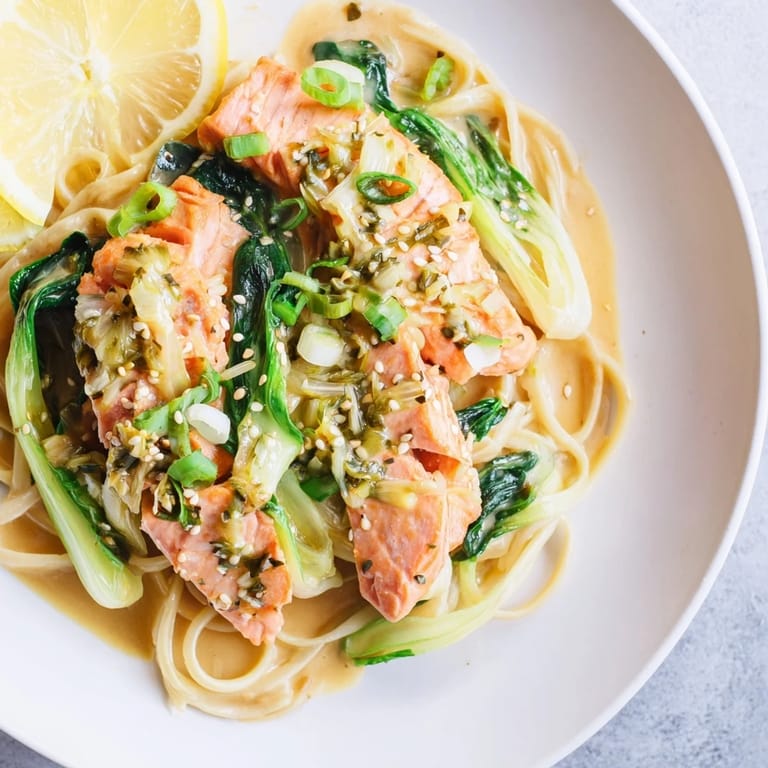
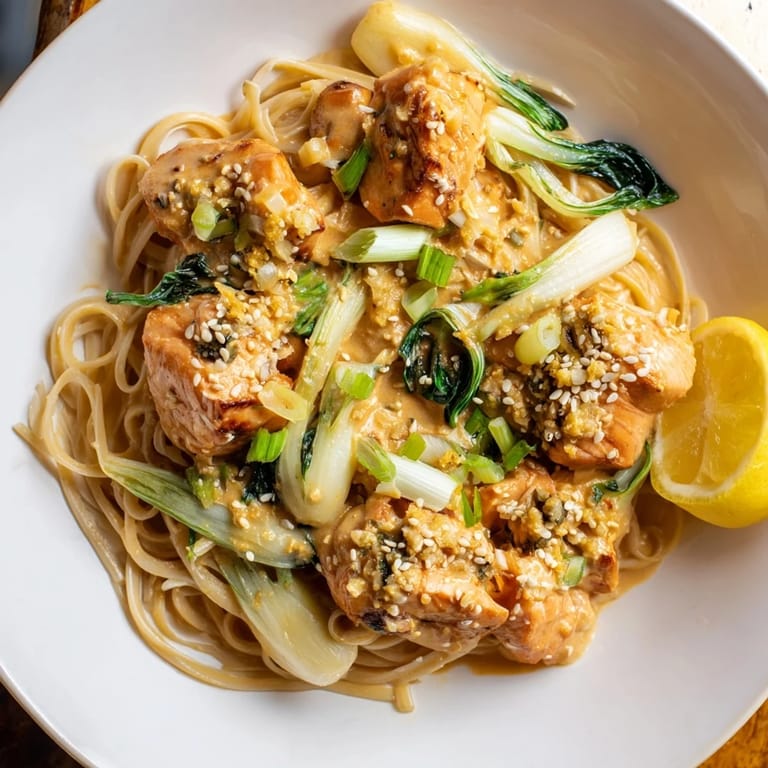
- Divide everything among bowls and scatter fresh scallions and toasted sesame seeds on top, with a wedge of lemon on the side for anyone who wants to add brightness at the last second.
 Pin This
 I've learned that this dish has a way of making people pause mid-bite, like they're trying to figure out where each flavor is coming from. That moment, when someone looks up from their bowl with that confused-but-delighted expression, is when you know you've made something worth making again and again.
Timing and Preparation
The beauty of this dish is that nothing has to be cut into tiny pieces or prepped with precision. Rough chops on the bok choy and simple salmon chunks mean you're looking at maybe five minutes of actual prep time. The whole dinner, from cold kitchen to hot bowl, takes less than forty minutes, which is honestly the golden window where something feels special enough to matter but quick enough that you'll actually make it on a Tuesday night instead of saving it for weekends.
Playing with Flavors
This is the kind of dish that tolerates tweaking beautifully. If you like heat, a pinch of chili flakes sizzled with the garlic will add a sharp kick. If you don't have white miso, red miso works too, though it'll be earthier and slightly more assertive. I've made this with spinach when bok choy wasn't in the market, and it was equally delicious in a different way, milder and less assertive but still bright.
Elevating Your Plate
The final touches matter more than you'd think in a dish like this. Toasted sesame seeds add crunch and nutty flavor, but more importantly, they signal that you cared enough to finish it thoughtfully. A wedge of lemon on the side lets everyone adjust the brightness to their own taste, and fresh scallions scattered on top keep things from feeling too heavy even though the sauce is decidedly rich and creamy.
- Toast your sesame seeds in a dry pan for about two minutes until they smell fragrant and nutty, then use them immediately before they cool and lose that just-roasted quality.
- Squeeze a little lemon juice over your bowl right before eating to brighten the umami and balance the richness of the cream.
- Don't be shy with the garnishes because they're doing real work, not just decoration, making each bite feel complete and intentional.
 Pin This
 This pasta has become my answer to the question of what to cook when I want to feel accomplished without spending all evening in the kitchen. It's one of those recipes that tastes more complicated than it actually is, and somehow that's the whole point.
Recipe FAQs
- → What type of pasta works best for this dish?
Linguine or spaghetti hold the creamy sauce well and complement the tender salmon and bok choy textures.
- → Can I substitute bok choy with another vegetable?
Yes, spinach is a good alternative, adding a similar leafy texture while blending nicely with the sauce.
- → How do I avoid overcooking the salmon?
Cook the salmon pieces gently for 2–3 minutes per side until just cooked through to maintain tenderness and flavor.
- → What can I use to add a touch of heat?
A pinch of chili flakes added when sautéing the garlic offers a subtle spicy kick without overpowering the umami flavors.
- → Is there a way to make this dish gluten-free?
Use gluten-free pasta and tamari instead of soy sauce to keep the dish free from gluten while maintaining its distinct taste.