 Pin This
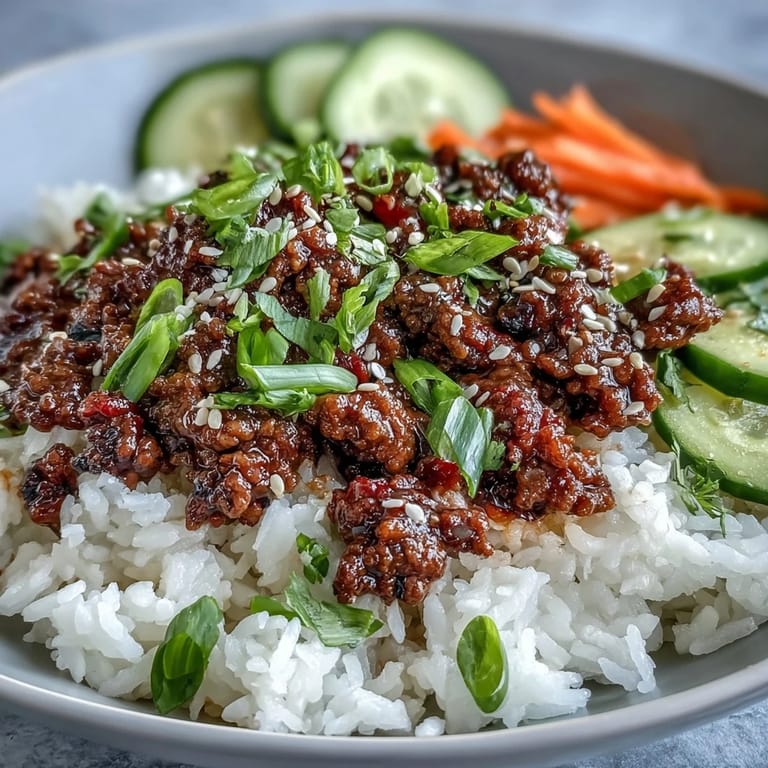
 My coworker brought this Korean beef bowl to lunch one Tuesday, and the whole office smelled like toasted sesame oil for hours afterward—in the best way. I watched her eat it with this satisfied smile, methodically layering the tangy pickled vegetables with each bite, and I knew I had to recreate it that weekend. The first time I made it, I underestimated how quickly ginger and garlic could perfume a kitchen, and honestly, that's when I knew this dish was going to become a regular rotation at home.
I made this for my partner on a random Wednesday when neither of us felt like ordering in, and watching them go back for seconds while standing at the counter really cemented it as a keeper. There's something about that moment when someone you care about enjoys food you've made—even if it only took 35 minutes—that makes the whole effort feel worthwhile.
Ingredients
- Lean ground beef (500 g): The backbone of this dish—lean cuts keep things from getting greasy, but don't stress if you have regular ground beef on hand.
- Soy sauce (2 tablespoons): Use tamari if you're keeping things gluten-free, and honestly, I've learned that a good quality soy sauce makes a noticeable difference.
- Toasted sesame oil (1 tablespoon): This is where the magic happens—a little goes a long way, so don't skip it or substitute with regular sesame oil.
- Brown sugar (1 tablespoon): Balances the savory and salty elements without making anything taste sweet.
- Freshly grated ginger (2 teaspoons): Fresh is non-negotiable here; ground ginger will taste muted by comparison.
- Garlic (3 cloves, minced): The fresher the better, and mincing it yourself means you control the size of the pieces.
- Gochujang or sriracha (1 teaspoon, optional): For heat and depth—leave it out if spice isn't your thing, but it does add complexity.
- Green onions (2, thinly sliced): Use the white and light green parts for cooking, save the dark green for garnish.
- Sesame seeds (1 tablespoon): Toast them yourself if you have the time; they'll taste nuttier and more alive.
- Cooked rice or cauliflower rice (4 cups): Either works beautifully—cook it just before assembling so it's still warm.
- Quick pickled vegetables (carrot, cucumber, radish): The acidity cuts through the rich beef and keeps everything feeling fresh and balanced.
- Rice vinegar (1/2 cup): The pickling liquid that makes everything sing—don't use regular vinegar here.
Tired of Takeout? 🥡
Get 10 meals you can make faster than delivery arrives. Seriously.
One email. No spam. Unsubscribe anytime.
Instructions
- Make the pickled vegetables first:
- Whisk rice vinegar, sugar, and salt together in a bowl until the sugar completely dissolves. This takes about a minute. Add your julienned carrot, sliced cucumber, and radish, give everything a good toss, and then let it sit—the longer it sits, the more flavor it develops, so ideally 15 to 30 minutes is perfect.
- Get your rice ready:
- Follow the package instructions for whatever rice you're using—jasmine or cauliflower both work. Keep it warm while you cook the beef.
- Brown the ground beef:
- Heat a large skillet over medium-high heat and add the beef, breaking it up as it cooks with a spoon or spatula—you want it in small, irregular pieces so it browns evenly. This takes about 5 to 7 minutes, and you'll know it's done when there's no pink left.
- Build the sauce:
- Once the beef is cooked through, pour off any excess fat if it looks greasy. Add the soy sauce, sesame oil, brown sugar, ginger, garlic, and gochujang if you're using it, then stir everything together and let it cook for 2 to 3 more minutes—this is when the kitchen really starts smelling incredible.
- Finish with brightness:
- Remove the skillet from heat and stir in your sliced green onions and sesame seeds. The residual heat will soften the onions slightly without cooking them completely.
- Assemble and serve:
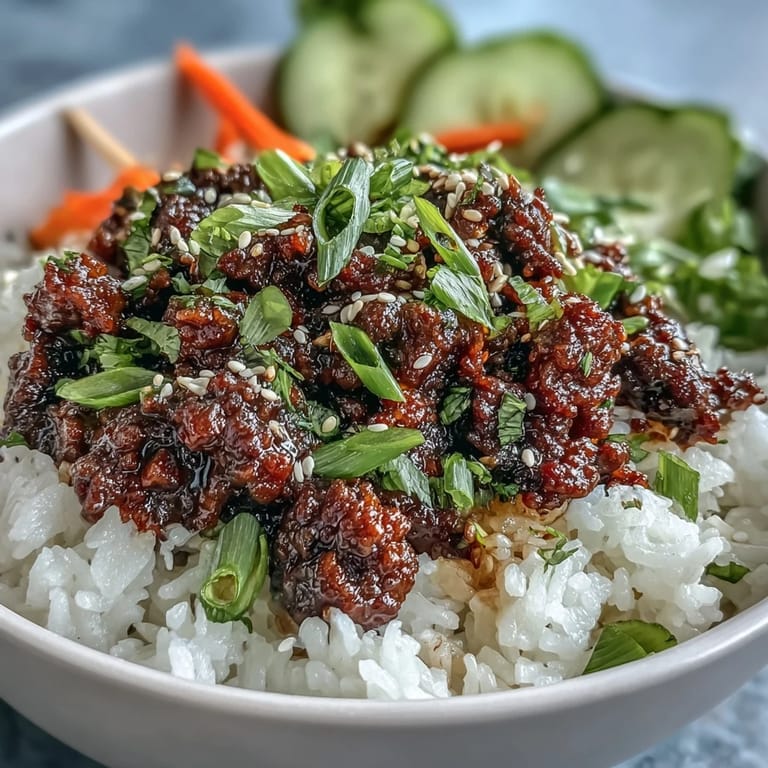
- Divide warm rice among your bowls, pile the seasoned beef on top, and then add a generous handful of pickled vegetables—they're the whole reason this doesn't feel heavy. Finish with extra green onions and sesame seeds, then eat it while everything is still warm.
 Pin This
 There was a moment last month when I made this bowl for my mom, and she said it tasted like the Korean restaurants she used to visit in the city years ago—not exactly the same, but close enough to matter. That's when I realized this simple weeknight dish had somehow become a vehicle for memory and comfort.
Why This Bowl Works Every Time
The genius of this recipe is that it relies on layers of flavor and texture rather than complicated technique. The beef gets its savory depth from the ginger and garlic, the sesame oil adds richness, and the pickled vegetables provide the brightness that keeps the whole thing from feeling one-dimensional. Everything cooks in one pan, which means cleanup is minimal and the whole meal comes together in about the time it takes to order takeout.
Room for Improvisation
This is one of those recipes that actually gets better when you adapt it to what you have. I've made it with turkey instead of beef, and it's leaner and works beautifully with the sauce. I've also topped it with a fried egg on days when I wanted extra protein, and suddenly it felt like brunch instead of dinner. The cauliflower rice version is genuinely satisfying if you're cutting back on carbs—it doesn't taste like you're missing out.
Small Touches That Make the Difference
The difference between a good version of this dish and a great one often comes down to small choices that happen in the moment. Toasting your own sesame seeds if you have time is one. Using fresh ginger instead of the jarred stuff is another. And tasting the pickled vegetables as they sit—I always steal a piece after 15 minutes to check the balance—is the kind of cooking habit that teaches you how flavors actually work.
- If you're using tamari instead of soy sauce, you might want to add a tiny pinch of salt to the beef, since tamari can sometimes taste slightly less savory.
- You can prep the pickled vegetables a day or two ahead and keep them in the fridge, which turns this into an even faster weeknight meal.
- A squeeze of lime juice over the bowl at the end adds a different kind of brightness if you want to switch things up.
 Pin This
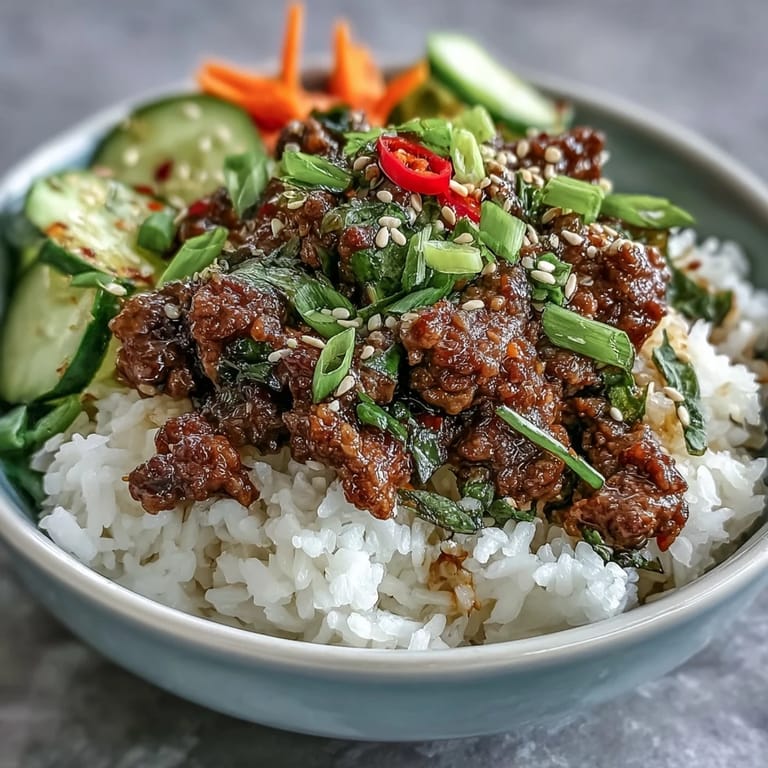
 This Korean beef bowl has become my answer to the question of what to make when I want something that feels restaurant-quality but doesn't require stress or ingredients I don't have. It's the kind of meal that reminds you that good food doesn't have to be complicated to be memorable.
Recipe FAQs
- → Can I make this dish ahead of time?
Yes, the seasoned beef and pickled vegetables store well separately for up to 4 days. Keep rice fresh and assemble bowls when ready to serve.
- → What can I substitute for gochujang?
Sriracha works well for heat, or use red pepper flakes with a touch of tomato paste for similar depth. The flavor profile will shift slightly.
- → Is cauliflower rice as good as regular rice?
Cauliflower rice creates a lighter, low-carb version that absorbs flavors beautifully. It's excellent for those watching carbohydrates while maintaining texture.
- → How spicy is this dish?
The spice level is mild to medium, controlled by the gochujang amount. Omit it entirely for a non-spicy version that still delivers great savory depth.
- → Can I use different vegetables for pickling?
Absolutely. Try daikon, bell peppers, or even sliced onions. The quick pickling liquid works with any crisp vegetables that add crunch.