 Pin This
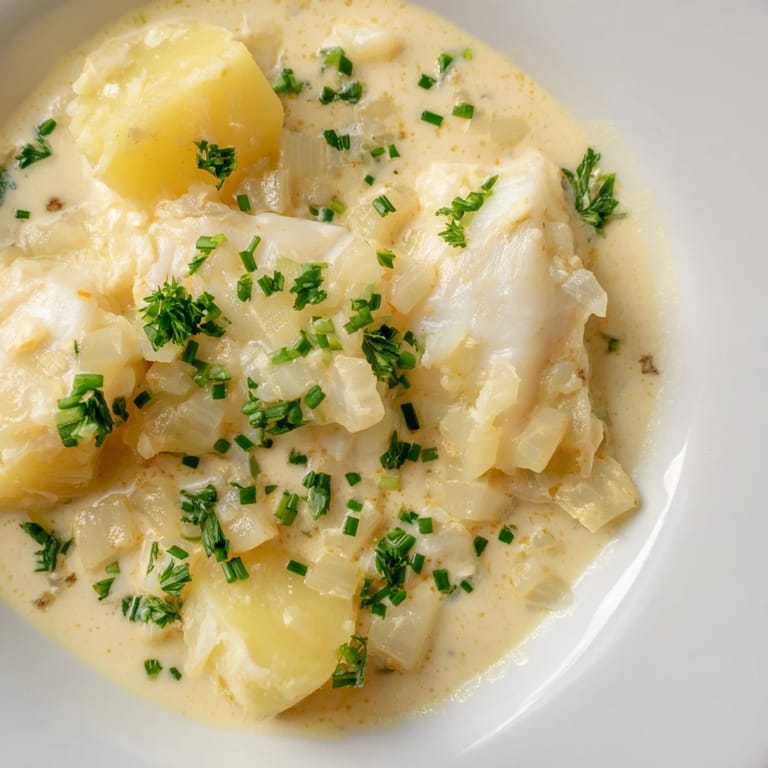
 There's something about standing in a friend's kitchen in Reykjavik on a gray afternoon, watching steam rise from a pot that smells like the sea, that makes you understand why a dish becomes part of a place's soul. She stirred this stew slowly, almost meditatively, and explained that her grandmother made it when the weather turned harsh and the days grew short. I watched how the cream swirled into the broth, how the potatoes softened into the background while the fish held its shape, and I realized this wasn't just food—it was how people survived the long winters with grace and flavor.
I made this for my partner on a night when neither of us felt like doing much of anything, but we both wanted something warm that tasted like it came from somewhere real. It turned out to be one of those meals where people eat more slowly, maybe because the flavors keep revealing themselves, or maybe because there's comfort in the simplicity. By the end of the bowl, we were already planning when to make it again.
Ingredients
- Cod or haddock fillets (500 g / 1 lb), skinless and boneless: White fish is the backbone here—it's delicate enough to break into tender flakes but sturdy enough to hold up in the broth without falling apart, which matters more than it sounds.
- Potatoes (500 g / 1 lb), peeled and diced: Cut them into small, even pieces so they cook at the same rate and partially dissolve into the cream, which is exactly what creates the stew's natural thickness.
- Butter (60 g / 4 tbsp): This is your flavor foundation—don't skip it or substitute it with oil, because the richness is part of the whole point.
- Whole milk (500 ml / 2 cups) and heavy cream (100 ml / ⅓ cup + 1 tbsp): Together they build a creamy base without being heavy or overwhelming; use full-fat versions because that's where the flavor lives.
- Onion (1 medium), finely chopped: This softens into the background, adding sweetness and body that you taste but never notice as a distinct ingredient.
- Fresh parsley and chives (2 tbsp each), chopped: These aren't optional—they brighten everything at the end and remind you that this dish comes from a place where herbs matter year-round.
- Bay leaf, salt, white pepper, and nutmeg: The bay leaf perfumes the fish while cooking, white pepper adds a gentle warmth without heat, and just a pinch of nutmeg makes people ask what that mysterious something is.
Tired of Takeout? 🥡
Get 10 meals you can make faster than delivery arrives. Seriously.
One email. No spam. Unsubscribe anytime.
Instructions
- Start with the potatoes:
- Cut them small and boil them in salted water until they're completely tender—this is crucial because they need to soften enough to partially break down into the cream later. If you rush this step, everything suffers.
- Poach the fish gently:
- Use just enough water to cover, add the bay leaf and salt, and keep the heat low so the fish stays delicate and the poaching liquid stays clean. The fish will turn from translucent to opaque when it's done, and that's your signal to stop.
- Build the base with onion and butter:
- Let the onion become truly soft and translucent—about five minutes—so it releases its sweetness into the butter. This is the flavor foundation for everything that comes next.
- Add the potatoes and break them down:
- Mash them gently against the side of the pot, but only enough to break down about half of them. You want texture, not baby food.
- Combine fish, potatoes, and poaching liquid:
- Flake the fish into large, tender pieces and fold everything together gently so the pieces stay whole and the broth stays clear.
- Add milk and cream slowly:
- Pour it in while stirring, then keep the heat low and cook gently until it's steaming—never let it boil, because boiling breaks the delicate balance and makes the fish tough. Taste as you go, because everything will need a little salt.
- Season and finish:
- White pepper and just a whisper of nutmeg add warmth without heat. Stir in half the herbs now and save the rest for the top of each bowl.
 Pin This
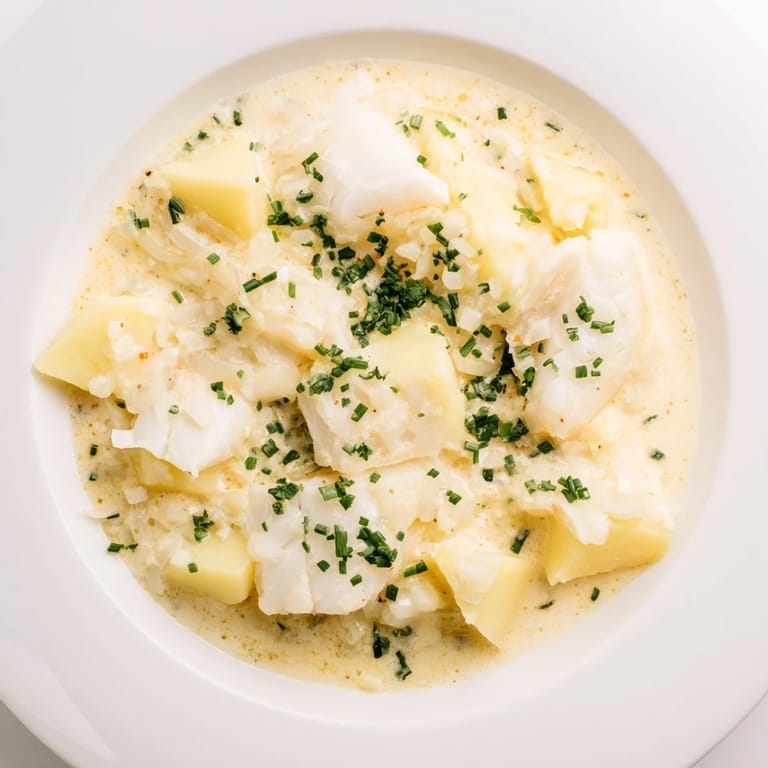
 There's a moment after everything is combined and you ladle it into a bowl, steam rising, herbs scattered on top, when you suddenly understand why people in cold places make food like this. It's not fancy, but it's complete—everything you need, nothing you don't, all in one warm bowl that says someone cared enough to cook it right.
The Creaminess Question
The cream in this stew isn't just an ingredient—it's the whole point. It smooths everything together, but it has to be cooked just right or you lose it. The trick is to treat it like something precious: add it slowly, stir it often, and never, ever let it boil. Some people make a lighter version with just milk, and that works fine, but it tastes like a different dish altogether—thinner, less substantial. If you're going to make this, make it the way it's meant to be made.
Fish Matters More Than You Think
Cod and haddock are traditional because they're sturdy enough to poach without falling apart, but delicate enough to feel special on your spoon. If you can't find either, pollock works beautifully. The fishmonger at my local market told me once that people overthink fish—just pick something white and firm, ask the fishmonger for honest advice, and trust that part. Don't use frozen fish if you can avoid it, because the texture suffers and you'll notice it in every spoonful.
When to Serve This, and What Goes With It
This stew belongs on nights when the weather is turning, when you want something that tastes like home even if you're far from it, or when you're cooking for people who need to know you care. Serve it in bowls, hot and generous, with dark rye bread alongside—the kind that's slightly sweet and dense enough to soak up the broth without falling apart. A simple green salad with vinegar helps cut through the richness, but honestly, you don't need anything else.
- Use full-fat milk and cream because that's where the flavor and the comfort come from.
- Don't skip the poaching liquid—it's where all the fish flavor ends up.
- Taste it before you serve it and adjust the salt; every batch is different depending on your fish and your potatoes.
 Pin This
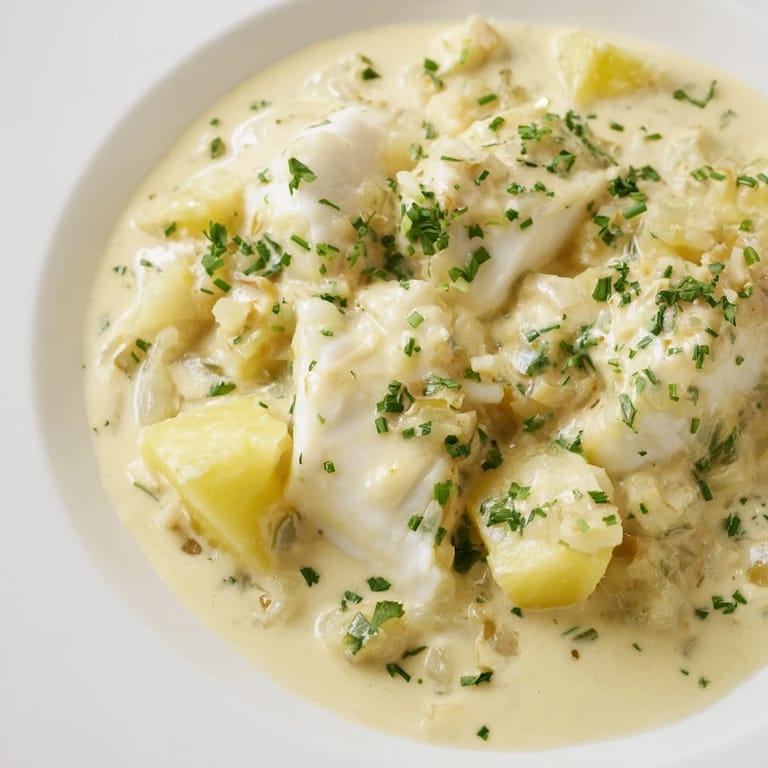
 This is the kind of stew that turns an ordinary evening into something worth remembering. Make it when you need comfort, when you want to impress without effort, or when you just want to understand why people in Iceland smile through the long winters.
Recipe FAQs
- → What type of fish works best?
Cod or haddock fillets are ideal as they hold texture well and have a mild, delicate flavor that complements the creamy base.
- → Can I substitute the cream with something else?
Milk alone creates a lighter stew, but the cream adds richness and smoothness to the texture. Both options work depending on preference.
- → How do I prevent the fish from breaking apart too much?
Poach fish gently until opaque and flake carefully into large pieces to maintain texture within the stew.
- → What herbs are used for flavoring?
Fresh parsley and chives provide a bright, fresh note that balances the creamy and buttery elements of the stew.
- → Is it necessary to mash the potatoes completely?
Partially mashing potatoes keeps some chunks for texture, contributing to a hearty mouthfeel rather than a smooth puree.