 Pin This
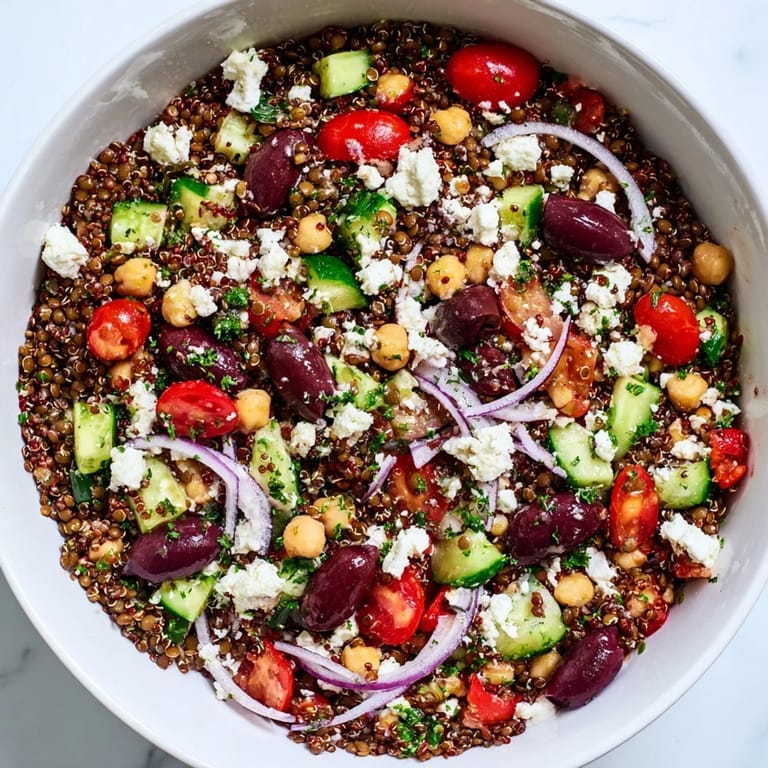
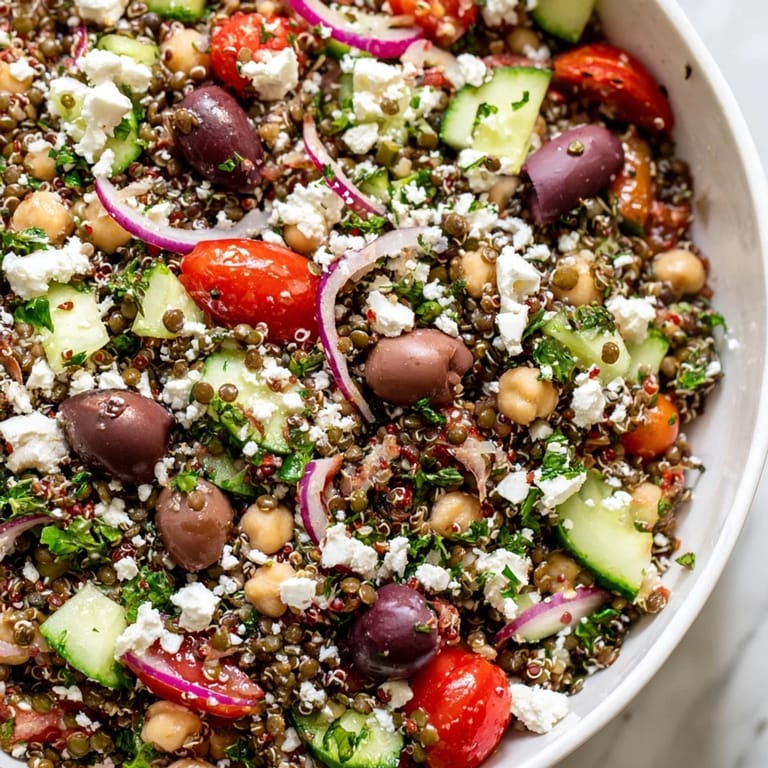
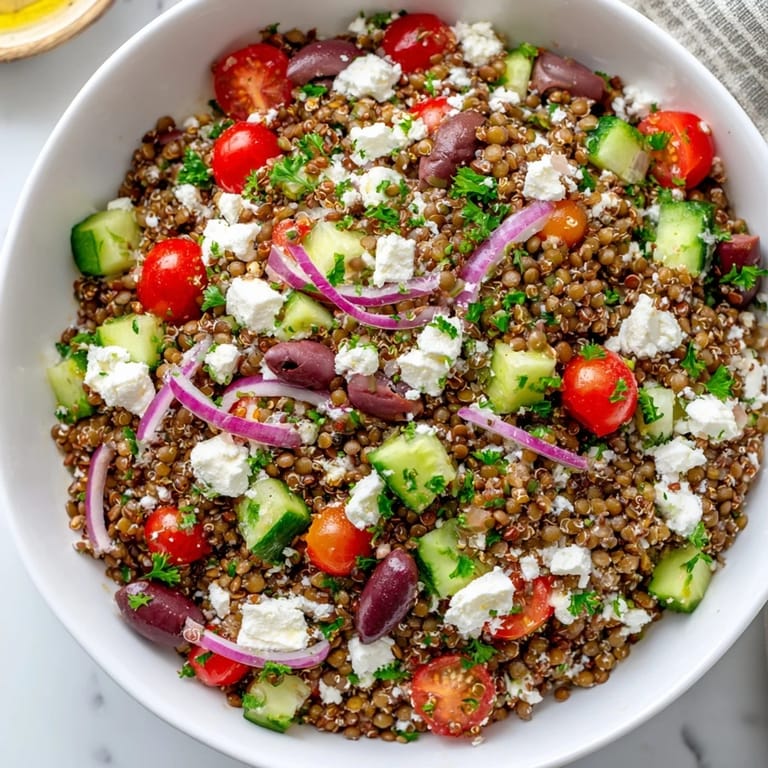
 The sound of quinoa tumbling into the strainer always makes me smile, those tiny spirals clinging to the mesh like they don't want to be rinsed. I started making this salad on a particularly hot July afternoon when I'd promised friends a potluck contribution but had forgotten until two hours before. What began as a pantry raid turned into something I now make at least twice a month. The colors alone, bright red tomatoes against pale green cucumber and deep purple olives, make it feel like a celebration even when it's just Tuesday.
My neighbor Diane once brought this to a backyard gathering, and I watched three people go back for seconds before the main course even arrived. She'd packed it in a big glass bowl, and the vinaigrette had settled at the bottom, making everything glisten when she tossed it again at the table. One guest, who usually avoided anything labeled healthy, scraped his plate clean and asked if there was more. That's when I realized a salad could be the main event, not just the opening act.
Ingredients
- Uncooked quinoa: Rinsing it well removes the bitter coating that can make it taste soapy, a mistake I made exactly once before learning my lesson.
- Dried green or brown lentils: These hold their shape beautifully unlike red lentils, giving you tender but distinct bites instead of mush.
- Chickpeas: Draining and rinsing them gets rid of that starchy canned liquid that can make the whole salad taste flat and one note.
- Cherry tomatoes: Halving them releases their sweet juices into the salad, creating little pockets of bright flavor throughout.
- Cucumber: I prefer English cucumbers because they have fewer seeds and a thinner skin, but any cucumber works if you peel the thick skinned varieties.
- Red bell pepper: The sweetness balances the tangy vinaigrette, and the crunch adds another layer of texture.
- Red onion: Slicing it thin is key, thick chunks overpower everything else and make people pick them out.
- Kalamata olives: Their briny punch wakes up the whole dish, though I once used green olives when that's all I had and it still worked.
- Fresh parsley: This isn't just garnish, it adds a grassy freshness that dried herbs can't replicate.
- Feta cheese: The salty creaminess melts slightly into the warm grains if you add it right after cooking, creating little pockets of richness.
- Extra virgin olive oil: Use the good stuff here since it's not being cooked, the flavor comes through clearly in every bite.
- Red wine vinegar: This gives the dressing its characteristic Greek tang, sharp but not harsh.
- Dijon mustard: It emulsifies the vinaigrette so the oil and vinegar don't separate, plus adds a subtle depth.
- Garlic: Mincing it fine prevents anyone from biting into a strong chunk, distributing the flavor evenly instead.
- Dried oregano: This is the herb that makes it unmistakably Greek, earthy and slightly peppery.
Tired of Takeout? 🥡
Get 10 meals you can make faster than delivery arrives. Seriously.
One email. No spam. Unsubscribe anytime.
Instructions
- Cook the quinoa:
- Bring the rinsed quinoa and water to a boil, then immediately turn it down to a gentle simmer and cover it, resisting the urge to peek for at least 10 minutes. When all the water disappears and you see little spirals on each grain, fluff it with a fork and spread it on a plate to cool faster.
- Cook the lentils:
- Use plenty of water, at least three times the volume of lentils, so they can tumble freely and cook evenly without sticking. Start tasting them at 15 minutes, you want them tender enough to bite through easily but still holding their shape, not splitting apart.
- Prepare the vinaigrette:
- Whisk everything together vigorously until it looks cloudy and slightly thickened, which means the mustard has done its job binding the oil and vinegar. Taste it and adjust, it should be tangy and bold since it's dressing a lot of mild grains and vegetables.
- Assemble the salad:
- Combine all the cooled grains, legumes, and fresh vegetables in your largest bowl, you need room to toss without sending chickpeas flying. Add the vegetables last so they stay on top and don't get buried under the heavier ingredients.
- Dress and toss:
- Pour the vinaigrette over everything and use your hands or two large spoons to gently fold it all together, making sure the dressing reaches the bottom. Be patient, this takes a minute or two of thorough mixing to coat everything evenly.
- Add the feta:
- Crumble it over the top just before serving so it stays in visible chunks rather than dissolving into the salad. If you're making this ahead, wait to add the feta until right before eating so it doesn't get soggy.
 Pin This
 I brought this to a family lunch once, and my uncle, who claims to be a meat and potatoes man, ate two full plates and then texted me the next day asking for the recipe. He said he'd made it for himself for lunch three days in a row, which might be the highest compliment I've ever received. Sometimes the best dishes are the ones that surprise people, that make them realize they've been missing something they didn't know they wanted.
Making It Your Own
This salad is endlessly adaptable once you understand the basic formula of grains, legumes, vegetables, and a bold dressing. I've swapped the quinoa for farro when I wanted something chewier, used white beans instead of chickpeas when that's what was in the pantry, and thrown in whatever vegetables looked good at the market. The key is maintaining the balance, something creamy, something crunchy, something tangy, and something fresh. One friend adds diced avocado right before serving, another stirs in a handful of toasted pine nuts for richness, and my sister likes to add thinly sliced fennel for an anise note that plays beautifully with the oregano.
Storage and Meal Prep
I've found this salad is actually better suited to meal prep than eating fresh, which is rare and wonderful. Make a big batch on Sunday, portion it into containers, and you've got four lunches that improve each day as the flavors develop. Store the feta separately if you're keeping it longer than two days, adding it fresh to each serving. The vinaigrette keeps the grains moist without making them mushy, and the vegetables stay surprisingly crisp if you've let everything cool properly before mixing. I've eaten this up to four days after making it with no loss of quality, just give it a good stir before eating since the dressing settles.
Serving Suggestions
While this salad absolutely works as a complete meal on its own, I've served it alongside grilled lamb chops for dinner parties and next to roasted chicken for family meals. It's substantial enough to be the main course for lunch, especially if you add a handful of arugula on top for extra greens. The leftovers, if you're lucky enough to have any, make an excellent stuffing for pita pockets or a base for grain bowls topped with a fried egg.
- Serve it at room temperature rather than cold straight from the fridge to let the flavors bloom.
- A squeeze of fresh lemon juice right before serving brightens everything up if it's been sitting a while.
- Warm pita bread or crusty baguette slices are perfect for scooping up any vinaigrette that pools at the bottom of your bowl.
 Pin This
 This salad has become my answer to what should I bring and what's for lunch and even what can I make that feels special without much effort. It's proof that simple ingredients, when treated with a little attention and tossed with a good dressing, can turn into something you actually crave.
Recipe FAQs
- → Can I prepare this salad ahead of time?
Yes, this salad stores beautifully for up to three days in the refrigerator. In fact, flavors meld and develop better when refrigerated overnight. Keep the vinaigrette separate if you prefer a crispier texture, or combine everything at once for deeper flavor absorption.
- → How do I cook quinoa and lentils properly?
Cook quinoa by simmering 1 cup rinsed quinoa with 2 cups water for 12-15 minutes until the water absorbs completely. Lentils cook separately: simmer in plenty of water for 15-20 minutes until tender but still firm. Both should cool before combining to prevent a mushy salad.
- → What are good protein additions to this salad?
Grilled chicken breast and shrimp are excellent protein additions. For vegetarian options, increase chickpeas or add roasted tofu. White beans or black beans work as legume substitutes or additions for extra heartiness.
- → How can I make this salad vegan?
Simply omit the feta cheese or replace it with a plant-based feta alternative available at most grocery stores. The rest of the ingredients are naturally vegan, making this a naturally inclusive dish.
- → Can I modify the vinaigrette?
Absolutely. Swap red wine vinegar for fresh lemon juice for brightness, or use balsamic vinegar for deeper flavor. Adjust oregano quantities based on preference, and experiment with different mustard types for subtle variations.
- → What vegetables can I substitute?
Use diced zucchini, roasted eggplant, artichoke hearts, or sun-dried tomatoes instead of standard vegetables. Spinach or arugula work well as bed alternatives. Adapt based on seasonal availability and personal preferences.