 Pin This
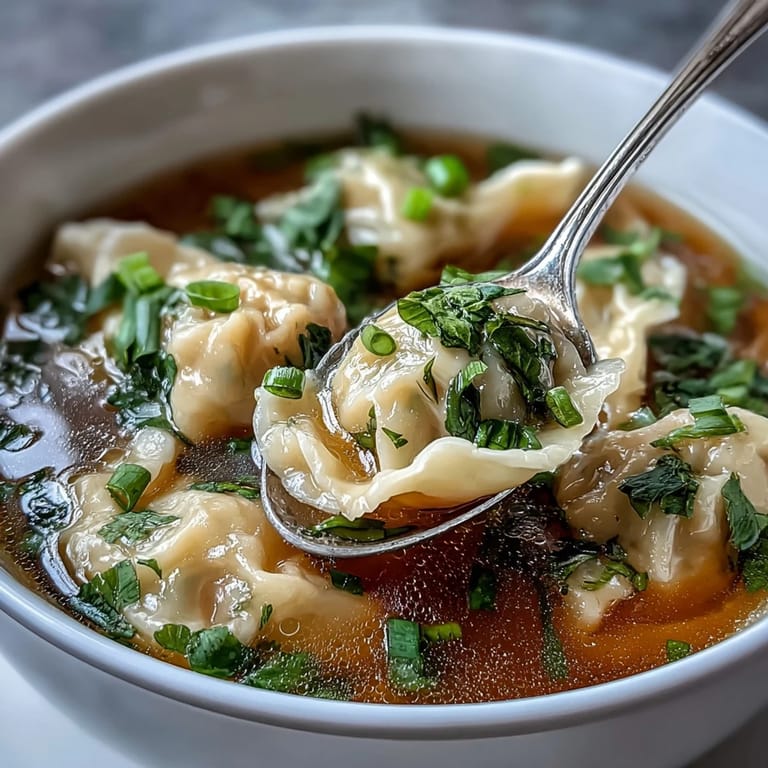
 My neighbor taught me this dumpling soup on a quiet Tuesday afternoon when she noticed me struggling through my fifth attempt at homemade dumplings. She walked in with a bag of flour and started folding without ceremony, talking about how her grandmother made these during winter months to warm the whole family. The broth was simple but somehow held everything together—chicken, ginger, the delicate parcels of filling that burst when you bit into them. That first bowl I made under her watchful eye tasted less like food and more like being cared for by someone who understood that comfort doesn't need to be complicated.
I made this soup for my roommate during her first bad cold, and she ate two bowls without saying much, just quiet appreciation between spoonfuls. The steam rising from the bowl, the softness of the dumplings yielding to her spoon—it was the kind of cooking moment where you realize food is really just organized kindness. She asked for the recipe the next week when she was healthy again, which somehow felt like the biggest compliment.
Ingredients
- All-purpose flour: The foundation of your dough, and room temperature water matters more than you'd think—cold water makes the dough fight back, but slightly warm water softens it into something almost silky.
- Ground chicken: Look for chicken that's finely minced rather than chunky, as it binds better with the other filling ingredients and creates a smoother bite.
- Sesame oil: Just a teaspoon seems small until you smell it toasting in the warm broth—it's the secret ingredient that makes people ask what you did differently.
- Fresh ginger and garlic: Freshly minced makes all the difference; the oils are still alive and the flavor cuts through the richness instead of getting lost.
- Chicken broth: Low sodium lets you taste the actual chicken and aromatics rather than salt, and homemade broth is worth the small effort if you have time.
- Scallions: Buy more than you think you need because they're better fresh and scattered on top rather than cooked down into the soup.
- Baby spinach: Optional but recommended—it wilts into the broth in seconds and adds a subtle earthiness that makes the whole bowl feel more complete.
Tired of Takeout? 🥡
Get 10 meals you can make faster than delivery arrives. Seriously.
One email. No spam. Unsubscribe anytime.
Instructions
- Mix your dough into submission:
- Combine flour and salt in a bowl, then add water gradually while stirring until it comes together into a shaggy mass. Knead for five minutes until the dough stops sticking to your hands and feels almost elastic—this is easier than it sounds and feels surprisingly meditative.
- Let it rest and relax:
- Cover your dough and walk away for fifteen minutes while you prep everything else. This isn't optional laziness; the rest makes rolling out the dough infinitely easier.
- Build your filling with intention:
- Mix the ground chicken with soy sauce, sesame oil, minced garlic, ginger, scallions, carrot, and white pepper in a separate bowl. Taste a tiny bit on your finger to adjust seasonings before you commit it to dumplings—this is your only real chance to fix it.
- Shape each dumpling like you mean it:
- Divide dough into about twenty balls, flatten each with your palm, then roll into a thin circle roughly the size of a small glass bottom. Place a heaping teaspoon of filling in the center and fold the circle in half, then pinch the edges together firmly so they don't pop open during cooking.
- Boil them gently until they float:
- Bring a large pot of water to a gentle boil and add dumplings in batches so they have room to move around. Once they float to the surface, cook for another minute or so, then fish them out with a slotted spoon and set aside on a plate.
- Simmer your broth with the good stuff:
- In a separate pot, bring chicken broth to a gentle simmer and stir in soy sauce and sesame oil. Add spinach and sliced scallions, letting them wilt into the broth while you arrange your cooked dumplings in bowls.
- Bring it all together:
- Pour the hot broth over the dumplings and cook together for just two minutes so everything warms through. Taste and adjust seasoning with salt and pepper, remembering that a little underseasoned broth is easier to fix than one that's too salty.
 Pin This
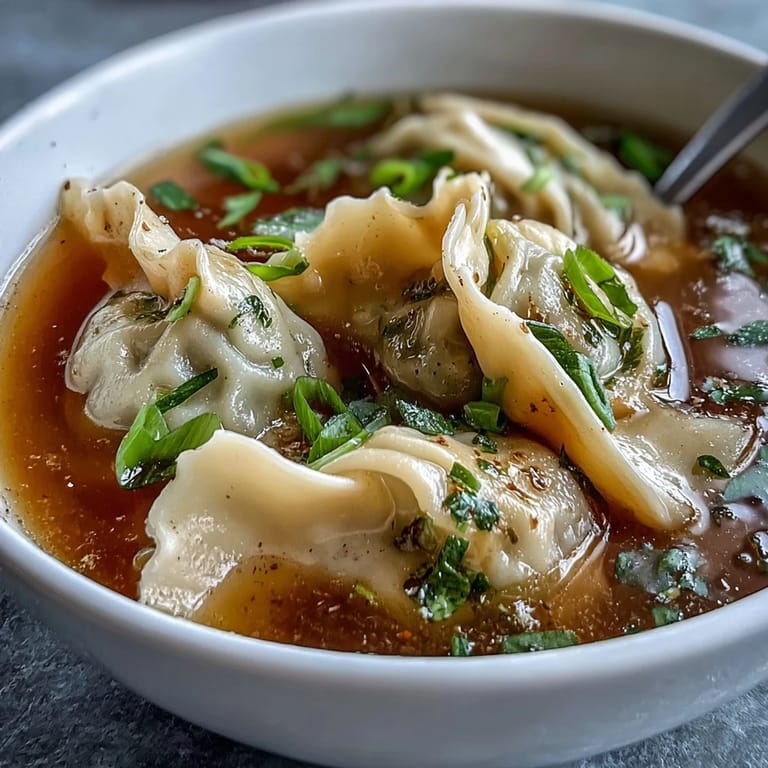
 There's a moment right after you add the first dumpling to boiling water when you hold your breath, hoping it won't split open and disappoint you. Then it bobs to the surface like a small miracle, intact and ready, and you remember why you bother learning to cook at all. It's the smallest thing but somehow the most important.
The Art of the Dumpling Fold
Folding dumplings is less about technical precision and more about developing a feel for the dough—your hands learn the rhythm long before your brain does. I spent my first attempt overthinking every fold, watching tutorial videos and second-guessing myself, but the best dumplings came on attempt three when I stopped watching and just let my hands do what they'd been practicing. The edges should seal where the dough overlaps, and a firm pinch is better than a gentle squeeze.
Broth as the Backbone
The quality of your broth is everything here because it's not competing with cream or complicated flavors—it's just chicken, heat, and aromatics. I learned this the hard way by using boxed broth once and wondering why the whole soup felt flat, even though I did everything else right. Since then, I've started making small batches of broth when I roast a chicken, freezing it in portions so I always have something better than what comes in a box.
Timing and Temperature Matter More Than You Think
Everything about this soup rewards a gentle hand and patient timing rather than rushing through high heat. The dumplings need a gentle boil where they can move freely, the broth should simmer rather than aggressive rolling boil, and the final assembly should happen just long enough to warm everything through. I used to blast my broth at high heat thinking faster meant better, but that just made the dumplings tough and the overall soup feel harsh instead of comforting.
- Keep water at a gentle boil for dumplings, not a violent rolling boil that could damage delicate edges.
- Taste your broth before the dumplings go in so you can adjust seasoning without having to fish them out later.
- Have all your components ready before you start cooking so you're never left scrambling with raw dumplings and cooling broth.
 Pin This
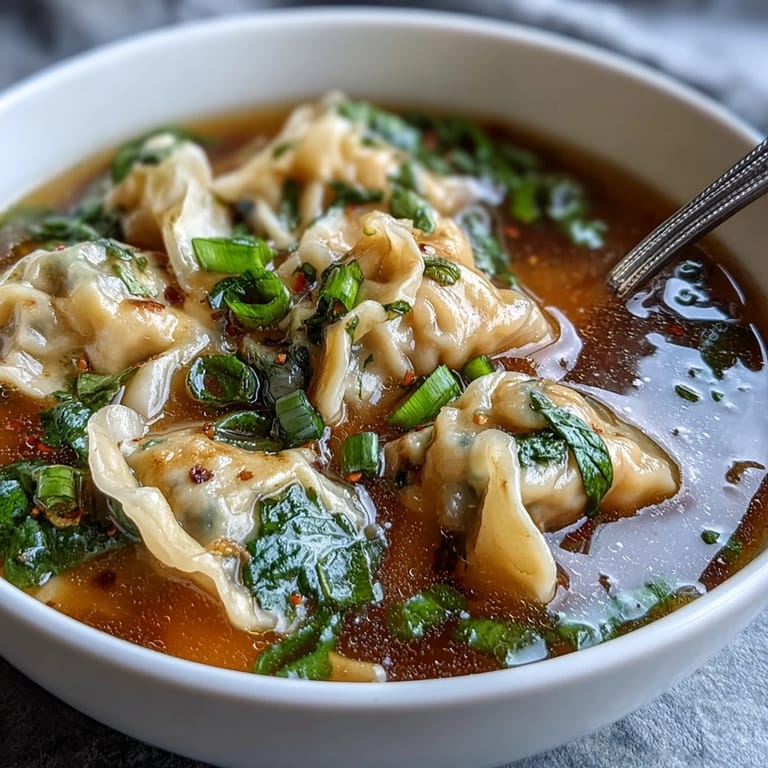
 This soup became my go-to for moments when I wanted to cook something that felt special without pretending, something that tastes like care in a bowl. Every time I make it, I think of my neighbor and that Tuesday afternoon, and I'm grateful for hands that taught me without judgment.
Recipe FAQs
- → How do I know when dumplings are cooked?
Dumplings are ready when they float to the surface and have a tender texture when bitten into.
- → Can I use other meats instead of chicken for the filling?
Yes, ground pork or tofu make great alternatives for the filling if preferred.
- → What is the purpose of sesame oil in this soup?
Sesame oil adds a rich, nutty aroma and depth that enhances the overall savory profile.
- → Can this soup be made spicier?
Adding a few drops of chili oil or fresh chilies will boost the spice level to your liking.
- → What can be added for extra greens in the soup?
Baby spinach is a great optional addition that blends well with the broth and dumplings.