 Pin This
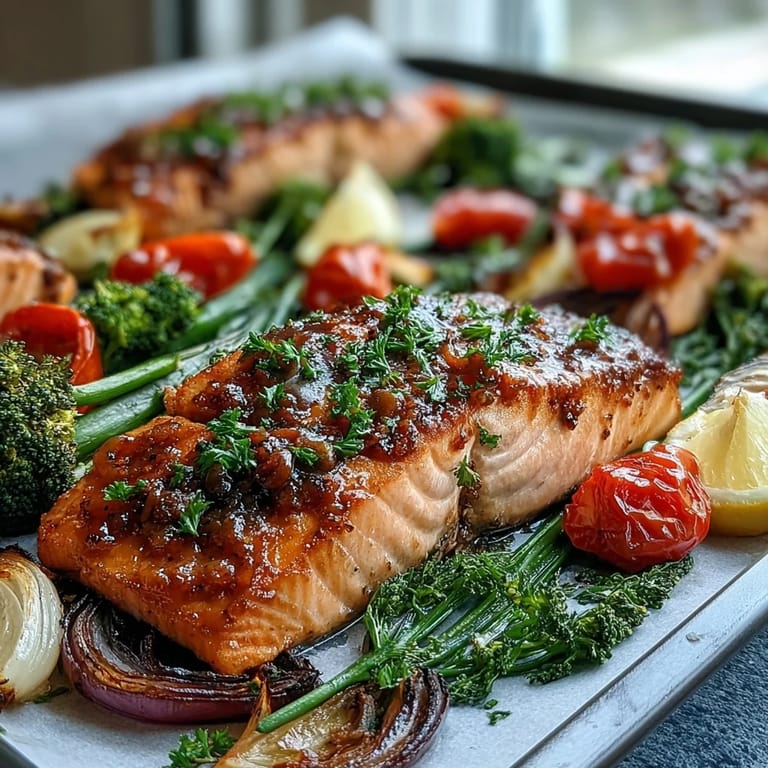
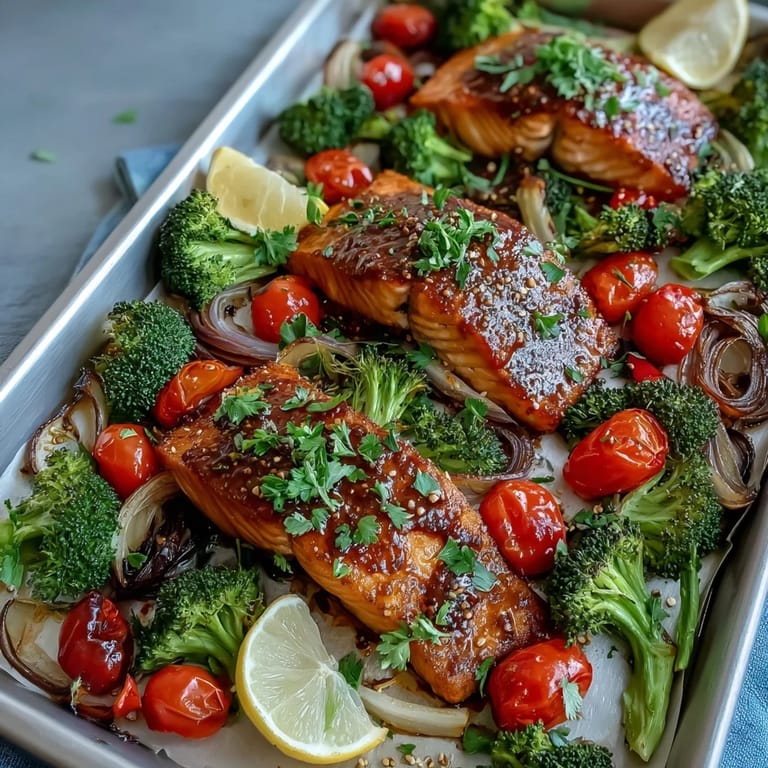
 My neighbor brought over a sheet pan salmon dinner one Wednesday evening, and I watched her pull it from the oven with this golden, glossy finish that made my kitchen smell impossibly good. She'd glazed it with Dijon mustard and lemon, roasted everything on one pan, and somehow made a weeknight dinner feel effortless and fancy at the same time. I asked for the recipe that night, made it the following week, and realized this was the kind of meal that changes how you think about cooking for yourself. No fuss, no excuses, just honest food that tastes like you actually tried.
I cooked this for my sister after she'd had a rough day at work, and watching her face light up when she tasted it reminded me that food does more than fill your stomach. The salmon flaked apart at the gentlest touch, and she kept pausing between bites to savor it, something she almost never does. That's when I knew this recipe wasn't just easy—it was the kind of meal that makes people feel cared for.
Ingredients
- Salmon fillets (4, about 6 oz each): Look for flesh that's firm and bright, not dull or soft; skin-on holds moisture better during roasting, but skinless works just fine if that's what you prefer.
- Dijon mustard (2 tablespoons): This is your secret weapon—the tangy bite cuts through the richness of the salmon and caramelizes beautifully, don't skip it for yellow mustard.
- Olive oil (3 tablespoons total): Use a good quality extra virgin for drizzling, but regular olive oil works if that's what you have on hand.
- Lemon juice (1 tablespoon): Fresh squeezed makes a difference, but bottled works if you're in a pinch.
- Honey (1 teaspoon): A tiny bit of sweetness balances the mustard's sharpness and helps everything glaze.
- Garlic (1 clove, minced): Mince it fine so it distributes evenly through the glaze and doesn't burn in the oven.
- Broccoli florets (2 cups): Cut them into similar sizes so they roast evenly; smaller pieces crisp up nicely at the edges.
- Cherry tomatoes (2 cups, halved): Halving them prevents them from rolling around and lets the cut side caramelize.
- Red bell pepper (1 large, sliced): The sweetness plays beautifully against the tangy salmon; slice into strips about a thumb's width apart.
- Red onion (1 medium, wedges): The edges turn sweet and almost jammy as they roast, trust the process.
- Dried Italian herbs or herbes de Provence (1 teaspoon): If you have fresh herbs, use about three times this amount and toss them in toward the end of roasting so they don't burn.
Tired of Takeout? 🥡
Get 10 meals you can make faster than delivery arrives. Seriously.
One email. No spam. Unsubscribe anytime.
Instructions
- Get your oven ready and prep your pan:
- Crank your oven to 425°F and line a large sheet pan with parchment paper—this prevents sticking and makes cleanup disappear. If you don't have parchment, a light coating of oil works, though you'll be grateful for the paper when you're done.
- Build the glaze:
- Whisk together the Dijon, olive oil, lemon juice, honey, minced garlic, salt, and pepper in a small bowl until it's smooth and cohesive. This takes about a minute, and you'll know it's ready when it looks like a thick, spreadable paste.
- Arrange and season the vegetables:
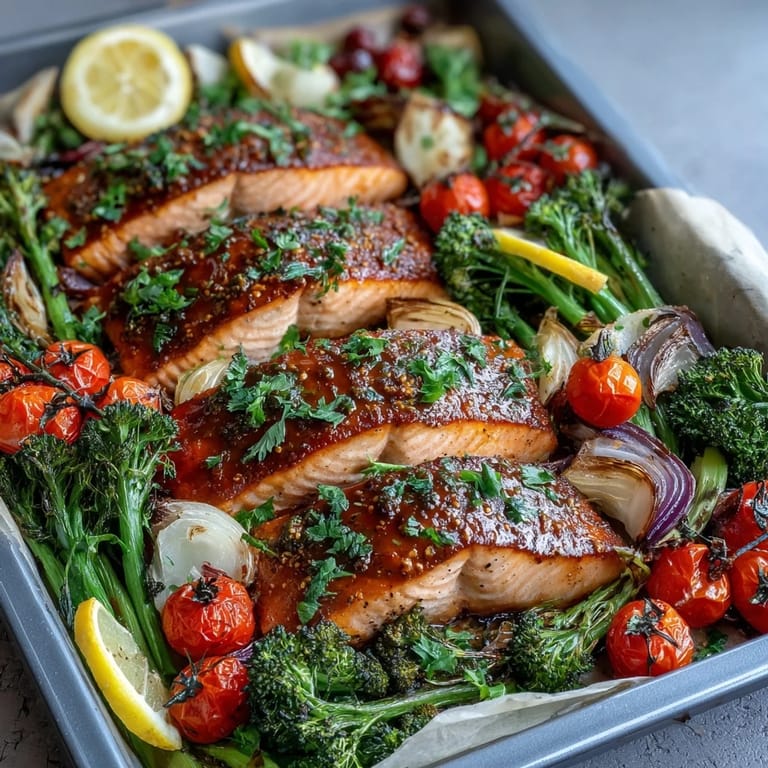
- Spread all your vegetables across the sheet pan, leaving space in the middle and around the edges for the salmon; drizzle with olive oil, sprinkle with herbs, salt, and pepper, then toss everything until it's evenly coated. Spread them back out in a single layer so they roast rather than steam.
- Position the salmon and apply the glaze:
- Nestle your salmon fillets skin-side down (if using skin-on) among the vegetables, then brush each fillet generously with that Dijon mixture until it's coated on top and the sides. Don't be shy—this glaze is what creates the magic.
- Roast until everything is golden and cooked through:
- Pop the pan into the oven for 20 to 25 minutes; you'll know it's done when the salmon is opaque, flakes gently with a fork, and the vegetables have caramelized edges. The timing depends on the thickness of your fillets, so start checking around the 20-minute mark.
- Finish and serve:
- Pull everything from the oven, scatter fresh parsley over the top if you have it, and serve with lemon wedges for squeezing. The brightness of the lemon at the end lifts everything and makes it feel complete.
 Pin This
 My seven-year-old nephew, who normally pushes vegetables around his plate like he's defusing a bomb, actually asked for seconds of the roasted broccoli. That's the moment I understood this recipe works not because it's complicated or trendy, but because it lets real ingredients do what they do best.
The Magic of the Dijon Glaze
The mustard doesn't just flavor the salmon—it caramelizes in the heat of the oven, creating a glaze that's both tangy and slightly sweet, with just enough honey to balance it out. The garlic infuses everything without overpowering, and you end up with something that tastes like you spent hours in the kitchen when really you've barely handled the food. I've made this same glaze on chicken thighs and even used it as a base for a dipping sauce, so once you understand how it works, it becomes a tool you reach for again and again.
Why Sheet Pan Meals Changed My Weeknight Cooking
Before I embraced one-pan dinners, I'd have salmon on one burner, vegetables sautéing somewhere else, and by the time everything hit the plate, the salmon was cold and I was exhausted. Roasting everything together means the salmon gently cooks while the vegetables caramelize below it, and somehow the oven does all the heavy lifting. There's something almost meditation-like about setting a timer, knowing nothing will burn if you're not hovering over it, and coming back to a complete, beautiful dinner.
Flexibility and Swaps That Work
The beauty of this recipe is that it adapts to what's actually in your kitchen or what's at the market that day. Asparagus, green beans, zucchini, or even brussels sprouts roast beautifully alongside the salmon and soak up that same tangy glaze. I've swapped the cherry tomatoes for regular tomato slices, used yellow bell pepper instead of red, and even thrown in some thin-sliced fennel when I had it on hand—everything works because the foundation is solid.
- Grate fresh lemon zest over the salmon before roasting for extra brightness that stays in your mouth after you've finished eating.
- If you have fresh herbs like dill or tarragon, use them fresh and scatter them over right before serving instead of dried herbs.
- A splash of white wine stirred into the glaze adds depth, though the recipe is perfect without it too.
 Pin This
 This is the kind of recipe that earns a permanent spot in your rotation because it delivers every single time—no drama, no surprises, just honest, delicious food. Make it for yourself on a random Tuesday, and you'll understand why it's become the meal I reach for whenever I want to feel like I've actually cooked something.
Recipe FAQs
- → What type of salmon works best for this dish?
Both skin-on and skinless salmon fillets can be used. Skin-on helps keep the fillets moist while roasting.
- → Can I substitute the vegetables used?
Yes, broccoli can be swapped with asparagus or green beans, and feel free to use other fresh vegetables you enjoy.
- → How do I know when the salmon is cooked properly?
The salmon is done when it turns opaque and flakes easily with a fork, typically after 20–25 minutes in a 220°C oven.
- → What herbs complement the vegetables best?
Dried Italian herbs or herbes de Provence add a fragrant, savory touch that pairs well with the roasted vegetables and salmon.
- → Any tips to enhance the flavor of the glaze?
Adding finely grated lemon zest on top of the salmon before roasting can brighten the glaze and add extra zestiness.