 Pin This
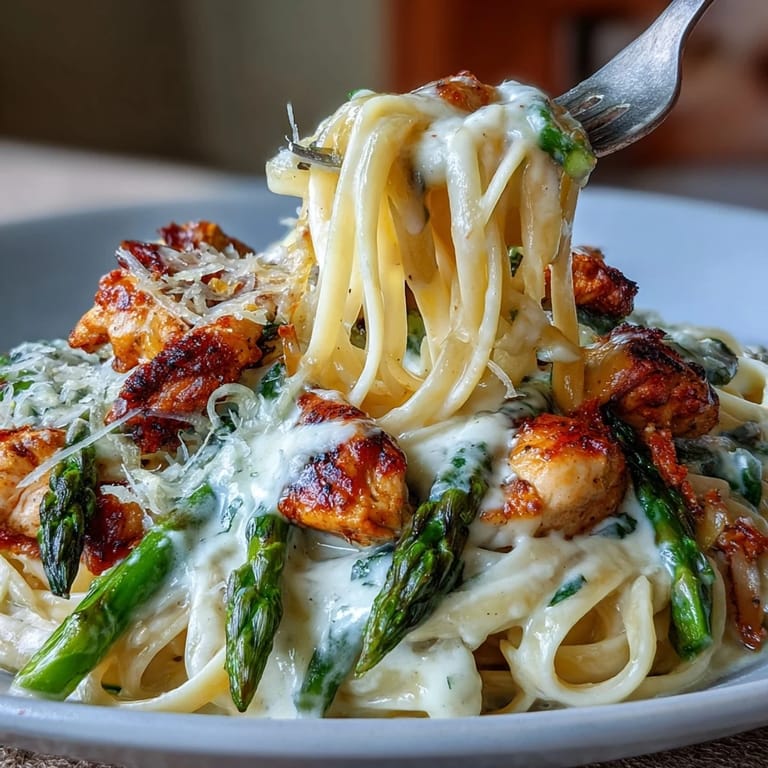
 There's something about the smell of Asiago crisping in the oven that stops me mid-conversation every single time. I discovered this dish on a Tuesday evening when I had chicken, leftover asparagus, and cream in my fridge, and somehow it turned into something my family actually requested again. The combination of that nutty, golden cheese crust on the asparagus with the silky pasta sauce felt like I'd accidentally created something restaurant-worthy in my own kitchen. What started as improvisation became the meal I make when I want to feel like I'm doing something special without spending hours cooking.
I made this for my neighbors last spring when they'd helped us move boxes all afternoon, and I remember them standing in my kitchen, watching the asparagus turn golden while we talked about their garden plans. My neighbor Sarah kept saying she could eat the asparagus alone as a snack, which tells you everything about how that roasting step transforms something ordinary into something crave-worthy. That meal turned into a tradition, and now they text me when they're craving it.
Ingredients
- Boneless, skinless chicken breasts: Cut into bite-sized pieces so they cook evenly and stay tender, about 350 grams total.
- Linguine: Use 350 grams and cook it until it has just a slight resistance when you bite it, not mushy.
- Asparagus: About 300 grams, and trimming those woody ends makes a real difference in texture, trust me on this.
- Garlic: Three cloves minced fresh, because jarred just doesn't carry the same brightness in the cream sauce.
- Onion: One small onion finely chopped creates a subtle sweetness that balances the richness.
- Asiago cheese: 120 grams total, divided between the asparagus and the sauce for maximum flavor impact.
- Heavy cream: 200 milliliters creates that luxurious coating, and yes, there's no skipping this one.
- Unsalted butter: 30 grams helps build the base for your sauce before the cream goes in.
- Olive oil: 2 tablespoons total, use good quality because you'll taste it directly in this dish.
- All-purpose flour: Just 1 tablespoon acts as a thickener and prevents the sauce from breaking.
- Salt and black pepper: Season at each step, not just at the end, for depth.
- Fresh parsley: Optional but worth it, the green brightness cuts through the richness beautifully.
Tired of Takeout? 🥡
Get 10 meals you can make faster than delivery arrives. Seriously.
One email. No spam. Unsubscribe anytime.
Instructions
- Get your oven ready:
- Preheat your oven to 220°C and line a baking sheet with parchment paper while you prep everything else.
- Roast the asparagus:
- Toss those asparagus pieces with olive oil, salt, pepper, and 40 grams of the Asiago cheese, then spread them on your prepared sheet. They need 10 to 12 minutes in that hot oven until the edges turn golden and crispy, which is when the magic happens.
- Start the pasta:
- While the asparagus roasts, get a large pot of salted water boiling and add your linguine, cooking until it has just a tiny bit of resistance when you bite it. Before you drain it, scoop out 120 milliliters of that starchy pasta water and set it aside, because you'll use it to adjust your sauce.
- Cook the chicken:
- In a large skillet, heat the olive oil and butter over medium-high heat until the butter foams, then add your chicken pieces seasoned with salt and pepper. Cook for about 5 to 6 minutes, stirring occasionally, until the chicken is golden all over and cooked through completely.
- Build the flavor base:
- Once the chicken is done, remove it to a plate and add your chopped onion to the same skillet, cooking for about 2 minutes until it softens and smells sweet. Add your minced garlic and let it cook for just 30 seconds so it releases its flavor without burning.
- Make the sauce:
- Sprinkle the flour over the onion and garlic mixture, stirring constantly for about 1 minute to cook out the raw flour taste. Slowly pour in your heavy cream while whisking constantly to avoid lumps, then add 80 milliliters of that reserved pasta water.
- Finish with cheese:
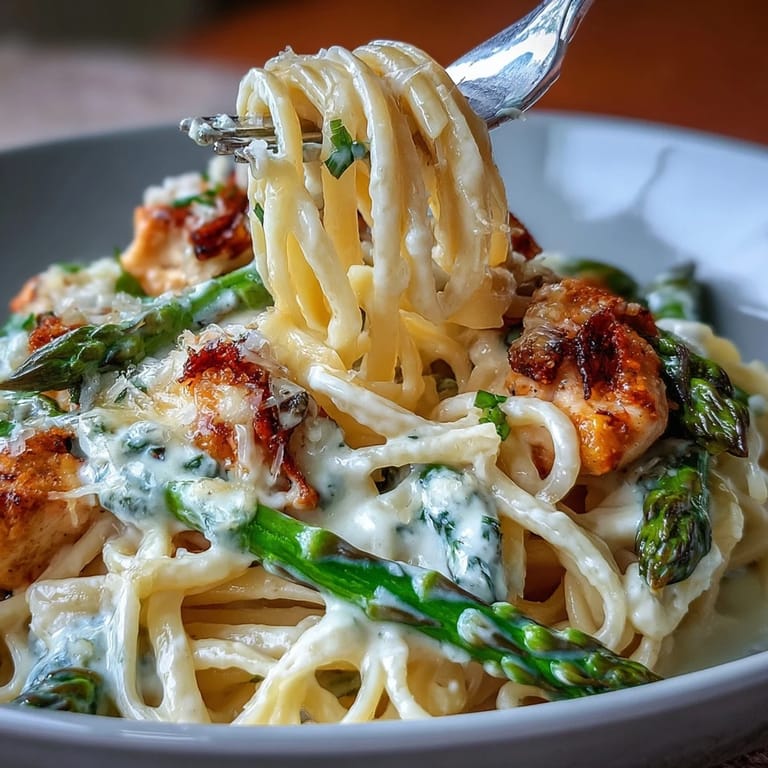
- Reduce the heat to low and stir in the remaining 80 grams of Asiago cheese until it melts completely and your sauce becomes silky and smooth. If it seems too thick, add more pasta water a splash at a time until you're happy with the consistency.
- Bring it all together:
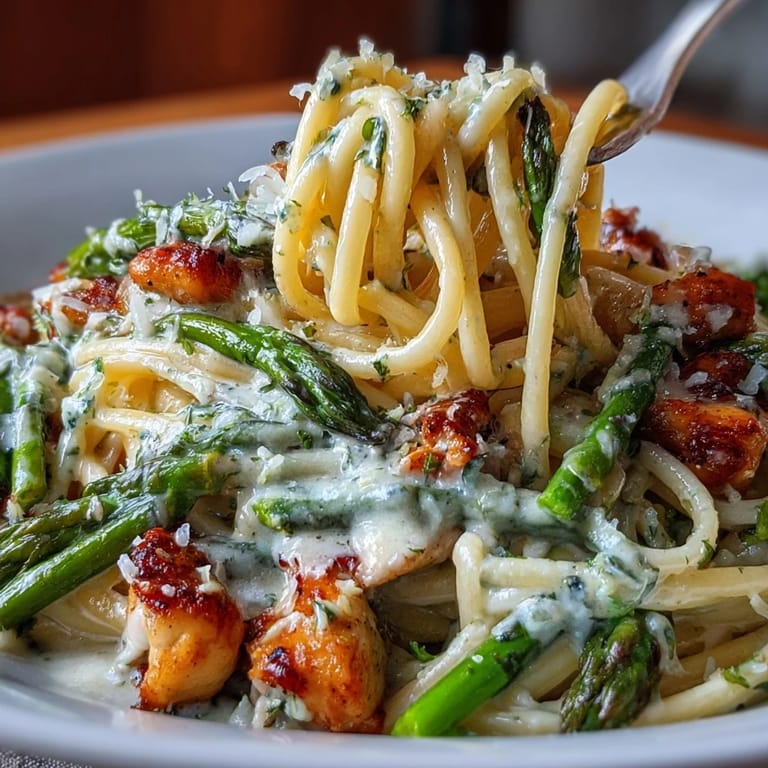
- Return the cooked chicken to the pan, add your drained linguine, and toss everything until every strand is coated in that creamy sauce. Gently fold in your roasted asparagus so you don't break those crispy pieces.
- Plate and serve:
- Serve immediately while everything is hot, garnishing with fresh parsley and extra Asiago if you like that extra sharpness.
 Pin This
 My mom tried this dish once and actually asked me to teach her how to make it, which meant everything to someone who grew up watching her cook traditional meals the same way for decades. That moment when she understood why the Asiago gets crispy in the oven and how that texture changes everything about the dish, I realized I'd actually learned something I could pass on instead of just following along.
The Secret of Asiago in Two Ways
Most people don't realize that Asiago works differently depending on how you use it. When it roasts on the asparagus, it becomes this crispy, almost nutty layer that adds texture and concentration. But in the sauce, it melts into something creamy and rich without overpowering the other flavors. The key is using it in both places so you get that textural contrast alongside the flavor depth.
Why Pasta Water Is Your Secret Weapon
I used to think pasta water was something restaurants wasted, until I realized how crucial it is for making a sauce actually stick to pasta instead of just coating it. That starch is invisible but powerful, and it's why restaurant pasta sauces cling to noodles the way they do. Once you start reserving it, you'll wonder how you ever made cream sauces without it.
Timing and Temperature Keep Everything Perfect
The real trick to this dish is making sure the chicken is done, the pasta is hot, the asparagus is crispy, and the sauce is ready all at the same time. I used to rush different components and end up with cold pasta or oversalted cream, so now I prep everything first and cook strategically. It feels like conducting an orchestra once you get the rhythm right, and dinner actually comes together as one cohesive thing instead of separate parts.
- Start your pasta water boiling before you prep anything else so it has time to heat thoroughly.
- Get your asparagus in the oven as soon as you've tossed it, so it finishes roasting right when you need it.
- Keep the heat moderate after you add the cream so the sauce stays smooth instead of breaking or bubbling aggressively.
 Pin This
 This is the meal I make when I want to prove to myself that simple ingredients can become something that tastes like care and effort without actually exhausting me. It's become the dish I know I can execute well on any given night, which feels like a small victory in the kitchen.
Recipe FAQs
- → What makes Asiago cheese special in this dish?
Asiago brings a nutty, slightly sharp flavor that creates depth in the creamy sauce. When roasted on asparagus, it forms a delicious crispy coating that contrasts beautifully with the tender pasta.
- → Can I make this vegetarian?
Absolutely. Simply omit the chicken or replace it with meaty portobello mushrooms. The dish remains satisfying with the rich cheese sauce and roasted asparagus as the stars.
- → Why reserve pasta water?
Starchy pasta water helps bind the sauce, creating silkier consistency and allowing it to cling better to the linguine. It's the secret to restaurant-style creamy pasta.
- → What pasta works best?
Linguine is ideal as its flat shape catches the creamy sauce beautifully. Fettuccine or tagliatelle would work equally well. Avoid short pasta shapes that don't hold sauce as effectively.
- → How do I prevent the sauce from separating?
Keep heat low when adding cheese and stir constantly. Avoid boiling the sauce once cheese is added, as high heat can cause dairy to separate and become grainy.
- → Can I prepare this ahead?
Roast asparagus and cook chicken up to a day ahead. Make the sauce fresh when ready to serve, as cream sauces don't reheat well. Reheat proteins gently before combining.