 Pin This
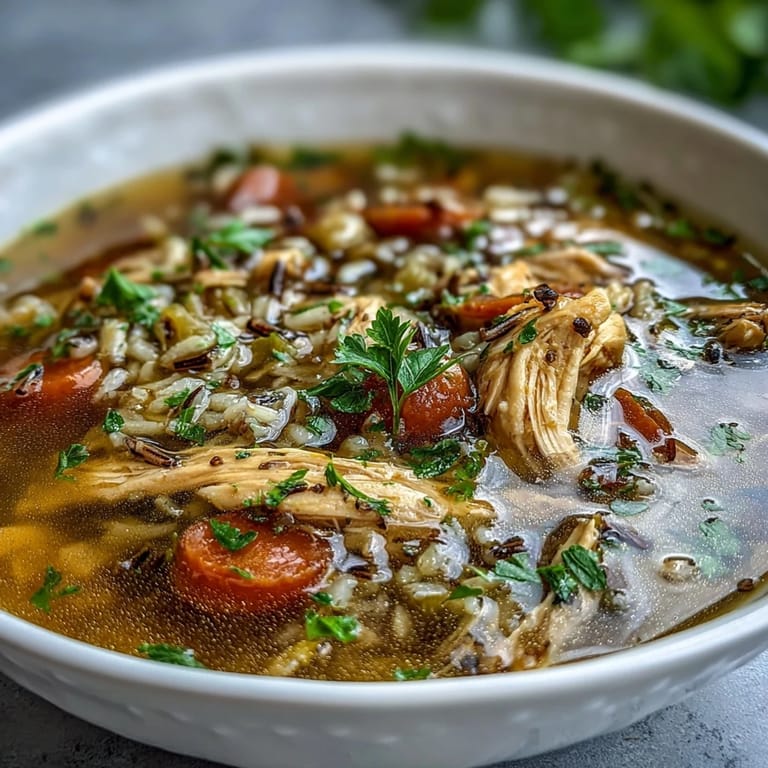
 There's something about the smell of wild rice toasting in a pot that makes me pause mid-afternoon and decide it's soup weather, even if the calendar says otherwise. My neighbor brought over a mason jar of her homemade chicken broth one fall, and I stood in my kitchen holding it, suddenly inspired to turn that gift into something warm and whole. This soup came together almost accidentally that day—not from a recipe, but from what I had on hand and the feeling that chicken, rice, and carrots belonged together in a bowl.
I made this soup for my daughter's first day back at school, wanting to have something ready when she came home tired and hungry. She sat at the kitchen counter with a spoon, eating slowly, and told me it reminded her of staying at her grandmother's house. That's when I realized this isn't just soup—it's the kind of meal that becomes a memory people hold onto.
Ingredients
- Cooked chicken breast, 2 cups shredded or diced: Use rotisserie chicken if you're short on time; the deeper color from roasting actually adds flavor to the broth as it simmers.
- Wild rice, 3/4 cup uncooked and rinsed: That nutty, almost earthy taste is why this isn't just chicken and rice soup—rinsing removes surface starch and helps each grain stay distinct.
- Carrots, 3 medium peeled and sliced: Cut them thick enough to stay firm during cooking, thin enough to soften just right; sweetness deepens as they cook down into the broth.
- Celery stalks, 2 diced: This is the backbone of flavor that no one tastes directly but everyone notices when it's missing.
- Yellow onion, 1 small diced: Golden onions mellow into the background, creating depth without overpowering the delicate chicken.
- Garlic, 2 cloves minced: Raw garlic can be harsh, but one minute in hot oil softens it into something sweet and warm.
- Low-sodium chicken broth, 7 cups: Low-sodium gives you control; you can taste and adjust seasoning yourself rather than fighting saltiness.
- Bay leaf, 1: Remove it before serving, but it whispers subtle flavor throughout the cooking time.
- Dried thyme and rosemary, 1 teaspoon and 1/2 teaspoon: Dried herbs are actually stronger than fresh in long-simmering dishes like this one.
- Salt and freshly ground black pepper, to taste: Always taste before adding salt to broth that may already be seasoned.
- Fresh parsley, 2 tablespoons chopped: Save this for the bowl itself; heat kills its brightness, so it's a garnish, not an ingredient.
- Olive oil, 2 tablespoons: Just enough to coat the pot and help vegetables release their flavors.
Tired of Takeout? 🥡
Get 10 meals you can make faster than delivery arrives. Seriously.
One email. No spam. Unsubscribe anytime.
Instructions
- Heat your oil and soften the foundation vegetables:
- Pour olive oil into your pot and let it shimmer over medium heat, then add onion, carrots, and celery all at once. You'll hear them sizzle right away; let them cook undisturbed for a couple minutes so they can caramelize slightly, then stir and keep going until the onion turns translucent.
- Wake up the garlic:
- Stir in minced garlic and let it sit for just one minute—you want fragrant, not brown. That's the difference between pleasant and bitter.
- Build the soup with rice and broth:
- Add wild rice to the pot and stir it around so each grain gets a little oil, then pour in broth and add bay leaf, thyme, and rosemary. Bring everything to a rolling boil, watching the steam rise, then lower the heat, cover, and let it simmer gently for 40 to 45 minutes until the rice is tender but still has a slight chew.
- Fold in the chicken:
- After the rice softens, add your cooked chicken and let it warm through for another 5 to 8 minutes. This isn't about cooking the chicken again; it's about letting it absorb the broth's flavor.
- Season with intention:
- Fish out the bay leaf with a spoon, then taste the soup and add salt and pepper gradually. Trust your palate more than any recipe.
- Serve with gratitude:
- Ladle into bowls and finish each one with a scatter of fresh parsley. Watch how the green brightens everything.
 Pin This
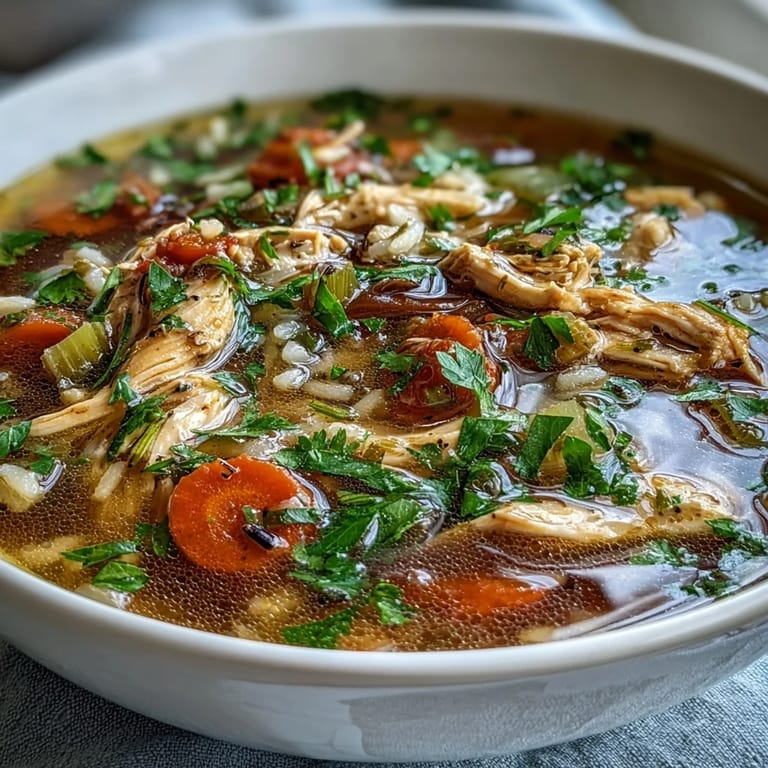
 My husband came home one cold evening, hung his wet coat by the door, and the first thing he said wasn't hello—it was that this soup smelled like home. We both went quiet for a moment, understanding that some meals become more than nutrition; they become the scent of care, the warmth of someone thinking about your comfort.
How to Make It Creamier
If you want a soup that feels more like a hug, stir in half a cup of heavy cream or whole milk in the final minutes of cooking. Add it slowly so the temperature stays gentle and the soup stays smooth rather than separating into strange clumps. The cream mellows the herbs and adds a subtle richness that makes people ask for seconds without understanding why.
Storing and Reheating
This soup improves overnight as the rice absorbs more broth and the flavors knit together. Store it in an airtight container in the refrigerator for up to four days, or freeze it in portions for up to three months. Reheat gently over medium-low heat, stirring often and adding a splash of water if the soup has thickened too much.
Small Changes That Matter
Once you've made this soup a few times, you'll start noticing what you'd change next time, and that's exactly right. Some cooks add a splash of white wine or a pinch of nutmeg, others use brown rice or pearl barley instead of wild rice. The structure stays the same; the spirit adapts to your kitchen and your taste.
- If you have fresh herbs like thyme or rosemary, use three times as much fresh as dried, adding half at the start and half in the final minute.
- Leftover rotisserie chicken saves time and often tastes deeper than fresh-cooked chicken because it's had time to rest and absorb its own flavors.
- Serve alongside crusty bread or a bright green salad so people can build their own soup experience rather than eating one fixed version.
 Pin This
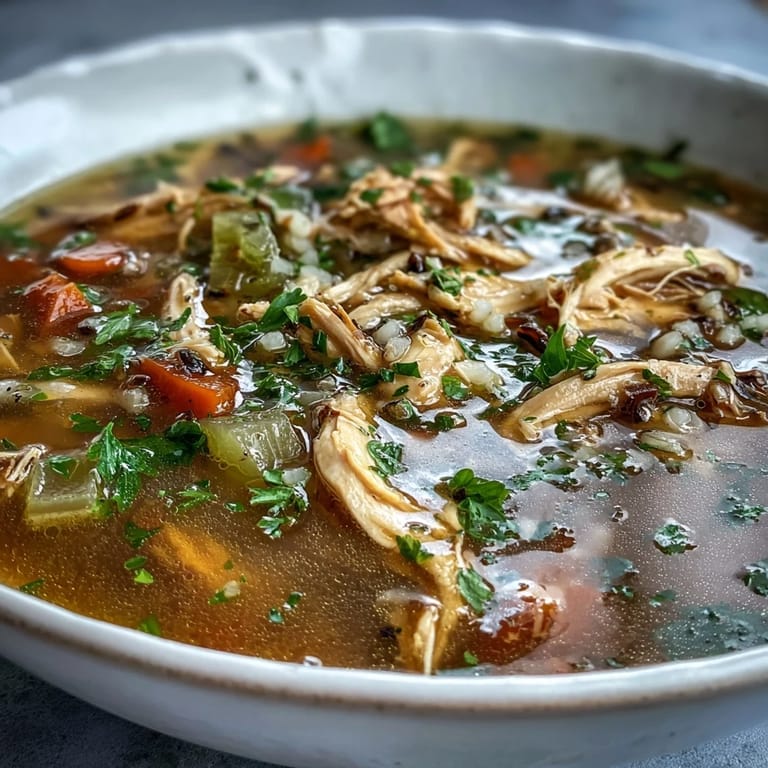
 This soup exists because comfort food doesn't have to be complicated, and nourishment becomes love when someone takes the time to let wild rice and carrots and broth become something greater than their parts. Make it, share it, and watch how it becomes part of someone's story.
Recipe FAQs
- → Can I use brown rice instead of wild rice?
Yes, brown rice can be substituted but will require a longer cooking time to ensure tenderness.
- → How do I make this dish creamier?
Stir in half a cup of heavy cream or whole milk at the end of cooking for a richer texture.
- → What herbs enhance the flavors best?
Thyme and rosemary are used here to complement the chicken and vegetables, adding a warm, earthy aroma.
- → Is it better to cook rice separately?
Cooking wild rice directly in the broth lets it absorb flavors, resulting in a more cohesive dish.
- → Can leftover cooked chicken be used?
Yes, shredded rotisserie or other cooked chicken works well and saves preparation time.