 Pin This
 My neighbor dropped by one April afternoon with a spring birthday invitation, and I found myself staring at a blank calendar square wondering what dessert says both celebration and season. I'd been playing with lemon curd that week—something about the tartness felt right for warmer days—and suddenly this cake came together in my mind: tender, bright, with layers of homemade curd and clouds of whipped cream. It became the cake I make whenever I want to turn an ordinary gathering into something that tastes like sunshine.
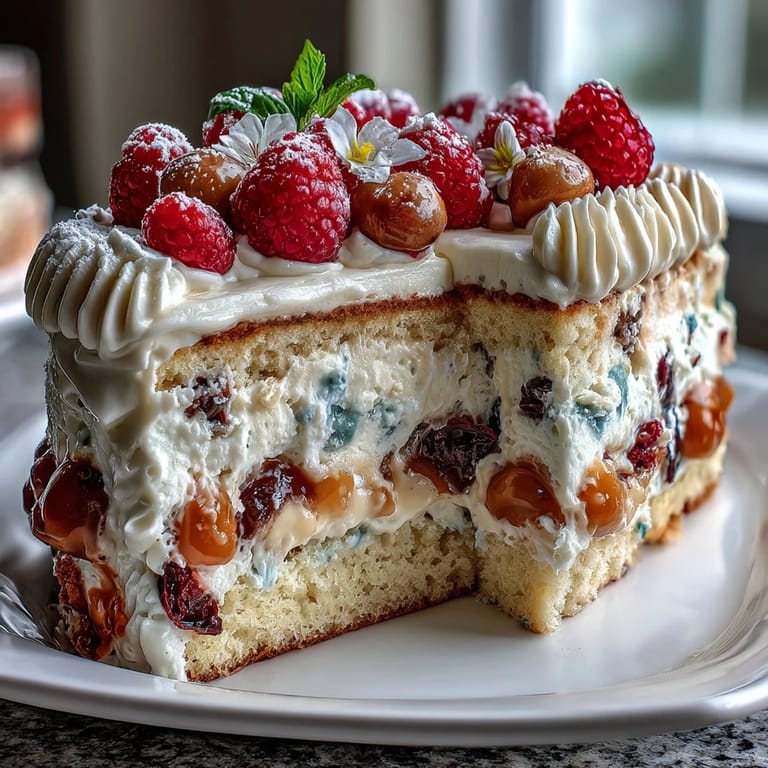
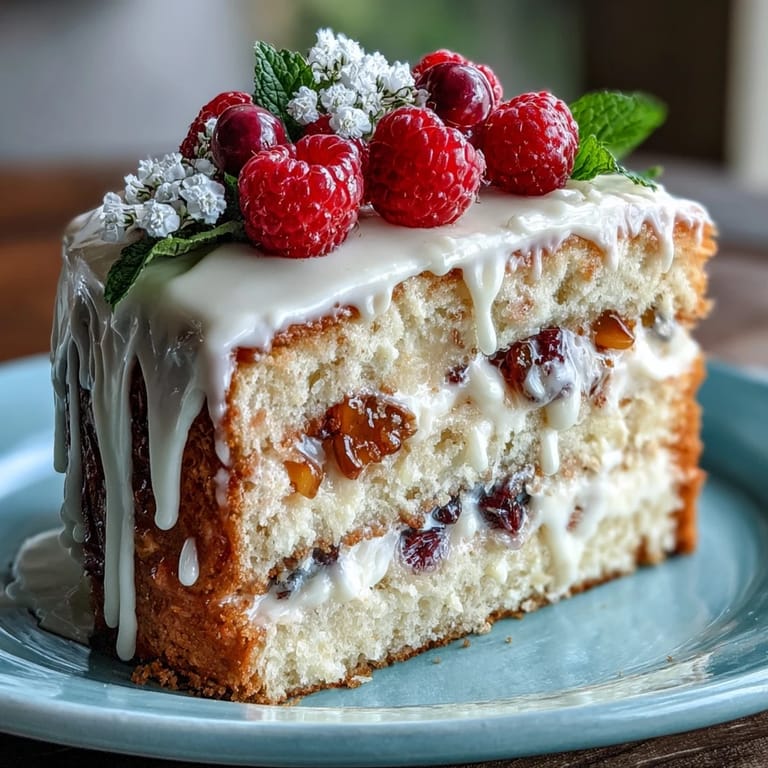
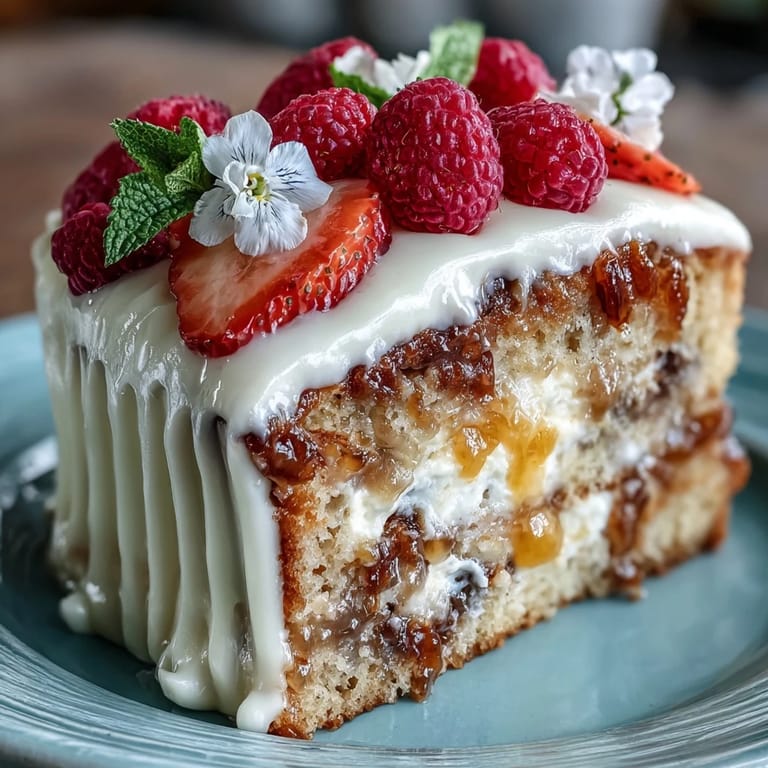
I made this for my sister's 30th birthday at a backyard picnic, and watching people cut into those clean layers felt like watching something precious happen. The pale yellow cake, that jewel-toned curd peeking through, the white frosting dotted with berries—it photographed beautifully, but more importantly, it tasted like springtime in a bite.
Ingredients
- All-purpose flour: The foundation—use fresh flour if you can, as older flour sometimes loses its lift.
- Baking powder and baking soda: They work together here; don't skip either one or your cake won't rise properly.
- Unsalted butter and granulated sugar: Cream these together slowly until they're pale and fluffy, which takes longer than you think but creates the tender crumb.
- Room-temperature eggs: Cold eggs won't blend smoothly into the butter mixture, so pull them out 30 minutes before you start.
- Lemon zest: Use a microplane and go for bright yellow only—the white pith tastes bitter.
- Whole milk: The acidity balances the sweetness and keeps the cake moist through the curd filling.
- Egg yolks for curd: Save those whites for something else; the yolks alone create the silkiest texture.
- Fresh lemon juice: Bottled juice will work in a pinch, but fresh is noticeably better here.
- Heavy cream: Chill the bowl and beaters too—cold equipment makes a difference in getting those stiff peaks.
- Powdered sugar: Sift it if you have a few minutes; lumps can show in the frosting.
Tired of Takeout? 🥡
Get 10 meals you can make faster than delivery arrives. Seriously.
One email. No spam. Unsubscribe anytime.
Instructions
- Set the stage:
- Preheat your oven to 350°F and line that sheet pan with parchment—overhang the sides a little so you can lift the cooled cake out easily. This small step saves you from cake crumbs scattered all over your cooling rack.
- Mix your dry team:
- Whisk flour, baking powder, baking soda, and salt together in a bowl and set aside. This distributes the leavening agents evenly so you don't end up with dense pockets in your cake.
- Cream the butter and sugar:
- Beat them together for 3 to 4 minutes until the mixture is noticeably pale and fluffy—you'll hear the mixer sound change as the butter gets lighter. This aeration is what gives you that tender crumb instead of a dense brick.
- Add eggs one at a time:
- Wait for each egg to fully incorporate before adding the next, beating well after each addition. This ensures the emulsion holds and you get a smooth batter instead of one that looks curdled.
- Fold in the flavors:
- Mix in vanilla and lemon zest, then add your dry ingredients in three parts, alternating with the milk and always starting and ending with dry. Overmixing at this stage toughens the cake, so stop as soon as you don't see streaks of flour.
- Bake with patience:
- Pour into the prepared pan, smooth the top, and bake 28 to 32 minutes until a toothpick comes out clean or with just a few moist crumbs. The cake will continue to cook slightly as it cools, so don't overbake.
- Make the lemon curd:
- While the cake cools, whisk egg yolks, sugar, lemon juice, and zest in a saucepan and cook over medium-low heat, stirring constantly, until it thickens enough to coat the back of a spoon (5 to 7 minutes). Remove from heat, whisk in butter, then press plastic wrap directly onto the surface and chill.
- Whip the cream:
- In a chilled bowl, whip heavy cream, powdered sugar, and vanilla until stiff peaks form. Don't walk away—this can go from perfect to grainy in seconds if you overbeat.
- Layer with care:
- Once the cake is completely cool, use a serrated knife and a gentle sawing motion to slice it horizontally into two layers. Spread the chilled curd evenly over the bottom layer, then carefully replace the top.
- Frost and finish:
- Spread whipped cream frosting over the assembled cake with an offset spatula, then decorate with fresh berries, edible flowers, or lemon zest curls. Chill for at least an hour before slicing for clean, beautiful pieces.
 Pin This
 There's something about serving this cake that feels like you've given people permission to enjoy springtime. When someone closes their eyes after that first bite and tastes the brightness, it reminds you why you spend time in the kitchen making things from scratch.
Why Homemade Lemon Curd Changes Everything
Store-bought curd is convenient, but homemade has a richness and brightness that's hard to replicate. The moment you taste that thick, silky layer between the cake layers, you'll understand why I keep a batch in my fridge most of spring. There's also something satisfying about knowing exactly what went into it—no mystery ingredients, just eggs, sugar, lemon, and butter transformed into gold.
Timing and Make-Ahead Magic
You can bake the cake layers a full day ahead and wrap them well at room temperature. The curd keeps beautifully in the fridge for a week, so you could make that days in advance too. Whip the cream just before you assemble, though—it's the one component that doesn't hold up well overnight.
Variations That Keep Things Interesting
Once you've made this cake once, you might start playing with it. Brush the layers with a thin lemon syrup before assembling for extra brightness, or swirl a bit of the curd into the whipped cream frosting. I've also added a tablespoon of poppy seeds to the batter for subtle texture, and nobody can quite place what makes it different. Here are a few other directions you might explore:
- Substitute almond extract for half the vanilla to create a subtle marzipan note that pairs beautifully with lemon.
- Layer fresh mint leaves or candied lemon slices between the cake and curd for visual drama.
- Make mini versions in a muffin tin if you're serving a smaller group or want individual portions.
 Pin This
 This cake has become my answer to springtime gatherings, and I hope it becomes one of yours too. There's nothing quite like a slice of this alongside good conversation and the feeling that someone cared enough to make something beautiful.
Recipe FAQs
- → How is the lemon curd filling prepared?
Whisk egg yolks, sugar, lemon juice, and zest in a saucepan. Cook over medium-low heat stirring until thickened, then remove from heat and add butter. Chill until cold before layering.
- → What makes the cake tender?
The combination of softened butter, eggs at room temperature, and alternating dry ingredients with milk creates a moist, tender crumb.
- → How to achieve fluffy whipped cream frosting?
Chill heavy cream and beat it with powdered sugar and vanilla until stiff peaks form, ensuring a light and airy texture.
- → Can the cake be decorated differently?
Yes, fresh berries, edible flowers, or lemon zest curls add a colorful, fresh finishing touch for spring celebrations.
- → How should the assembled cake be stored?
Refrigerate the layered cake for at least one hour before slicing to maintain clean layers and fresh flavor.
- → What tools are essential for this cake?
A 9x13-inch sheet pan, electric mixer, mixing bowls, whisk, offset spatula or knife, saucepan, and cooling rack are recommended for best results.