 Pin This
 I first discovered the magic of spiral plating at a small bistro in Lyon, where the chef arranged vegetables like a painter composing a masterpiece on canvas. Years later, I attempted to recreate that moment in my own kitchen, and the Snail Shell Spiral was born—a dish that transformed my understanding of how presentation could elevate even the simplest vegetables into something worthy of admiration.
I remember serving this to my mother-in-law, who typically preferred traditional dishes, and watching her eyes light up as she realized the spiral wasn't just beautiful—it was genuinely delicious. That moment taught me that food could be both art and nourishment, and that sometimes the most meaningful meals are the ones that surprise us.
Ingredients
- Eggplant (1 small, thinly sliced lengthwise): The foundation of our spiral—eggplant adds a subtle earthiness and silky texture when roasted. A mandoline is your best friend here; it ensures even, delicate slices that will bend beautifully without breaking.
- Zucchini (1 medium, thinly sliced lengthwise): The gentle, mild vegetable that balances the other flavors. Slice it as thin as you dare—these tender ribbons are what make the spiral actually spiral.
- Red bell pepper (1, seeded and thinly sliced): Your first pop of color and a hint of sweetness. Remove the seeds carefully and slice against the natural curves of the pepper for longer, more pliable strips.
- Yellow squash (1, thinly sliced lengthwise): This adds brightness and a delicate squash flavor. Its pale yellow is essential to the visual gradient of your spiral.
- Carrot (1 small, peeled and thinly sliced lengthwise): Raw carrots are tougher than other vegetables, so roast them slightly longer to ensure they're pliable enough to spiral without cracking.
- Goat cheese (100 g, softened): The creamy anchor of this dish. Softened goat cheese spreads like a dream and provides a tangy richness that ties everything together. Let it sit at room temperature for 15 minutes before using.
- Crème fraîche (2 tbsp): This adds luxurious richness to the cheese mixture and makes it easier to spread in that perfect, thin spiral.
- Fresh basil (2 tbsp, finely chopped): The herbaceous heartbeat of this dish. Fresh basil should be chopped just before mixing—bruising it releases oils that make the flavor even more vibrant.
- Fresh thyme (1 tbsp): Thyme adds a subtle, woodsy note that elevates the entire composition. Strip the leaves from the stems; they're delicate enough not to overpower.
- Olive oil (2 tbsp): Use your best quality here—this oil coats the vegetables and becomes part of the flavor. A fruity, robust oil makes all the difference.
- Sea salt (½ tsp) and freshly ground black pepper (¼ tsp): Season as you roast, not all at once. This allows the flavors to develop gradually and evenly distribute.
- Pine nuts (1 tbsp, lightly toasted): These add a buttery crunch that contrasts beautifully with the soft vegetables. Toast them in a dry pan for just 2-3 minutes—they go from perfect to bitter in seconds.
- Microgreens (optional): A final whisper of color and freshness. Use them as your signature flourish.
Tired of Takeout? 🥡
Get 10 meals you can make faster than delivery arrives. Seriously.
One email. No spam. Unsubscribe anytime.
Instructions
- Preheat and prepare:
- Set your oven to 200°C (400°F) and line a baking tray with parchment paper. This prevents sticking and makes cleanup effortless. Taking these few moments to prepare means you can focus on the artistry to come.
- Slice with intention:
- Using a sharp chef's knife or mandoline, slice each vegetable lengthwise into thin, delicate ribbons. The slices should be thin enough to bend but sturdy enough not to tear. Lay them flat as you work—this prevents them from curling up on you.
- Oil and season:
- Lightly brush each slice with olive oil on both sides, then sprinkle with sea salt and pepper. Use a gentle hand; you want a whisper of seasoning, not a coat. Think of it like kissing the vegetables with flavor.
- Roast until tender:
- Arrange the slices in a single layer on your prepared tray and slide them into the oven. Roast for 10-12 minutes until they're pliable and slightly softened but still maintain their vibrant colors. Set a timer; this window is crucial. When ready, they should bend without breaking, and you'll notice a faint sweetness rising from the oven.
- Cool briefly:
- Remove the tray from the oven and let the vegetables cool for just 3-4 minutes. They continue to soften as they cool, and warm vegetables are much easier to work with than hot ones. Pat them gently with paper towels to remove excess moisture.
- Create the cheese base:
- In a small bowl, combine the softened goat cheese, crème fraîche, finely chopped basil, and thyme. Stir gently until the mixture is completely smooth and consistent. This is your canvas—take a moment to appreciate its creamy, herbaceous aroma.
- Spiral the cheese:
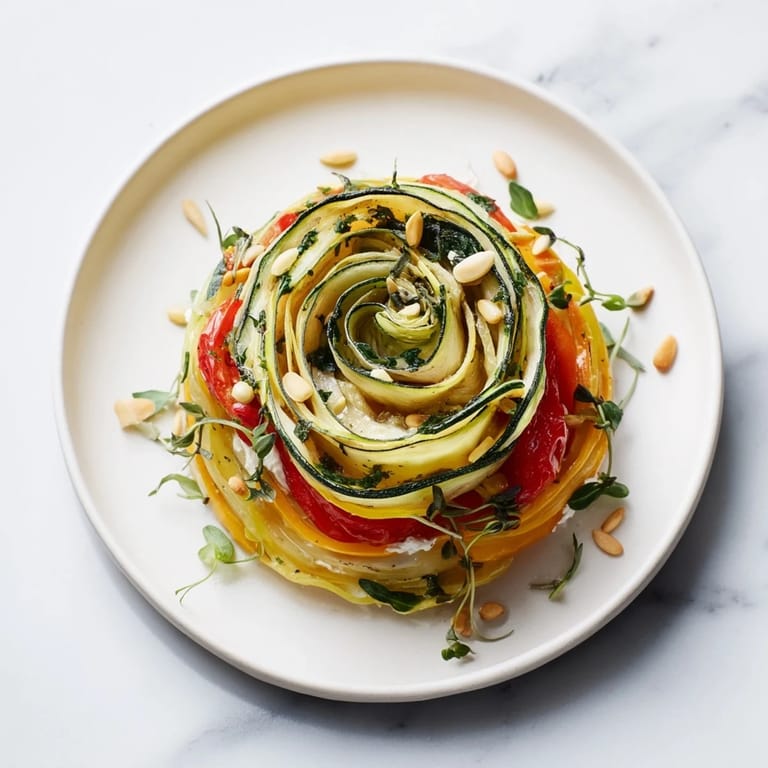
- On your serving plate, begin at the very center and, using the back of a spoon or offset spatula, spread the cheese mixture in a thin, continuous spiral that winds outward like a snail shell. Keep the line thin and even; this is about 2-3 mm thick. The spiral should be confident, not timid.
- Layer the vegetables:
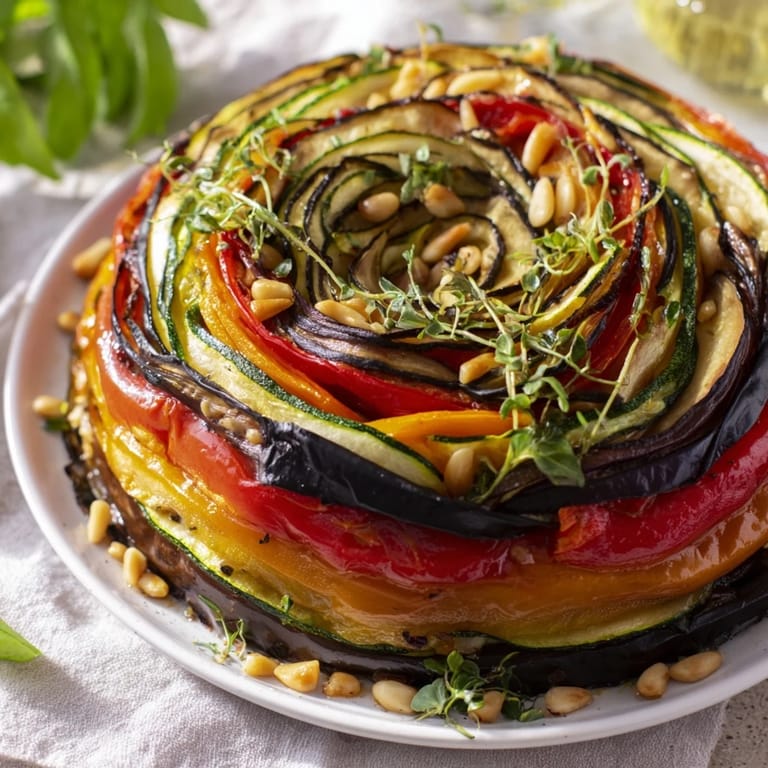
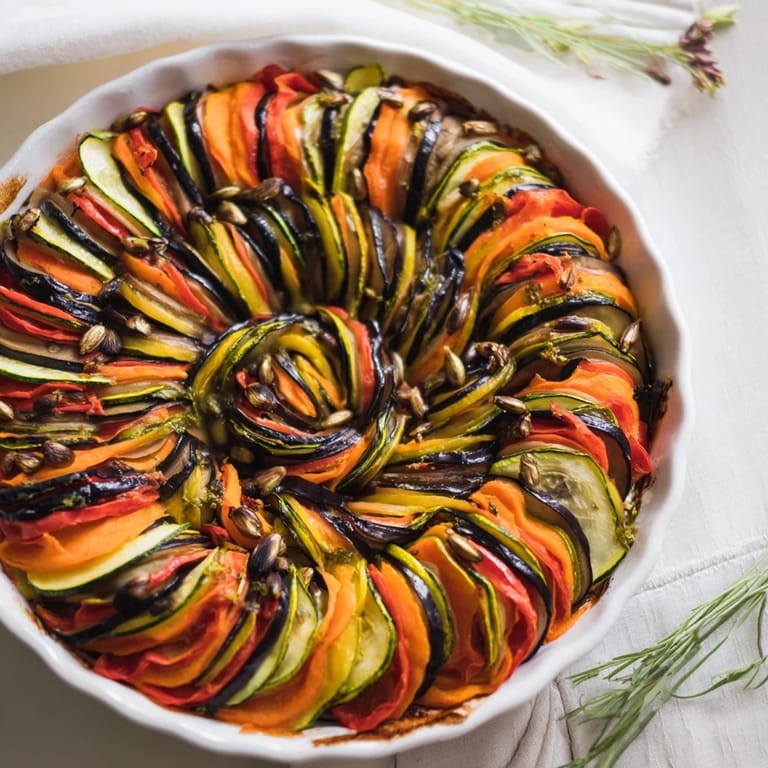
- Starting from the center where your cheese spiral begins, arrange your roasted vegetable slices in the same spiral pattern, slightly overlapping each piece. Alternate colors deliberately—eggplant, then zucchini, then red pepper, then yellow squash, then carrot—this creates a visual rhythm that draws the eye from center to edge. Continue until your entire spiral is filled, working outward with patience and intention.
- Crown with crunch and freshness:
- Scatter the toasted pine nuts across the spiral with a light hand, allowing them to settle into the crevices. If using microgreens, add them as your final flourish, focusing them around the outer edges where they'll catch the light and add height.
- Rest and serve:
- Allow the dish to rest at room temperature for 5-10 minutes before serving. This lets all the flavors meld and makes cutting and plating effortless. Serve while everything is still cool enough to taste fresh but warm enough to feel generous.
 Pin This
 When my daughter took her first bite and said, 'Mom, this tastes like the restaurant we went to,' I realized that sometimes the most powerful gift you can give someone is recreating a memory they didn't even know mattered. The Snail Shell Spiral became our signature dish, something we make whenever we want to remind ourselves that beauty and flavor can exist in perfect harmony.
The Art of Vegetable Selection
Choosing the right vegetables makes all the difference. Look for firm, unblemished produce without soft spots—the vegetable should feel substantial and fresh, not limp. Smaller specimens are preferable because they're more tender and have thinner skins that roast more evenly. When you hold each vegetable, imagine whether it can become a graceful ribbon. If a vegetable feels woody or overly mature, it likely won't cooperate with your spiral vision. I've learned to visit the farmers market early in the morning when the produce is at its absolute peak, and I always chat with the vendors about what's been picked most recently.
Temperature and Timing Considerations
This dish thrives when served at room temperature, which is both a blessing and a practical reality. Room temperature allows the flavors to shine without being muted by cold, and it means you can prepare the spiral 30-45 minutes ahead of serving. The flavors actually improve slightly as they sit, allowing the herbs to fully infuse the cheese. If you must serve it chilled, remove it from the refrigerator 15 minutes before serving to let it warm slightly. Never serve it hot—the goat cheese will become too soft and the vegetables will lose their structural integrity. I once made the mistake of serving this right from the oven and watched my carefully crafted spiral collapse into something sad and formless.
Variations and Personal Touches
While the original recipe is perfect as is, the spiral welcomes creative interpretation. I've experimented with roasted beets for deeper color, thin slices of sweet potato for subtle sweetness, and even paper-thin apple slices for unexpected brightness. For a vegan version, a quality plant-based cheese spread or cashew cream mixed with herbs creates the same creamy base. Some evenings, I add a drizzle of aged balsamic vinegar around the outer edge for depth, or finish with fleur de sel for a contrast to the main salt already in the dish. The spiral format is wonderfully forgiving—it's actually harder to make it look bad than good because the natural pattern is so visually compelling.
- Try serving it on a bed of fresh greens or alongside crispy bread for a light lunch that feels substantial without being heavy.
- Consider making individual spirals on smaller plates rather than one large presentation—each diner gets a perfect, complete spiral that's ready to enjoy immediately.
- Save any leftover spirals and shred them the next day to toss into pasta or grain bowls for a second life of deliciousness.
 Pin This
 Every time I make this dish, I'm reminded that the most nourishing meals are often the ones that ask us to slow down and create with intention. The Snail Shell Spiral isn't just food—it's an edible meditation, a conversation between your hands and the ingredients, and a gift that says, 'You're worth this effort.'
Recipe FAQs
- → What vegetables are used in the spiral?
The dish features eggplant, zucchini, red bell pepper, yellow squash, and carrot, all thinly sliced lengthwise for easy layering.
- → How are the vegetables prepared before assembling?
The vegetable slices are lightly brushed with olive oil, seasoned, and roasted until pliable but not browned to ensure easy shaping.
- → What cheese complements the vegetables in this dish?
A smooth mixture of goat cheese and crème fraîche, blended with fresh basil and thyme, adds creamy richness and herbaceous flavor.
- → Can this dish be made vegan?
Yes, by substituting goat cheese and crème fraîche with plant-based cheese spreads, the dish can be adapted for vegan diets.
- → What garnish enhances the final presentation?
Toasted pine nuts provide a subtle crunch, while optional microgreens add fresh color and texture to finish the dish elegantly.