 Pin This
 The first time I made cepelinai, my hands were dripping wet and my kitchen smelled like raw potato starch and possibility. My Lithuanian grandmother had finally written down her recipe after years of refusing, and I stood there grating potatoes by hand, my knuckles getting dangerously close to the grater's teeth. Something about the weight of those dumplings in the simmering water felt like holding history—each one a small, perfect oval of tradition that had fed her family through winters I could barely imagine.
I remember serving these to my partner's coworkers who had never heard of cepelinai, watching their faces shift from polite curiosity to genuine surprise when they bit into that tender potato exterior and hit the warm, seasoned meat inside. The sauce made everything better—I'd added a bit more dill than the recipe called for, and it kept appearing in conversations for weeks afterward.
Ingredients
- Starchy potatoes (1.5 kg raw, peeled): The backbone of everything—russets work beautifully because they're absorbent and won't turn gluey when you grate them.
- Boiled and mashed potatoes (2 medium): These add structure and help bind the raw potato pulp, keeping your dumplings from falling apart in the water.
- Salt (1 tsp for dough): Season generously because potato can taste bland without it; trust your instincts if the mixture needs more.
- Potato starch (1 tbsp, optional but honestly essential): This is your safety net if things feel too wet—it's the difference between dumplings and potato soup.
- Ground pork (250 g) and ground beef (150 g): The pork brings richness, the beef adds depth; together they're unstoppable.
- Onion and garlic for the filling: Finely chop the onion so it disappears into the meat, melting into every bite rather than staying separate.
- Black pepper (½ tsp): Fresh cracked pepper tastes noticeably better here than pre-ground, since the filling is simple enough to taste every spice.
- Bacon or smoked pork belly (150 g, diced): Don't skip this—the smoky, salty bacon is what makes the whole sauce sing.
- Sour cream (300 ml): Full-fat sour cream is non-negotiable; anything thinner won't coat the dumplings properly.
- Fresh dill (1 tbsp, chopped): It's optional on the ingredient list but I've never made this without it—dill and potato are old friends.
Tired of Takeout? 🥡
Get 10 meals you can make faster than delivery arrives. Seriously.
One email. No spam. Unsubscribe anytime.
Instructions
- Grate and squeeze the potatoes:
- Use the fine side of your grater, working over a large bowl or sink to catch the spray. Once grated, wrap everything tightly in cheesecloth or a clean kitchen towel and squeeze like you mean it—you want to extract as much liquid as possible because wet dough makes for dense, heavy dumplings. Let the reserved liquid sit for a few minutes so the starch settles to the bottom, then carefully pour off the water and keep that white starch sediment.
- Mix the dough:
- Combine your squeezed grated potatoes with the mashed boiled potatoes, salt, and that reserved starch in a large bowl, stirring until it comes together into a cohesive mass. If it still feels too wet and sticky, add a bit more potato starch a teaspoon at a time until it feels workable but not stiff.
- Prepare the meat filling:
- In a separate bowl, mix the ground pork, ground beef, finely chopped onion, minced garlic, salt, and pepper until everything is evenly distributed and the mixture holds together slightly when squeezed. Taste a tiny pinch if you like (the raw meat won't hurt you) to make sure the seasoning feels right.
- Shape the dumplings:
- Wet your hands with water—this prevents sticking better than anything else—then take a portion of dough about the size of a large egg. Flatten it into a thin patty in the palm of your hand, place a heaping tablespoon of filling in the center, and carefully pull the edges up and over, sealing completely. You want an oval shape that's smooth and tight with no cracks or exposed filling.
- Cook in gently simmering water:
- Bring a large pot of salted water to a gentle simmer (not a rolling boil, which will batter them) and carefully slide the dumplings in, one or two at a time so they don't stick together. Let them float for about 25 to 30 minutes—when they start rising to the surface, give them another 5 or 10 minutes to make sure the center is cooked through.
- Make the sauce while they cook:
- Dice your bacon and fry it in a skillet over medium heat until it's crisp and beautiful, then scoop it out and set aside. Add finely chopped onion to the bacon fat and let it turn golden and soft, then stir in the sour cream off the heat and fold in the bacon and dill gently so nothing breaks.
- Bring it all together:
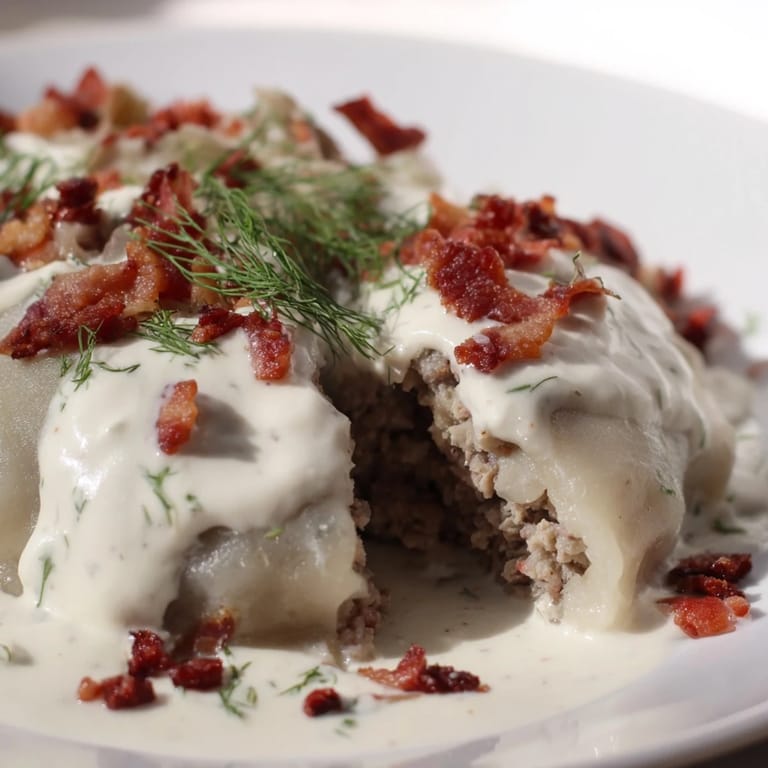
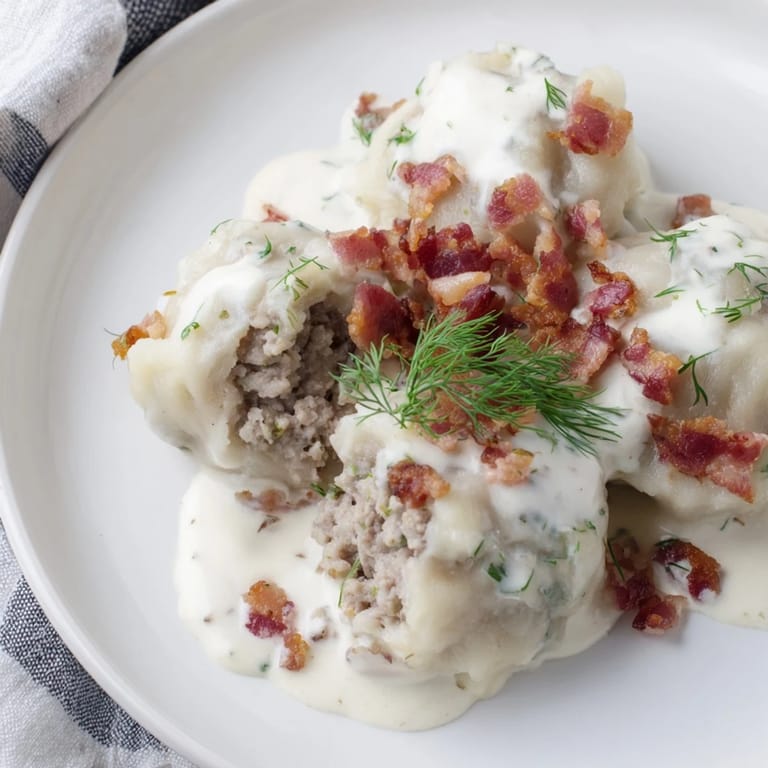
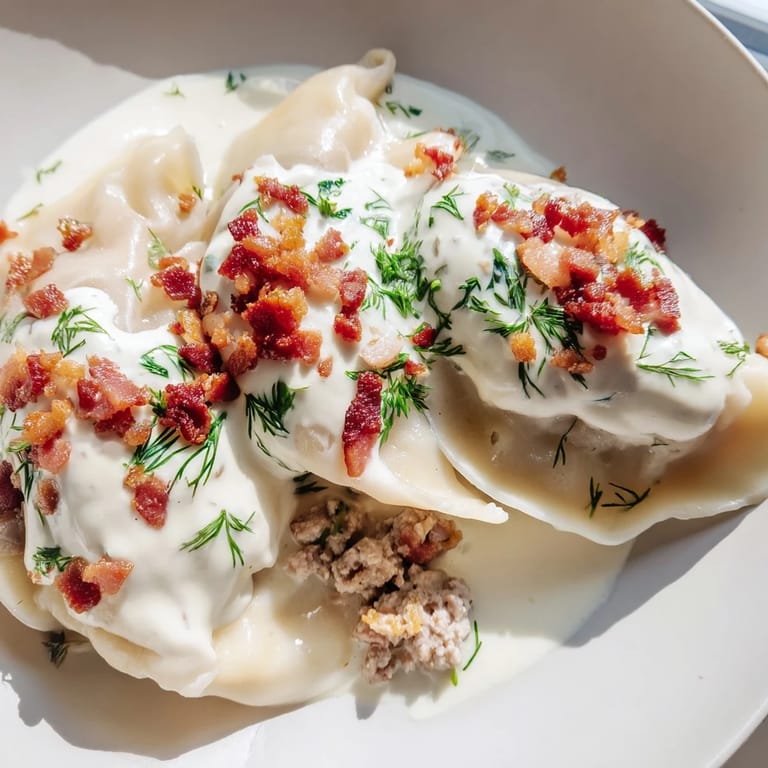
- Remove the dumplings with a slotted spoon, letting them drain well, then transfer to a serving platter or individual plates and spoon that warm, creamy, bacon-dotted sauce over the top.
 Pin This
 There's a moment when you pull those first batch of cooked dumplings from the water and see them floating, golden and firm, that you realize you've done something real. When the sauce hits them and you see the sour cream pool around the edges with those crispy bacon bits scattered on top, that's when cepelinai stops being just dinner and becomes a conversation.
Why This Dish Matters
Cepelinai are what Lithuanian families made when they wanted to turn humble potatoes and simple meat into something that fed not just the body but also the feeling of home. They're labor-intensive enough that making them feels like a gesture—you're not just cooking, you're saying something about how much you care. The dough is tender, the filling is warm and savory, and when you top it with that sour cream and bacon sauce, suddenly potatoes become a reason to gather people at a table.
The Technique That Changes Everything
The secret that nobody tells you is that squeezing the potatoes matters more than any other single step. I've made these with people who skip the squeezing, and their dumplings come out heavy and waterlogged, sinking instead of floating. When you really wring out that grated potato, you're removing the moisture that would otherwise turn the dough dense and starchy. I learned this the hard way after my first batch fell apart in the water, and now I squeeze until my hands ache—it's worth it every time.
Make It Your Own
Lithuanian cooks have been tweaking cepelinai for generations, and there's room for your own touch. Some people prefer all beef, others swear by all pork; some add a pinch of nutmeg to the filling, and a few brave souls use mushrooms instead of meat entirely. The sauce is forgiving too—extra dill, a bit of fresh parsley, even a small splash of white wine won't hurt anything. The structure stays the same, but the flavor can shift with whatever you believe tastes best.
- If you're feeding vegetarians, sautéed mushrooms with caramelized onions and a touch of garlic make a surprisingly rich filling that satisfies even meat-eaters.
- You can prepare and freeze uncooked dumplings for up to three months, cooking them straight from frozen (just add a few extra minutes in the water).
- Double the sauce recipe if you like yours extra creamy—there's never a wrong amount of bacon and sour cream on a plate of dumplings.
 Pin This
 Making cepelinai is a small act of devotion, the kind of cooking that reminds you why you bother learning things in the kitchen at all. They're proof that simple ingredients, treated with patience and care, become something unforgettable.
Recipe FAQs
- → What type of potatoes are ideal for cepelinai?
Starchy potatoes work best for the dough to provide the right texture and binding, complemented by boiled mashed potatoes for tenderness.
- → How do you prevent the dumplings from falling apart during cooking?
Ensure excess moisture is squeezed from grated potatoes, and use potato starch to bind the dough firmly before shaping.
- → Can the filling be customized?
Yes, the traditional filling uses seasoned pork and beef, but substitutions like all pork, all beef, or sautéed mushrooms and onions are possible.
- → What is the best way to cook these dumplings?
Simmer gently in salted water, avoiding a rolling boil, until they float and feel firm, which takes about 25-30 minutes.
- → How is the sauce prepared to complement the dumplings?
The sauce combines crisp diced bacon, golden sautéed onions, sour cream, and fresh dill, gently heated without boiling for a rich finish.