 Pin This
 The first time I served something on a raw stone slab, I felt oddly nervous. There was no prettifying it with garnish or clever plating tricks—just pristine lines of meat and cheese on unpolished slate, almost architectural in its honesty. A guest ran her hand across the cool surface and said it felt expensive, like we'd stumbled into some Michelin-starred moment in my kitchen. That compliment stuck with me, and I realized the best presentations often come from restraint, not decoration. The Industrial Slate became my answer to every "what should I bring" question after that.
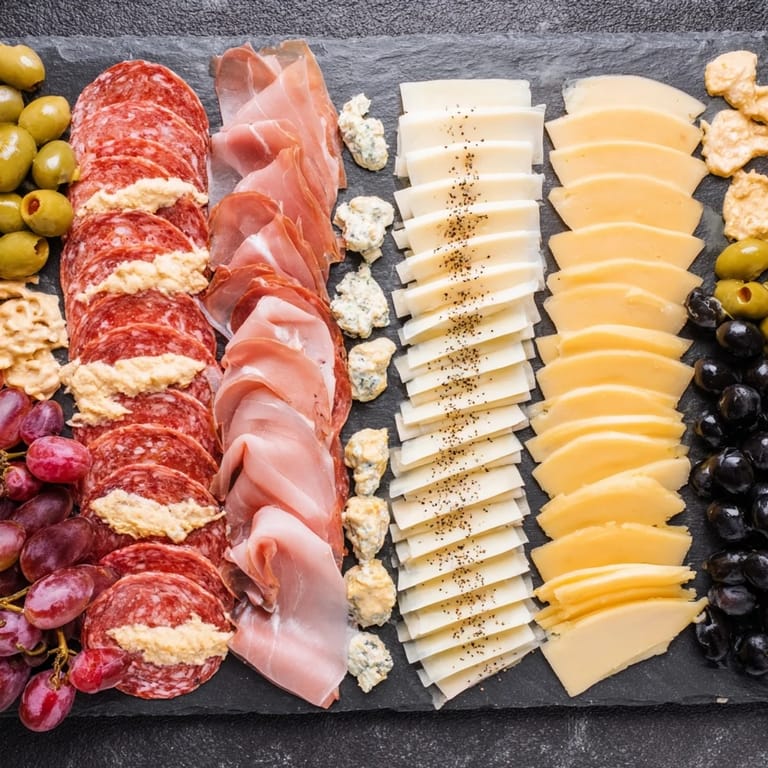
I made this for a dinner party where I'd invited people who didn't know each other, so there was that awkward tension in the air when they arrived. But something about the stark beauty of that slate board, the way the colors caught the light—smoked reds against pale cheese, the bright olives nestled in perfect rows—people just stopped talking and stared. Then someone laughed and said it looked like modern art, and suddenly everyone was leaning in, picking things up, talking, really talking. Food that makes people pause before they eat it does something special.
Ingredients
- Smoked prosciutto (100g): Buy it sliced thin but not paper-thin; you want some delicate folds and texture, not transparency. It brings a salty, smoky anchor to the board.
- Soppressata (100g): This Italian cured salami has a slight wine undertone that cuts beautifully against sharp cheese. Slice it yourself if possible for better control over thickness.
- Coppa (100g): Its marbling and subtle sweetness add visual intrigue and richness that prevents the board from feeling one-note.
- Mortadella (100g): The most underrated addition—silky, lightly spiced, and elegant when arranged properly.
- Aged cheddar, sliced (100g): Go for a really sharp version; the funk mellows beautifully against acidic accompaniments.
- Manchego, sliced (100g): Its nuttiness and pale gold color provide visual balance and a different texture story.
- Gruyère, sliced (100g): Rich and slightly crystalline, it's the hearty anchor cheese that grounds the board.
- Blue cheese, sliced or crumbled (100g): The boldest voice here; use it sparingly or it drowns everything out, but it's essential for contrast.
- Seedless red grapes: They're not just filler—their sweetness and acidity reset your palate between bites of salty, rich foods.
- Cornichons (50g): Tiny, sour, essential. They cut through richness like nothing else can.
- Whole grain mustard (50g): A dollop or two scattered intentionally is all you need; it's more visual than it is about consumption.
- Mixed olives (50g): Green for brightness, black for earthiness; the combination gives visual rhythm.
- Freshly cracked black pepper: Don't skip this. A gentle final shower adds aroma and signals care in presentation.
Tired of Takeout? 🥡
Get 10 meals you can make faster than delivery arrives. Seriously.
One email. No spam. Unsubscribe anytime.
Instructions
- Start with the stage:
- Set your slate board on a clean, dry surface where it won't move. If you have time, chill it in the refrigerator for 30 minutes beforehand; that cold stone keeps everything fresher longer and feels luxurious to the touch.
- Arrange the meats in parallel lines:
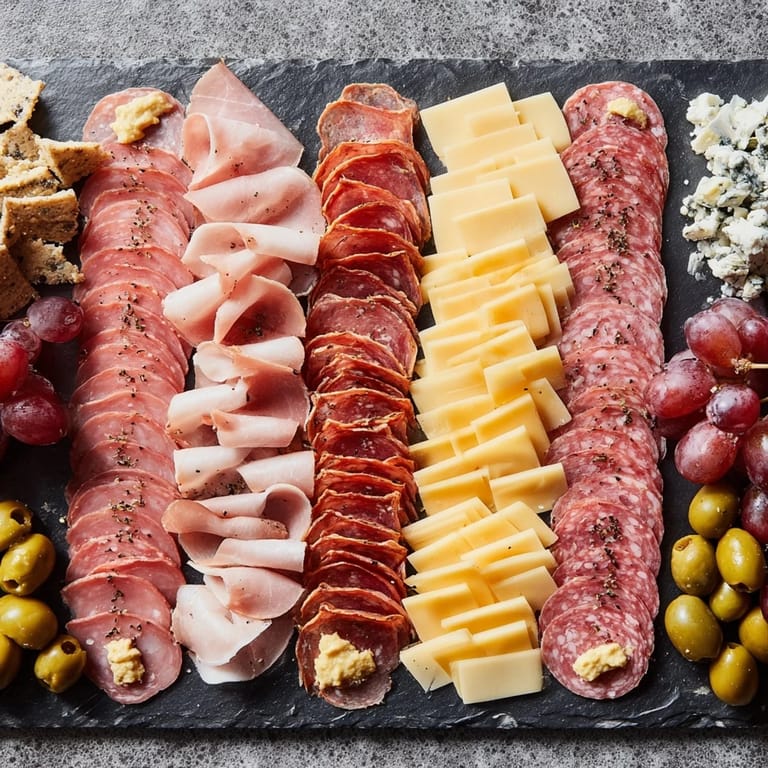
- Lay each type of cured meat in its own distinct line, slightly overlapping each slice like roof tiles. The visual separation is what makes this feel intentional and modern, not random.
- Create opposing cheese lines:
- On the opposite side, repeat with the cheeses, grouping by type. Sliced cheeses should overlap gently; blue cheese can be scattered or broken into small chunks for visual texture.
- Fill the negative space:
- Tuck small bunches of grapes between the lines, scatter cornichons and olives with intention (not chaos), and place them where they'll guide the eye along the board.
- Add mustard punctuation:
- Either create small lines of mustard that echo the geometry of the meats and cheeses, or place a small ramekin at one corner. It's about balance, not coverage.
- Finish and serve:
- Give the entire board a final, light scatter of freshly cracked black pepper for aroma and polish. Serve immediately while everything is cool and the presentation is pristine.
 Pin This
 There's a moment right after you place everything on the slate when you step back and see it for the first time—those clean lines, the colors humming together, the whole thing looking far more composed than you feel. That's when the real magic happens, because your guests see that moment too, and they know you cared.
The Psychology of a Well-Arranged Board
I used to think charcuterie boards were just food arranged to look nice, but I've learned they're actually about creating visual pathways and giving people permission to eat freely. When things are organized into clear lines and sections, guests feel confident reaching in—there's no mystery, no worry about disrupting some precious arrangement. The simplicity is what makes it feel generous, like you're saying, 'Here, all of this is for you, and I trust you to enjoy it your own way.' That's a different feeling than a board that looks so perfect you're afraid to touch it.
Pairing Wine and Temperature
The cool stone does something unexpected: it keeps the flavors distinct and sharp. If this board sat out at room temperature, the cheeses would start to blur together, the meats would lose their texture, and the whole thing would taste less interesting. But on cold slate, each bite stays true to itself. As for wine, don't overthink it—a bright, acidic white cuts right through the richness, or a bold red with tannins holds its own against the salty, fatty meats. Whichever you choose, chill it; temperature matters as much as the choice itself.
Variations and Flexibility
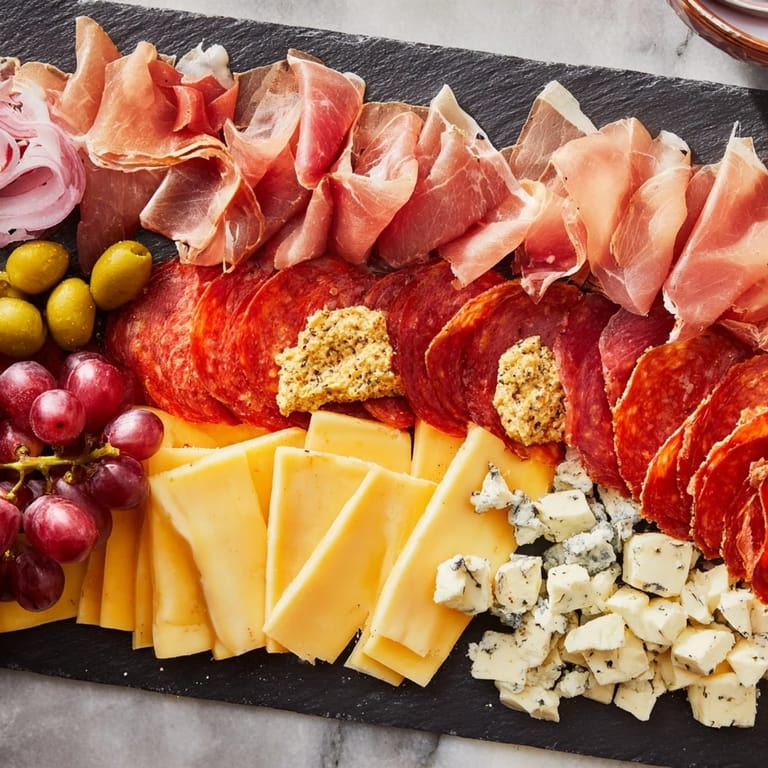
The beautiful thing about this format is how adaptable it is without losing its identity. I've done versions with roasted vegetables, marinated artichoke hearts, toasted nuts, and fresh herbs, and they all work because the principle stays the same: contrast, clarity, and intention. The board is the stage; the ingredients are just the performers you choose for the day. Some nights I go vegetarian, some nights I hunt down an obscure cured meat I've never tried, and it always feels fresh because the structure itself never gets old.
- For a vegetarian version, swap meats for marinated artichoke hearts, roasted nuts, and fresh herbs like basil or oregano to maintain visual interest and textural variety.
- In warmer months, add fresh berries or stone fruits for a lighter feel that still respects the board's geometry.
- Remember that presentation matters as much as ingredients—thoughtful arrangement transforms simple food into something memorable.
 Pin This
 This board has become my quiet answer to the question of what good hospitality looks like. It says you cared enough to choose quality, arrange it with intention, and let your guests feel that care in every bite.
Recipe FAQs
- → What is the best way to arrange the meats and cheeses?
Arrange cold meats and cheeses in straight, parallel lines on opposite sides of the stone slab for a clean, modern aesthetic.
- → Can I prepare this platter ahead of time?
Yes, assembling just before serving ensures freshness; chilling the slate beforehand helps keep ingredients cool longer.
- → What accompaniments complement this platter?
Seedless grapes, cornichons, mixed olives, and whole grain mustard enhance the flavors and textures beautifully.
- → Are there vegetarian options for this arrangement?
Omitting meats and adding marinated artichoke hearts with roasted nuts creates a satisfying vegetarian alternative.
- → How should the mustard be presented?
Place small dollops of whole grain mustard either in neat lines on the slate or in a small dish at one corner.