 Pin This
 I still remember the evening I first assembled a honeycomb cheese platter for my sister's engagement party. I'd been flipping through design magazines that afternoon, mesmerized by photographs of hexagonal patterns in nature, and it hit me—why not arrange cheese the same way? The moment I placed those first golden manchego cubes in their interlocking pattern, something magical happened. The platter transformed from a simple cheese board into edible architecture, and when the honey caught the light, my guests literally gasped. That night taught me that food isn't just about taste; it's about the story the presentation tells.
I made this for my best friend's baby shower last spring, and watching her face when she saw it displayed on our dining table reminded me why I love creating food experiences. Everyone gathered around it like it was a work of art, phones came out, and suddenly this simple cheese platter became the centerpiece of the whole afternoon. People kept saying they were too intimidated to eat it, until I broke the spell by grabbing a piece of manchego with some almonds, and then the whole board disappeared within minutes.
Ingredients
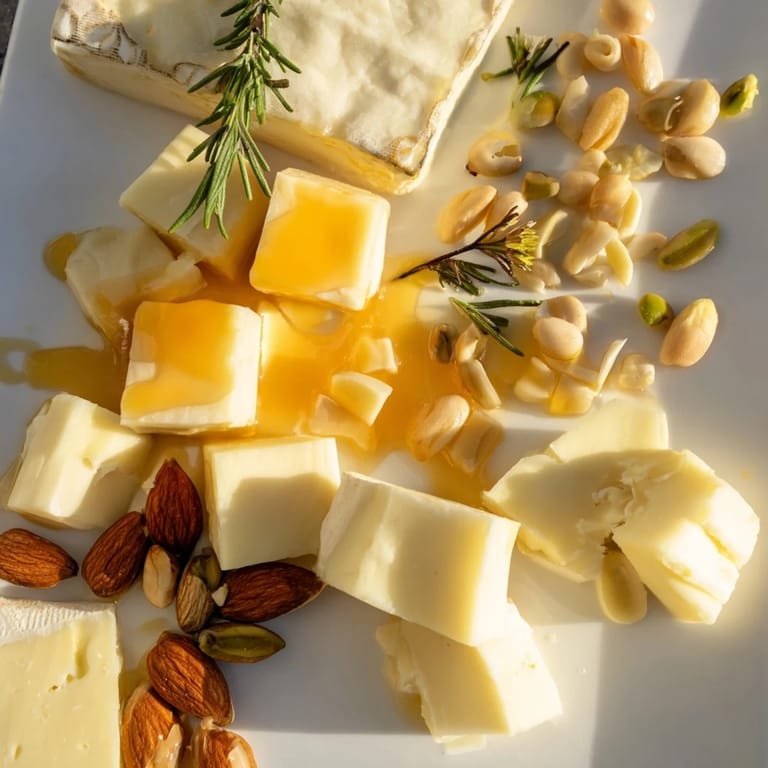
- Manchego cheese, 150g cut into small hexagonal cubes: This Spanish beauty has a nutty, slightly caramel flavor that makes the platter feel sophisticated. Cut it into roughly equal cubes—I learned the hard way that uneven pieces disrupt the honeycomb pattern's visual magic.
- Cheddar cheese, 150g cut into small hexagonal cubes: The familiar friend in this lineup, cheddar adds a sharp, bright note that contrasts beautifully with the manchego's sweetness. Its firmer texture holds the hexagonal shape beautifully.
- Brie, 100g sliced into small wedges or cubes: This is your creamy anchor—the soft, buttery element that makes people close their eyes when they taste it. Keep it chilled until the last moment so it holds its shape during arrangement.
- Roasted almonds, 60g: These add that satisfying crunch and fill the negative space in your honeycomb pattern. I always taste them first to make sure they're fresh; stale nuts can undermine the whole experience.
- Shelled pistachios, 60g: The pop of color and a subtle earthiness that plays beautifully against the cheese. Their natural saltiness makes every bite more interesting.
- High-quality honey, 3 tbsp: Don't skimp here—this is the finishing touch that brings everything together. I use a honey with character, something like acacia or wildflower, that adds its own flavor story to the platter.
- Fresh thyme sprigs: A whisper of herbal aroma that elevates the entire experience without overpowering anything.
- Edible flowers: These are optional but transformative—they turn a beautiful platter into something that feels like it belongs in a fairy tale.
Tired of Takeout? 🥡
Get 10 meals you can make faster than delivery arrives. Seriously.
One email. No spam. Unsubscribe anytime.
Instructions
- Gather your canvas:
- Clear your serving board completely and step back—you're about to create geometry with food. If you have a hexagonal cookie cutter, dust it lightly so the cheese releases easily. If you're cutting by hand like I often do, sharpen your knife first; a dull blade will crumble the cheese instead of cutting cleanly through it.
- Lay the foundation:
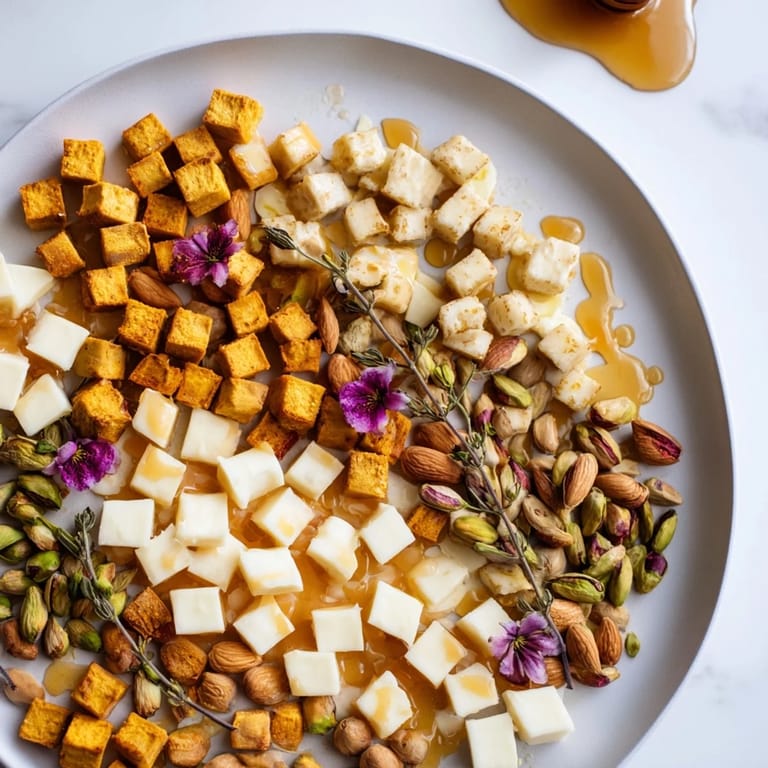
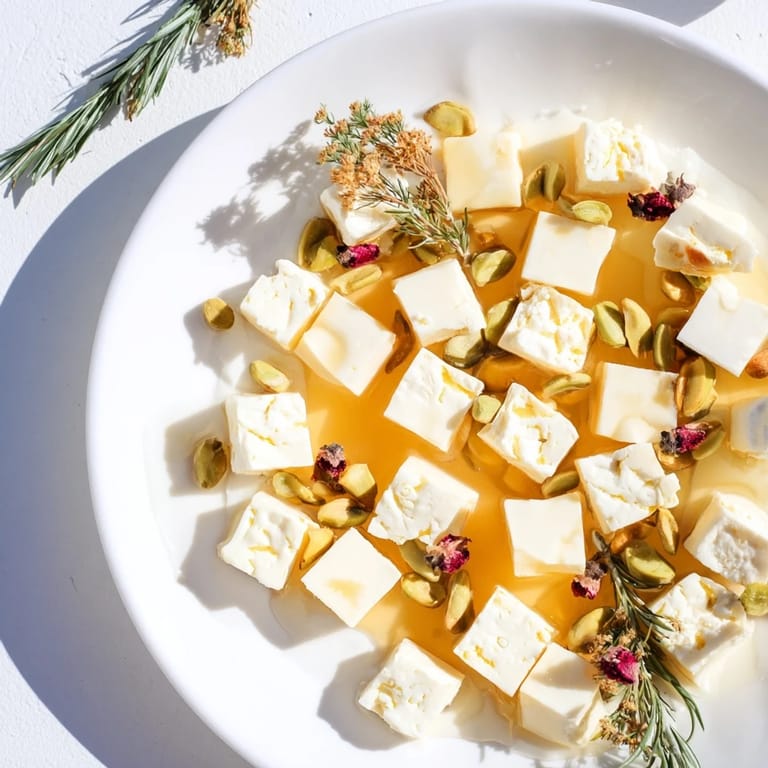
- Start placing your manchego hexagons in the center of your board, nestling each one snugly against its neighbors like you're solving a puzzle. Feel the satisfying click as they lock together. Work outward in rings, alternating between manchego and cheddar if you want a color pattern, or follow your instincts. There's no wrong way to arrange this—trust your eye.
- Fill the gaps:
- Now comes the fun part. Look at the little pockets created between your cheese pieces and gently tuck almonds and pistachios into them. Don't overthink it—scatter them with the same casual abundance you'd use when feeding birds. You want the board to feel generous and bountiful.
- Crown it with cream:
- Nestle your brie pieces into any remaining gaps or arrange them around the outer edge of your honeycomb. They should sit like precious jewels, slightly proud of the surrounding elements.
- Anoint with golden sweetness:
- Now for the moment that transforms everything. Warm your honey very slightly if it's thick—this makes it drizzle more freely. Hold the jar or spoon above your platter and let the honey flow in lazy patterns, watching it catch the light and pool in the crevices. Don't rush this step. Breathe. Let the honey create its own path.
- The finishing flourish:
- Scatter thyme sprigs across the top like you're blessing it, and if you're using edible flowers, place them with intention—a few scattered blooms, not a bouquet. Step back and look at what you've created. You've just made art you can eat.
- Bring it to the table:
- Serve immediately while the honey is still glossy and the cheese is at its perfect temperature. Set out small forks or toothpicks nearby, and watch as people lean in, mesmerized.
 Pin This
 My most memorable moment with this platter came during a quiet dinner with my mother. She'd been ill, and I wanted to create something that felt celebratory but not heavy. When she saw the honeycomb arrangement, she actually teared up—not because it was fancy, but because she said it reminded her of the intricate lace patterns from her grandmother's tablecloth, and here it was, made edible, made into a memory we could share together. That's when I truly understood that the geometry was never really about visual perfection; it was about creating something worth remembering.
The Art of the Cheese Board Statement
There's something deeply human about gathering around a shared board of beautiful food. This honeycomb pattern taps into something ancient—our fascination with nature's perfect geometry, the efficiency of a bee's work, the sweetness of honey. When you create this platter, you're not just arranging cheese; you're inviting people into a moment where beauty and nourishment intersect. I've learned that the most impressive dishes are often the simplest ones executed with intention and care. This platter takes twenty minutes but feels like you've spent hours on it, and somehow that gap between effort and impact is where the real magic lives.
Why Honey and Cheese Are Meant to Be Together
Before I made this platter, I thought of honey and cheese as separate pleasures. But the first time I tasted them together—a piece of manchego drizzled with warm honey—something shifted. The salt in the cheese makes the honey taste sweeter, more complex. The honey softens the edge of the cheese's sharpness and brings out flavors you didn't know were there. It's a partnership that's been celebrated in Mediterranean cuisine for centuries, and experiencing it on a simple cheese board is like discovering an old secret that was hiding in plain sight. Every culture that values both honey and cheese has figured this out; now you have too.
Elevating the Ordinary Cheese Board into Theater
What separates a cheese board from a cheese experience is intention. Any platter can look nice if you throw good ingredients on it, but this hexagonal arrangement requires you to pause and think about placement, balance, and visual rhythm. It forces you to engage with your ingredients before serving them. That engagement—that moment of creative focus—changes how you feel about the dish and how others perceive it. I've served the exact same cheeses and nuts in a casual scatter, and I've served them in this honeycomb pattern, and the response is utterly different. The pattern doesn't make the cheese taste better, but it makes everyone taste it more slowly, more deliberately, more gratefully.
- Cut your hexagons as uniformly as possible—they don't have to be perfect, just intentional.
- Chill your board before assembly on a hot day so the cheese doesn't warm too quickly.
- Remember that this platter is as much about what you leave visible as what you fill in—don't overcrowd it.
 Pin This
 Every time I make this honeycomb platter, I remember that cooking is about more than recipes and technique—it's about creating moments. This cheese board has become my go-to when I want to impress without stress, when I want to create something that feels both simple and special.
Recipe FAQs
- → How do I create perfect hexagonal cheese pieces?
Use a small hexagonal cookie cutter for uniform shapes or carefully cut using a sharp knife to achieve neat hexagons.
- → Can I substitute the cheeses used in this platter?
Yes, firm cheeses like gouda or comté work well as alternatives, maintaining the texture and flavor balance.
- → What type of honey pairs best with this platter?
A high-quality, floral honey enhances the natural creaminess of the cheeses and complements the nuts' crunch.
- → How can I add visual appeal to the platter?
Garnish with fresh thyme sprigs and edible flowers to add color and a subtle aroma that complements the flavors.
- → Is this platter suitable for dietary restrictions?
This dish is vegetarian and can be gluten-free if using appropriate cheeses and nuts. For vegan options, plant-based cheeses and agave syrup can be used.