 Pin This
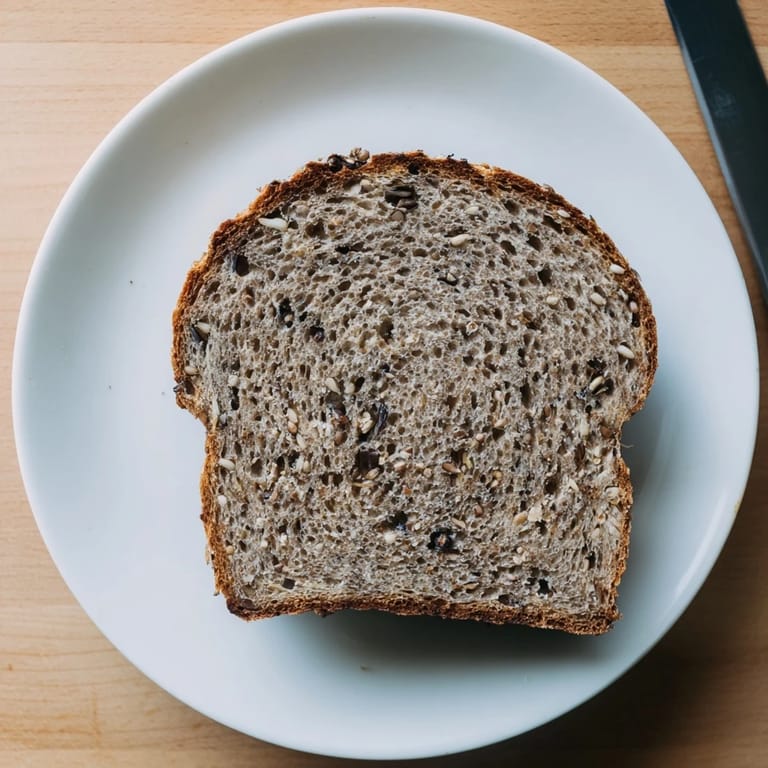
 The first time I bit into real Estonian leib, I was sitting in a small Tallinn kitchen on a gray autumn morning, watching my friend's grandmother pull a dark, almost mahogany-colored loaf from her oven. The smell hit like a warm embrace—earthy rye, molasses, and something spiced I couldn't quite name until she pointed at the caraway seeds studded throughout. She handed me a thick slice still steaming, spread it with butter that melted immediately, and said simply, "This is home." That moment stuck with me, and I've been chasing that feeling ever since, learning to build this bread in my own kitchen.
I remember bringing a loaf to a potluck and watching it disappear faster than anything else on the table—not because it was flashy, but because people kept coming back for another slice with their cheese. A quiet woman I'd never met before asked for the recipe, and when I told her it was Estonian, her eyes got a little misty. She said her grandmother made this exact bread.
Ingredients
- 100 g active rye sourdough starter: This is your living foundation—make sure it's bubbly and fed a few hours before baking, or the whole thing will move sluggishly.
- 400 g dark rye flour: Don't skip the dark variety; it brings that characteristic deep, almost molasses-like flavor that makes Estonian leib unmistakable.
- 100 g bread flour (wheat): The small amount of wheat flour gives just enough structure to hold everything together without diluting the rye character.
- 300 ml lukewarm water: Temperature matters—too hot and you'll kill the starter, too cold and fermentation stalls.
- 50 g dark rye malt (or barley malt powder): This is the secret ingredient that adds sweetness and depth; regular flour simply won't give you the same thing.
- 2 tbsp molasses or dark honey: Molasses brings a subtle bitterness that balances the caraway and malt—use the real thing, not the light kind.
- 1 tbsp caraway seeds: Toast them lightly first if you want them to really sing, or add them raw if you prefer a softer, more integrated flavor.
- 2 tsp fine sea salt: This strengthens the dough and slows fermentation slightly, giving you a more predictable rise.
Tired of Takeout? 🥡
Get 10 meals you can make faster than delivery arrives. Seriously.
One email. No spam. Unsubscribe anytime.
Instructions
- Wake and Mix:
- Pour your bubbly starter into a large bowl with the lukewarm water and molasses, stirring until the molasses dissolves into dark ribbons. Add all your flours, malt powder, caraway seeds, and salt, mixing with a wooden spoon until you have a thick, shaggy dough—it will look rough and sticky, and that's exactly right.
- First Rise—The Patient Part:
- Cover the bowl with a damp cloth and let it sit at room temperature for 10 to 12 hours, or overnight. You're looking for visible bubbles breaking through the surface and the dough expanding noticeably, though it won't quite double like a wheat bread would. This slow fermentation is where the flavor develops.
- Shape and Pan Rise:
- Line your loaf pan with parchment paper or grease it lightly, then scrape the dough in and smooth the top with a wet spatula—it will be sticky, and that's fine. Sprinkle those optional caraway seeds on top if you want them visible, then cover and let it rise for another 2 to 4 hours until it's puffed and approaching the rim of the pan.
- The Heat Stage:
- Preheat your oven to 220°C (430°F) and place a pan of hot water on the bottom rack—steam is essential for developing that dark, slightly crackled crust. Bake the loaf on the middle rack for 15 minutes at the high temperature, then lower the heat to 190°C (375°F) and bake for another 30 minutes.
- The Tap Test:
- The loaf is done when the crust is deep brown and it sounds genuinely hollow when you tap the bottom. Remove it from the pan and let it cool completely on a wire rack—this is hard to do because the smell is incredible, but skipping it means the crumb will be gummy inside.
 Pin This
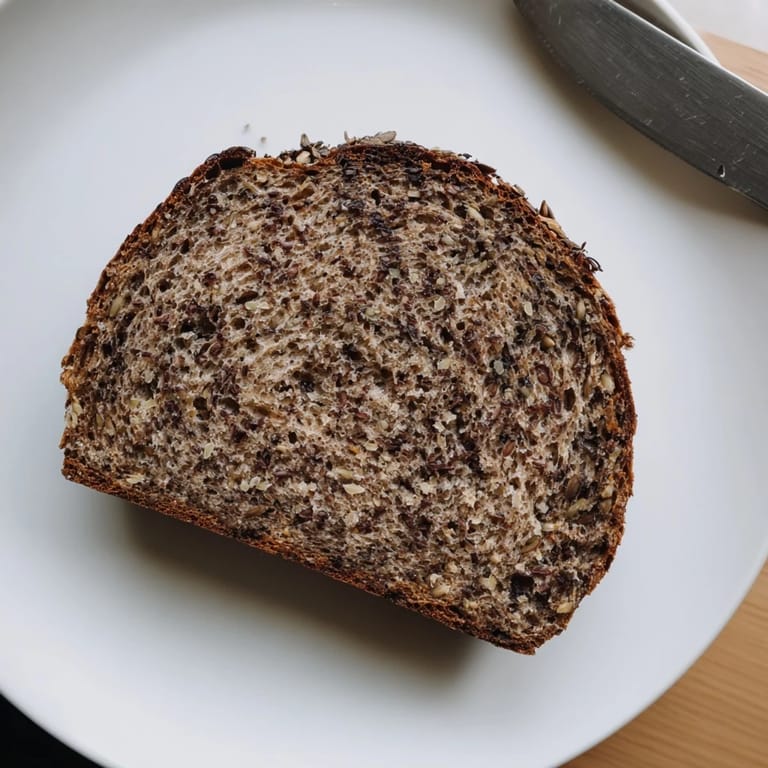
 There's a moment when you slice into day-old Estonian leib and see how tight and fine the crumb is, almost like a thin-crumbed sandwich bread, that you realize what all those hours of waiting were for. It's not a fluffy showpiece; it's honest, sturdy food that tastes better with age and holds up to whatever you pile on top of it.
Why Rye Flour Changes Everything
Rye has a completely different gluten structure than wheat, which is why this dough never becomes elastic or smooth no matter how much you work it. That used to confuse me until I stopped fighting it and started trusting the fermentation to build strength instead of my hands. Rye also absorbs more water, which is why the dough looks almost batter-like at first—that's not a mistake, it's the flour doing what it's supposed to do.
The Caraway Question
Caraway seeds are genuinely polarizing, and I respect that—some people find them herbal and perfect, others think they taste like licorice and want nothing to do with them. If you're in the second camp, you can absolutely reduce them to a teaspoon or leave them out entirely, though the bread will taste noticeably less Estonian. I've also found that toasting the seeds for a minute in a dry pan before adding them intensifies their flavor in a way that feels more sophisticated than raw seeds scattered throughout.
Storage and Keeping
This bread is one of the few that actually improves as it sits, developing deeper flavors over three or four days. Wrap the cooled loaf in a clean linen towel and keep it at room temperature—the towel protects the crust from hardening too much while still letting it breathe.
- Day one is fresh and tender, perfect for spreading with good butter and a slice of smoked fish.
- Days two through four are ideal for pairing with cheese, when the flavors have settled and the texture becomes more substantial.
- After a week, slice it thin, toast it lightly, and spread with whatever your kitchen calls for—it refuses to be wasted.
 Pin This
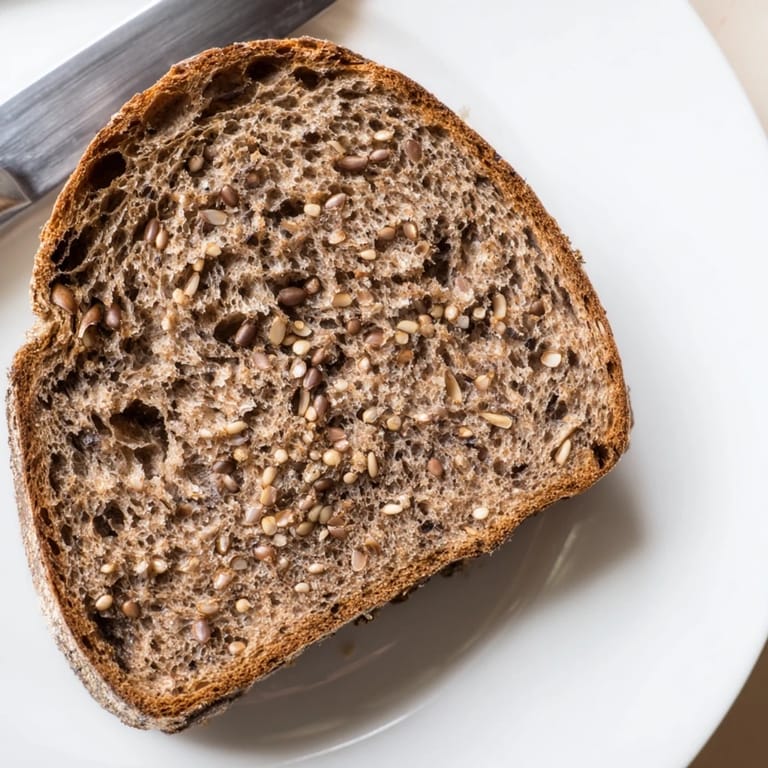
 Making Estonian leib taught me that good bread doesn't need to be complicated or fast—it needs time, simple ingredients you understand, and the willingness to let fermentation do most of the heavy lifting. Every loaf you make teaches you something about your kitchen, your starter, your hands.