 Pin This
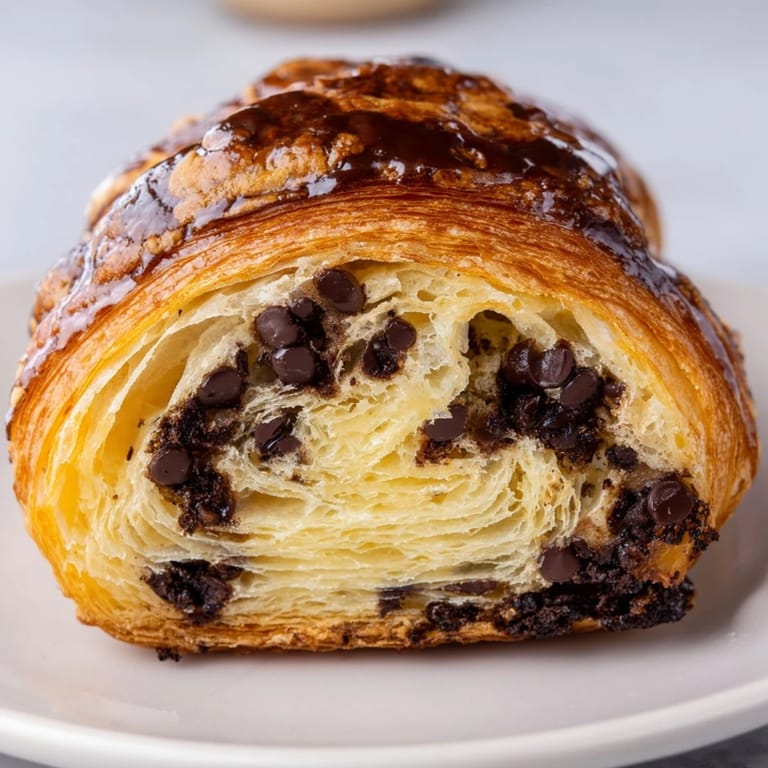
 The first time I attempted a crookie, I was skeptical. How could something claiming to be both croissant and cookie actually deliver on both fronts? But then I bit into one fresh from the oven, and the flaky, buttery layers gave way to that dense, chocolatey cookie center, and suddenly it made perfect sense. It's the kind of hybrid that shouldn't work but absolutely does, like discovering your two favorite things were meant to be together all along.
I remember bringing a batch to a friend's apartment on a rainy Sunday afternoon, nervous about whether they'd even hold up in my tote bag. She took one bite, closed her eyes, and didn't say anything for a solid thirty seconds. When she finally spoke, she just said, "You can't un-know this exists now." We ended up eating four of them while watching old movies, and I realized the magic wasn't just in the recipe—it was in that moment of unexpected indulgence.
Ingredients
- All-purpose flour: You'll need 250 g for the laminated dough and another 120 g for the cookie layer; the dough flour creates structure for those beautiful layers, while the cookie flour keeps things tender.
- Instant yeast: Just 7 g here—enough to give the dough slight rise and an ethereal crumb without overpowering the butter flavor.
- Unsalted butter: This is where patience matters; cold butter (150 g) creates the lamination magic, while the melted butter (25 g) brings the dough together smoothly.
- Whole milk: 120 ml lukewarm is the sweet spot—cold milk slows hydration, hot milk kills the yeast.
- Brown sugar and granulated sugar: The combination (60 g brown, 40 g granulated) gives the cookie layer depth and moisture that pure white sugar can't match.
- Dark chocolate chips: 100 g of quality chocolate makes all the difference; cheap chips seize up and turn waxy, while good ones stay silky through the bake.
- Egg yolk: One yolk (saved from separating) enriches the cookie dough and binds everything beautifully without adding excess whites.
Tired of Takeout? 🥡
Get 10 meals you can make faster than delivery arrives. Seriously.
One email. No spam. Unsubscribe anytime.
Instructions
- Build your dough foundation:
- Whisk together flour, sugar, salt, and yeast in a large bowl, then pour in the lukewarm milk, melted butter, and egg. Stir until shaggy, then knead for five minutes until the dough becomes smooth and slightly elastic—you'll feel it transform under your hands. Shape it into a rectangle, wrap it, and let it chill for 30 minutes while you prepare the lamination butter.
- Create the butter layer:
- Take your cold butter and place it between two sheets of parchment paper. Roll it gently into a 15x15 cm square, then chill it alongside your dough. This butter needs to be cold enough to hold its shape but not so cold it shatters.
- Begin the lamination:
- Roll your chilled dough into a 30x15 cm rectangle. Place your butter square in the center, then fold the dough over from both long sides to seal it completely. You're now creating a butter parcel—this is where the magic begins.
- Execute the folds:
- Roll the butter-enclosed dough to 45x20 cm, then fold it into thirds like a letter. Chill for 30 minutes, then repeat this rolling and folding two more times, chilling between each fold. After the final fold, give it a full hour to rest—this patience is what creates those shattered, distinct layers.
- Mix the cookie dough:
- While your laminated dough rests, beat softened butter with both sugars until fluffy, then add the egg yolk and vanilla extract. Gently fold in your flour, baking soda, salt, and chocolate chips, being careful not to overwork it or the cookies will be tough.
- Assemble with intention:
- Roll your chilled laminated dough to 30x25 cm and about 6 mm thick. Spread the cookie dough evenly across, leaving a 1 cm border so nothing squeezes out when you roll. Roll it up tightly from the long side, then slice into 8 equal rounds with a sharp knife using a gentle sawing motion.
- Proof and bake:
- Place your rounds on a parchment-lined baking sheet, cover loosely with plastic wrap, and let them proof at room temperature for 1 hour—they should puff slightly and look a bit pillowy. Bake at 190°C for 18–20 minutes until golden and set, then cool on a wire rack before the real temptation begins.
 Pin This
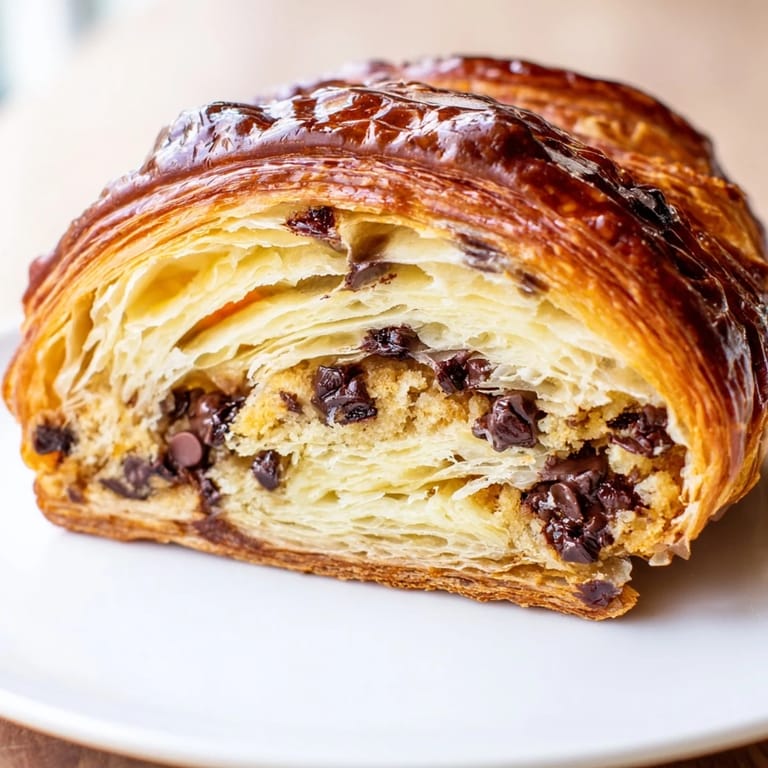
 There's something almost spiritual about pulling a tray of crookies from the oven and watching them cool, the chocolate melted just enough to be gooey but not so much that they're falling apart. My kitchen filled with this smell that was simultaneously bakery and home—croissant buttery richness mixed with warm chocolate—and I knew I'd created something that blurred the line between indulgence and comfort food.
The Science of Lamination
Laminated dough seems mysterious until you understand it's basically butter suspended between paper-thin layers of dough. Each fold doubles your layers, so three folds create 64 distinct sheets of butter and dough. When that butter melts during baking, it creates steam between the layers, which is what causes that dramatic shattering and separation. The reason you chill between folds is to let the gluten relax and the butter firm up again—if you kept rolling without stopping, the butter would warm and blend into the dough, and you'd end up with a croissant texture that's almost uniform rather than dramatically flaky.
Chocolate Matters More Than You Think
I learned this the hard way by trying to save money on chocolate chips. The cheaper ones contain more cocoa butter substitutes and emulsifiers, which means they don't melt as smoothly and they can develop that waxy mouthfeel. Quality dark chocolate chips stay silky through the bake and taste like actual chocolate rather than sweet coating. Look for chips with cocoa butter listed high in the ingredients, and if you can't find good ones, buy a chocolate bar and chop it instead—it's worth the extra two minutes of work.
Timing and Temperature Tricks
The magic of crookies lives in understanding that different parts of this recipe need different conditions to succeed. Your laminated dough needs to be cold so the butter stays distinct; your cookie dough needs to be chilled so it doesn't spread everywhere; your proofing needs to be at room temperature so the yeast can work without the butter overheating. I've learned that a cool kitchen is actually your friend here—if your kitchen is warm, give everything extra chill time and proof your crookies in the coolest spot you can find.
- If your dough feels greasy or soft during lamination, pop it back in the fridge for 15 minutes—there's no shame in taking breaks.
- You can make crookies up to the proofing stage, then freeze them unbaked and bake straight from frozen with just 2–3 extra minutes in the oven.
- Brush the tops with egg wash before baking if you want that picture-perfect glossy golden finish.
 Pin This
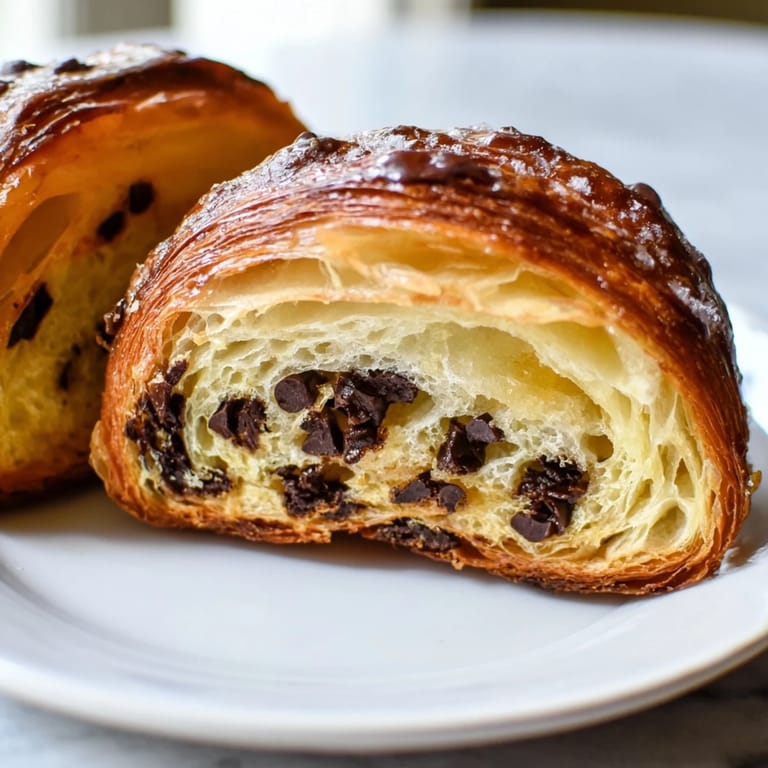
 Making crookies is essentially a love letter to butter—folding it, chilling it, respecting it, and then watching it transform into something that tastes like both refinement and comfort at once. Every time I pull these from the oven, I'm reminded that sometimes the most satisfying things are the ones that took a little patience to create.
Recipe FAQs
- → What type of dough is used in this pastry?
It features laminated dough, which involves folding cold butter into the dough multiple times to create flaky, layered texture reminiscent of croissants.
- → How are the chocolate chips incorporated?
The chocolate chips are folded into a cookie dough layer, which is spread evenly over the rolled laminated dough before rolling up and slicing.
- → Why is chilling important during preparation?
Chilling allows the butter layers to firm up, preventing it from melting into the dough and ensuring flaky, distinct layers after baking.
- → Can I add nuts or other mix-ins?
Yes, chopped nuts or different types of chocolate can be added to the cookie layer for texture and flavor variety.
- → How should these pastries be stored or reheated?
They are best enjoyed fresh but can be gently reheated to restore warmth and softness without sacrificing flakiness.