 Pin This
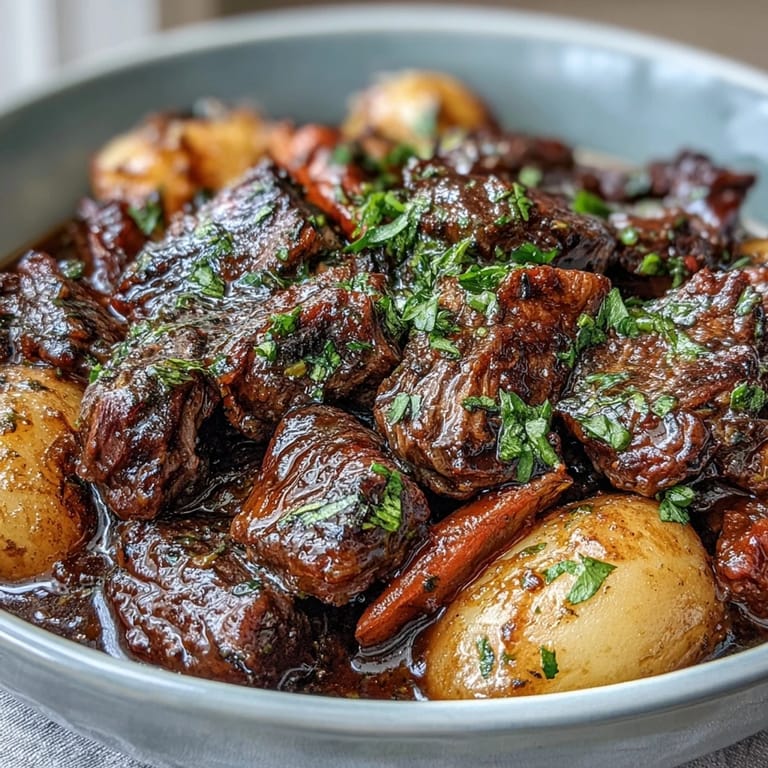
 There's something about the first real cold snap of autumn that makes me crave beef stew, and I'll never forget the afternoon my neighbor stopped by just as the slow cooker was releasing those deep, savory smells into the kitchen. She stood in the doorway with her coat still on, sniffing the air like she was catching a memory, and asked if I had extra. That bowl turned into a conversation that lasted through dinner, and somehow this humble stew became the reason we became friends.
I made this stew the winter my dad was learning to cook again after his accident, and watching him cube those potatoes with careful determination, then tasting it hours later with genuine pride—that's when I realized comfort food isn't really about the ingredients. It's about the quiet moments when someone realizes they can still create something nourishing for people they love.
Ingredients
- Beef chuck, cut into 1.5-inch cubes: This cut has just enough fat and connective tissue to turn silky and rich after hours of gentle cooking, which is exactly why it's worth the splurge over leaner cuts.
- Kosher salt and black pepper: Season the meat generously before searing—this creates those caramelized edges that add depth to the whole pot.
- Carrots, parsnips, Yukon Gold potatoes, yellow onion, and celery: Each vegetable brings its own personality: carrots add sweetness, parsnips bring earthiness, potatoes thicken naturally as they break down, onions build the base, and celery adds structure.
- Garlic, tomato paste, Worcestershire sauce, bay leaf, thyme, and rosemary: The tomato paste deepens color and umami, Worcestershire adds a savory backbone, and the dried herbs create those complex layers that make people ask for your recipe.
- Beef broth and dry red wine: The wine adds brightness and a subtle tannin complexity that rounds out the beef's richness—use something you'd actually drink.
- Cornstarch and cold water: This slurry is your secret to a stew that's silky without being heavy or flour-based, and it comes together in the last fifteen minutes.
Tired of Takeout? 🥡
Get 10 meals you can make faster than delivery arrives. Seriously.
One email. No spam. Unsubscribe anytime.
Instructions
- Season and sear the beef:
- Pat your beef cubes dry with paper towels—this matters more than you'd think because moisture prevents browning. Season each piece generously and listen for that satisfying sizzle as they hit the hot skillet, watching for deep golden-brown corners.
- Build your slow cooker base:
- Transfer the browned beef to your slow cooker, then add all the chopped vegetables and minced garlic. This layering helps distribute flavors evenly as everything cooks down together.
- Add the flavor elements:
- Stir in tomato paste (don't skip this step—it adds color and umami), Worcestershire sauce, bay leaf, thyme, and rosemary. The paste should coat the vegetables slightly, which helps it distribute throughout the pot.
- Pour in the liquids and let time do the work:
- Add your beef broth and red wine, give everything a gentle stir, cover, and set it to low for eight hours. Resist the urge to peek constantly—each time you lift the lid, you release heat and extend cooking time.
- Thicken at the finish:
- Make your cornstarch slurry by whisking cornstarch with cold water until smooth, then stir it into the hot stew. Switch to high heat, leave the lid off, and cook for fifteen minutes while it thickens into silky richness.
- Taste and adjust before serving:
- Remove the bay leaf, then taste—you might want more salt, cracked pepper, or even a splash more Worcestershire to brighten everything. This final adjustment is where you make it truly yours.
 Pin This
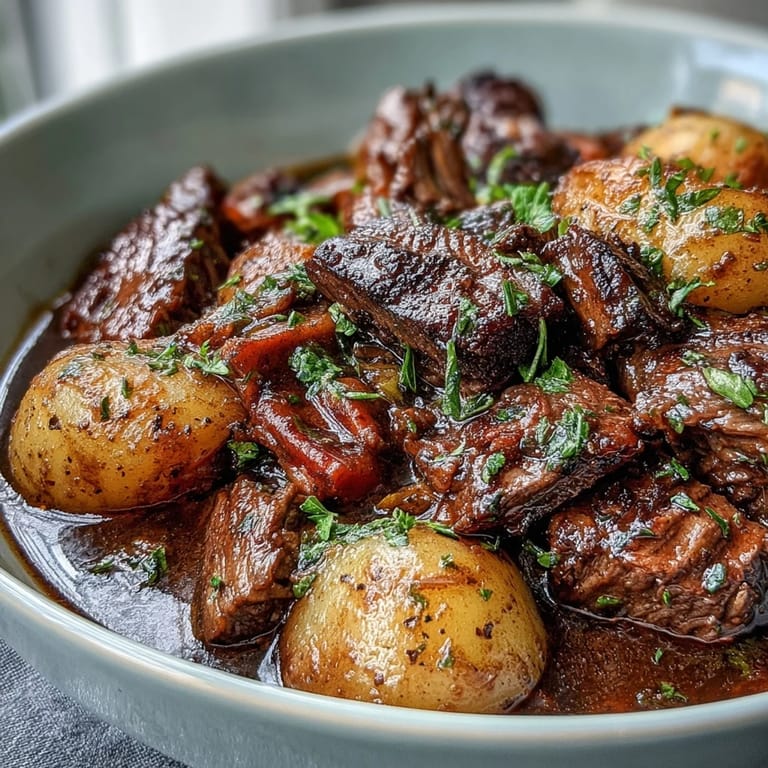
 There was a night when my daughter came home upset about something at school, and we sat at the kitchen table in complete silence while eating this stew. By the second bowl, she started talking, and I realized the warmth of the spoon and the richness of the broth had somehow made space for her to open up. Food does that sometimes—it holds us when words are too hard.
Making It Your Own
The beauty of this recipe is how willing it is to adapt to what you have on hand and what you're craving. I've added mushrooms in the last hour of cooking and watched them absorb all that savory broth, transforming into something almost meaty themselves. Frozen peas stirred in at the very end bring a pop of sweetness and color, though my grandmother insists they're unnecessary and slightly inauthentic—but then again, she's also the one who makes it with sweet potatoes instead of Yukon Golds when she's feeling adventurous.
Serving and Pairing
This stew is forgiving about what you serve alongside it, which is part of why it's become my go-to dinner for unpredictable evenings. Crusty bread for soaking up every last bit of broth is the obvious choice, but I've also spooned it over creamy mashed potatoes, polenta, or even egg noodles when that felt right. The important thing is having something to catch the stew as you eat—this isn't a delicate dish; it's generous and messy and meant to be savored slowly.
Storage and Make-Ahead Magic
This stew actually tastes better the next day, once all the flavors have had time to get to know each other in the refrigerator overnight. I make it on Sunday afternoon and eat from it all week, and honestly, by Wednesday it's even richer and more cohesive than it was fresh. You can freeze it for up to three months, though I've never successfully hidden it in the freezer because someone always finds it.
- Let the stew cool completely before refrigerating—never put hot food straight into the fridge because it raises the temperature of everything around it.
- If you're freezing it, skip the cornstarch thickening step and do that when you reheat, which prevents the texture from getting weird in the freezer.
- Reheat gently on the stovetop over medium heat, stirring occasionally, because aggressive heat can break down those tender vegetables.
 Pin This
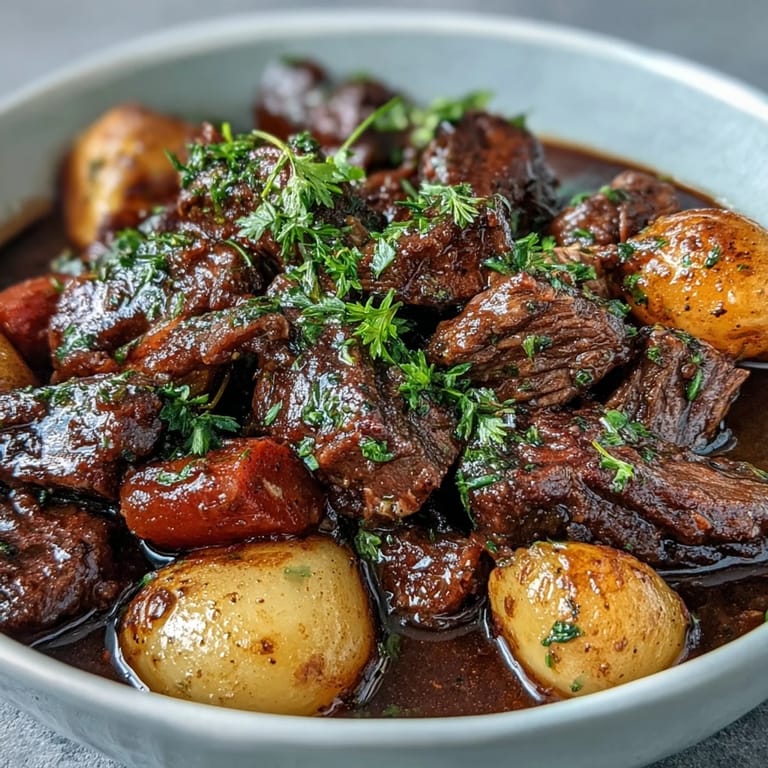
 This stew has become my answer to almost every difficult moment—when someone's sick, when bad news arrives, when we just need to sit together without much talking. It's proof that the most meaningful meals are often the simplest ones.
Recipe FAQs
- → What cut of beef works best for this stew?
Beef chuck is ideal due to its marbling and tenderness after long, slow cooking.
- → Can I use fresh herbs instead of dried thyme and rosemary?
Yes, fresh herbs can be used but add them during the last hour to preserve their aroma.
- → How do I thicken the stew broth?
A cornstarch slurry made with cold water is stirred in near the end and cooked until thickened.
- → Is red wine necessary for flavor?
Red wine adds depth, but you can substitute extra broth to keep it alcohol-free without losing richness.
- → What are good side options to serve with this dish?
Crusty bread or creamy mashed potatoes complement the hearty nature of the stew perfectly.